
Research · Injury Prevention
The ACL Programmes Work. The Evidence Is Thinnest Where the Risk Is Highest.
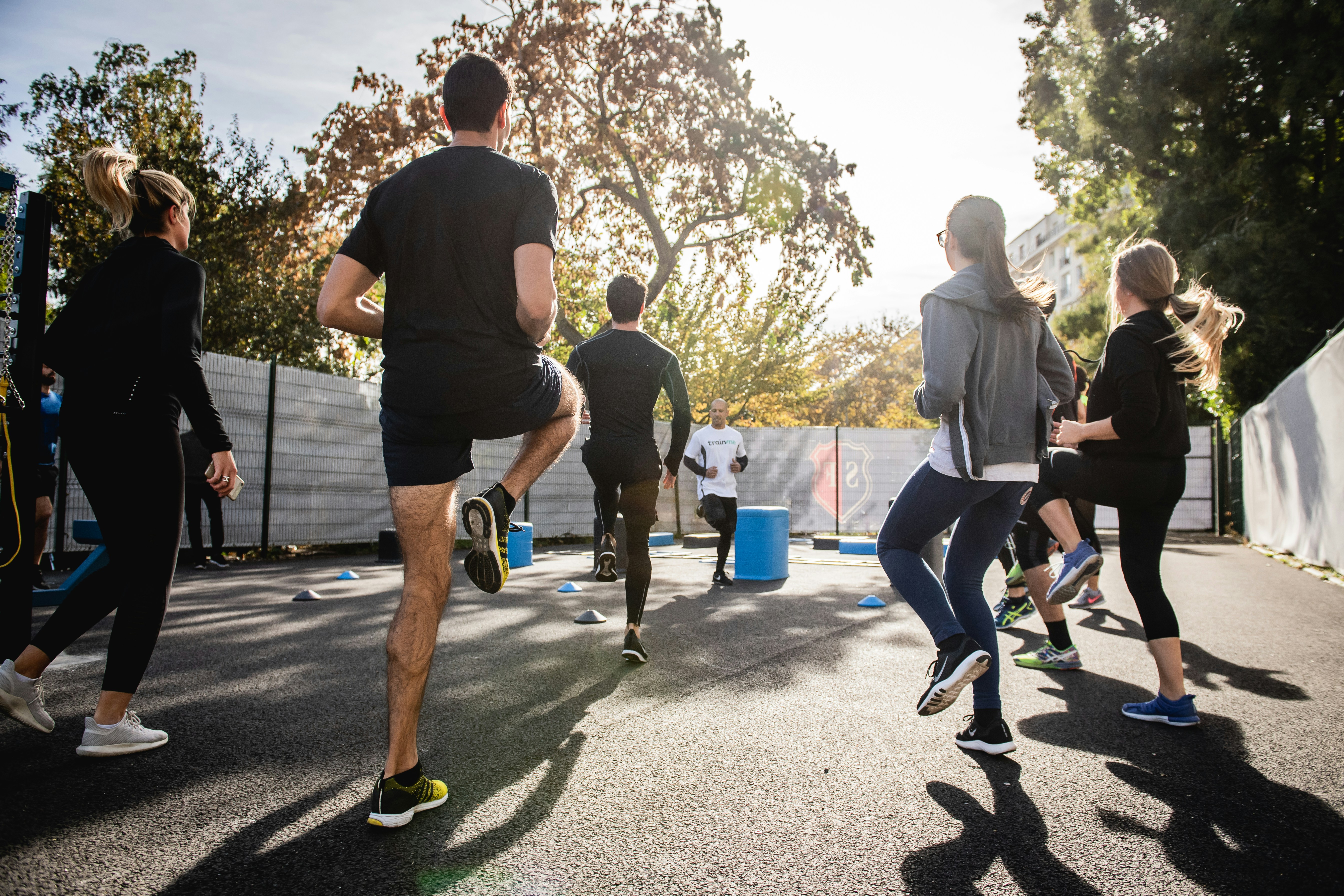
Structured injury-prevention warm-ups have been around long enough to have become furniture. FIFA 11+ and its relatives get run, half-run, or quietly dropped for shooting practice in thousands of youth sessions a week, and the coaches dropping them are rarely arguing with the evidence — they have just never seen it.
It is worth seeing, because the headline is genuinely good and the fine print is genuinely awkward.
The headline
A meta-analysis of six randomised controlled trials pooled 6,344 football players — 3,307 in intervention groups and 3,037 in controls — to test the FIFA 11+ warm-up.1
For a free intervention that replaces a warm-up you were going to do anyway, a 30% reduction is an unusually good deal. The authors note the effect was not homogeneous across studies, owing to clinical and methodological differences between samples — a caveat that recurs in every analysis of this literature.1
Narrowing from injuries in general to the ACL specifically, a 2024 network meta-analysis compared exercise-based prevention programmes head to head across 11 randomised trials.2 FIFA 11+ ranked first for reducing ACL injury risk (log hazard ratio −1.23, 95% credible interval −2.20 to −0.35), with the Swedish Knäkontroll programme second (−0.76, −1.60 to −0.03). Both credible intervals sit clear of zero. On the overall question — do these programmes reduce ACL injuries — the answer is yes.
The fine print
Now split the same evidence by sex, and the picture changes.
In that network meta-analysis, the authors report that when the analysis was adjusted for females, only Knäkontroll showed a significant effect. But the credible interval they report for it runs from −1.71 to 0.62 — an interval that crosses zero. The authors themselves advise interpreting the female results with caution because of the lack of sample.2 This is not a programme failing in women; it is a question the trials were never powered to answer.
A separate 2024 systematic review and meta-analysis of twelve FIFA 11+ trials, ten of which were pooled, reaches the same wall from another direction: a significant reduction in lower-limb injury incidence for young and adult males, and evidence of effectiveness in females that the authors describe as lacking, with more studies needed.3 They also flag high heterogeneity between studies as a limit on generalisability.
Hold that against what is known about who tears an ACL, and the gap is uncomfortable. The group carrying the highest ACL risk in field sports is the group with the thinnest randomised evidence that the standard preventive programme works for them.
This is not a reason to stop running the programmes with female teams. There is no evidence of harm, the mechanism is not sex-specific, and the overall effect is real. It is a reason to be honest about what is established and what is assumed — and to resist the confident claim that 11+ cuts ACL injuries by a specific percentage in girls, because that number does not exist yet.
What the programmes actually change
If the injury-outcome data in young females is thin, the mechanistic data is a little better. A 2025 systematic review and meta-analysis examined how training interventions alter jump-landing biomechanics specifically in youth females — 13 studies, 648 participants.4
Landing softer and with less knee collapse are the two things these programmes are supposed to produce, and they are the two that moved. Effects on every other kinematic and kinetic variable ranged from trivial to moderate and did not reach significance.4 The authors call for more consistent study designs before drawing firmer conclusions.
So: the mechanism responds, modestly, in exactly the population where the injury-outcome trials are missing. That is a reasonable basis for continuing, and not a substitute for the trials.
Why this matters more than the percentages suggest
The strongest argument for prevention is not the 30%. It is what happens after a first ACL injury in a young athlete. A systematic review and meta-analysis of 19 studies pooled reinjury rates following ACL reconstruction.5
That last figure reframes the whole discussion. A young athlete who tears an ACL and returns to a cutting sport is not restored to baseline risk — they are carrying something in the region of thirty to forty times the risk of a teammate who never got hurt, and the second injury tends to arrive early in the return-to-play period.5 Twenty minutes of structured warm-up looks different when the downside is a one-in-four chance of going through the whole thing again.
What this changes in practice
Run the programme as the warm-up, not in addition to it. The trials replaced the existing warm-up. Framing 11+ as extra work is how it gets cut when the session runs late.
Do not oversell it to parents of girls. The honest statement is that these programmes reduce injuries overall, that the ACL-specific evidence is strongest in male cohorts, and that the female trials have not been done at sufficient scale. Claiming a hard percentage for a girls' team is claiming something the literature does not contain.
Coach the two things that actually moved. Knee flexion on landing and control of valgus were the variables that changed in youth females. That is where the coaching cues earn their keep, not in the parts of the sequence nobody corrects.
Treat a returning ACL athlete as a high-risk athlete indefinitely. A 23% second-injury rate in under-25s returning to sport means return-to-play clearance is the beginning of the risk period, not the end of it.
Expect heterogeneity in your own squad. Every pooled estimate here carries a warning about variation between studies. A 30% average reduction across 6,344 players says little about any individual team's season.
Where this evidence stops
Adherence is the gap running under all of it. Pooled trial results describe what happens when a programme is delivered under study conditions; they do not describe a volunteer coach running two-thirds of the sequence twice a week in the rain. None of the analyses above establish a dose-response relationship that would tell you how much is enough.
The heterogeneity caveat is repeated by every author group cited here, and it is not boilerplate — it means the pooled numbers average across squads, ages, competitive levels and injury definitions that differ substantially. The biomechanics review rated ten of thirteen studies as having some concerns for bias and three as high risk.
And the central limitation is worth restating plainly, because it is the kind of thing that gets rounded off in summaries: the evidence that structured prevention programmes reduce ACL injuries specifically in female players is not yet strong. The programmes are still the best-supported tool available, and they remain worth running. That is a different sentence from the one usually offered.
Sources
- Sadigursky, D., Braid, J. A., De Lira, D. N. L., Machado, B. A. B., Carneiro, R. J. F., & Colavolpe, P. O. (2017). The FIFA 11+ injury prevention program for soccer players: a systematic review. BMC Sports Science, Medicine & Rehabilitation, 9, 18. https://doi.org/10.1186/s13102-017-0083-z
- Magaña-Ramírez, M., Gallardo-Gómez, D., Álvarez-Barbosa, F., & Corral-Pernía, J. A. (2024). What exercise programme is the most appropriate to mitigate anterior cruciate ligament injury risk in football (soccer) players? A systematic review and network meta-analysis. Journal of Science and Medicine in Sport, 27(4), 234-242. https://doi.org/10.1016/j.jsams.2024.02.001
- Althomali, O. W., Ibrahim, A. A., Algharbi, A. F., Alshammari, S. S., Alajlan, S. N., Albaqawi, J. A., Alshammari, A. F., Sheeha, B. B., & Hussein, H. M. (2024). The FIFA 11+ injury prevention program reduces the incidence of lower extremity injuries in football players: a systematic review and meta-analysis. The Journal of Sports Medicine and Physical Fitness, 65(1), 117-124. https://doi.org/10.23736/S0022-4707.24.15910-5
- Ramachandran, A. K., Pedley, J. S., Moeskops, S., Oliver, J. L., Myer, G. D., Hsiao, H.-I., & Lloyd, R. S. (2025). Influence of neuromuscular training interventions on jump-landing biomechanics and implications for ACL injuries in youth females: a systematic review and meta-analysis. Sports Medicine, 55(5), 1265-1292. https://doi.org/10.1007/s40279-025-02190-w
- Wiggins, A. J., Grandhi, R. K., Schneider, D. K., Stanfield, D., Webster, K. E., & Myer, G. D. (2016). Risk of secondary injury in younger athletes after anterior cruciate ligament reconstruction: a systematic review and meta-analysis. The American Journal of Sports Medicine, 44(7), 1861-1876. https://doi.org/10.1177/0363546515621554
Want this applied to your own program, team, or school? Free 20-minute consult, no obligation.
Book a free consult →