
Research · Sleep
How Much Sleep Does a Teenage Athlete Actually Need? The Research Has an Exact Answer
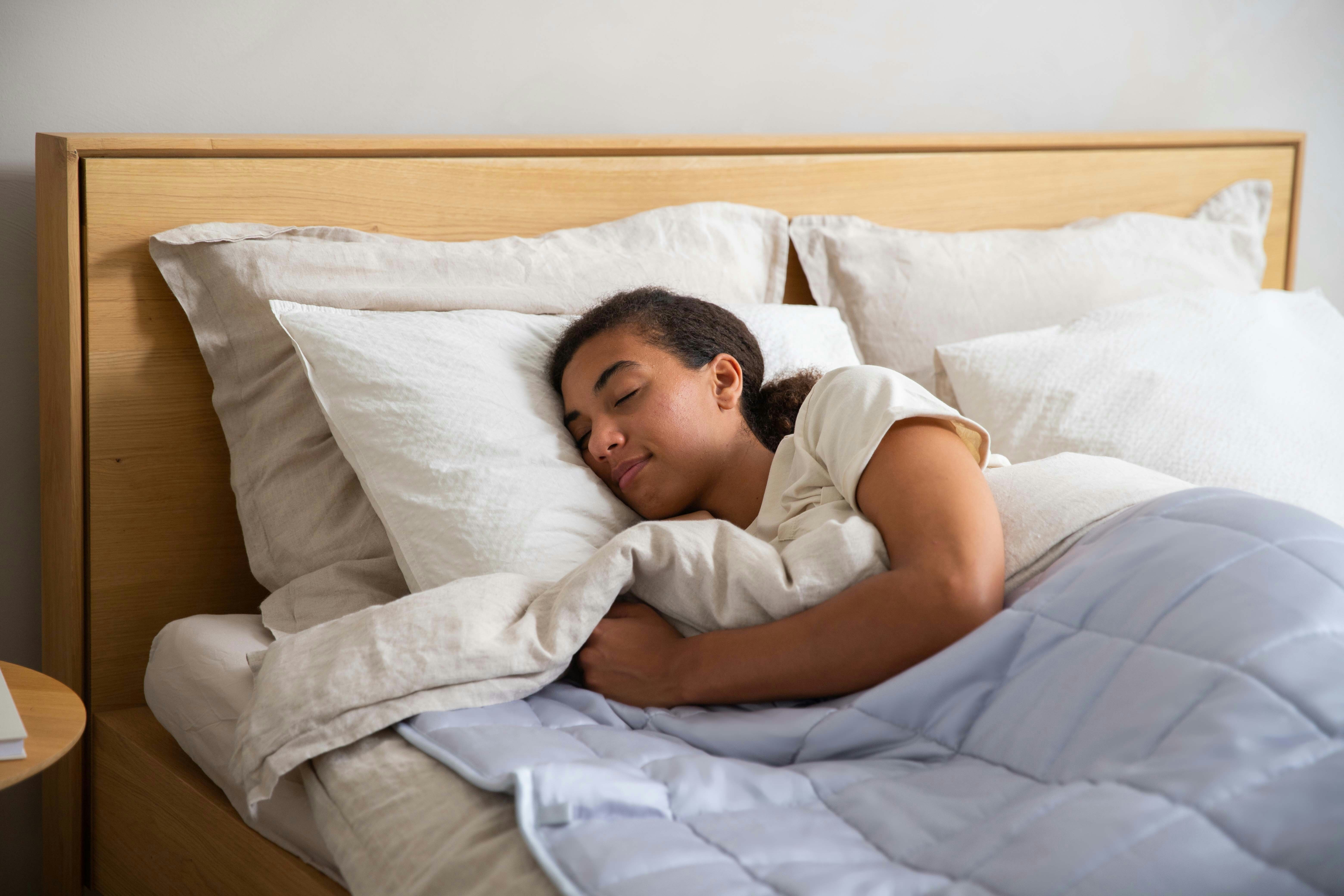
A strength and conditioning program for a teenage athlete gets built around sets, reps, and the rest days between hard sessions. Sleep, when it comes up at all, tends to get a single line — "get your rest" — treated as common sense rather than as a variable with an actual number attached to it. That gets the priority backwards. Sleep has some of the clearest dose-response evidence behind it of any recovery input available to a young athlete, a professional medical body has already put a specific figure on how much of it a teenager needs, and the research on what happens below that figure — to reaction time, to injury risk, to the training adaptation itself — is more direct than most of what gets argued over in program design.
The number: 8 to 10 hours, not "enough"
In 2016, the American Academy of Sleep Medicine convened a 13-member pediatric consensus panel, reviewed 864 published studies over ten months, and used a modified RAND Appropriateness Method — the same style of formal consensus process used to settle clinical practice guidelines — to set age-specific sleep targets.1 For teenagers 13 to 18, the panel's recommendation is a defined range, not a vague gesture at "enough": 8 to 10 hours per 24-hour period, on a regular basis, to promote optimal health.
The panel didn't stop at the number. It was equally direct about what falls below it: sleeping less than the recommended amount is associated with attention, behavior, and learning problems, and with an increased risk of accidents, injuries, hypertension, obesity, diabetes, and depression. That list reads like an injury-prevention checklist as much as a pediatric sleep one.
Measured against that 8-to-10-hour target, the trend line is moving the wrong way. The CDC's Youth Risk Behavior Survey found that in 2023, only 23% of US high school students reported getting 8 or more hours of sleep on an average school night — down from 32% a decade earlier, meaning the shortfall has gotten worse, not better, even as the recommendation itself hasn't changed.2 A National Sleep Foundation poll cited in the American Academy of Pediatrics' own policy statement on the subject found 59% of sixth-to-eighth graders and 87% of high schoolers sleeping below the recommended range on an average school night.3 None of this is a niche problem confined to a handful of overscheduled kids — it's closer to the norm.
Two clocks working against each other: school and sport
Part of why the shortfall is so widespread is that it isn't really a discipline problem — it's a biology problem colliding with a scheduling one. The American Academy of Pediatrics' 2014 policy statement on school start times lays out the mechanism directly: at the onset of puberty, most adolescents experience a sleep-wake "phase delay," a shift of up to two hours relative to their sleep-wake cycle in middle childhood. Nocturnal melatonin release shifts later along with it, to roughly 10 to 11pm, which means a teenager who's told to be asleep by 9:30 isn't being lazy or undisciplined when they're still awake — their own hormones haven't cleared them for sleep yet.3 The policy statement's central recommendation follows directly from that biology: middle and high schools should start no earlier than 8:30am, to leave enough of the morning end of the sleep window intact to compensate for the delayed evening end.
Singapore's own policy sits in front of that line, not behind it. The Ministry of Education's baseline is that schools may set their own start time so long as it isn't earlier than 7:30am — a full hour ahead of the AAP's recommended floor — and while schools have the autonomy to start later, few actually do. A 2023 parliamentary reply from MOE puts a number on how limited that adoption has been: only about one in ten secondary schools start at 8:00am or later on at least three days a week, most junior colleges do, and primary schools generally don't start that late at all.4 The reply is also candid that this isn't being driven by an internal sleep-science review — MOE's own stated reasoning for not standardizing a later start time is that "each school's context differs," a logistics answer to a question the AAP's policy statement frames as physiological.
For a competitive youth athlete, the school bell is only the first constraint on the day, not the only one. Training itself tends to sit at the edges of it — an early session before the first class, or club and squad training that runs into the evening after a full academic day, followed by homework. Two institutions are independently claiming the edges of the day from opposite directions, against a body that biologically doesn't want to fall asleep until closer to 11pm regardless of what either one needs from the following morning. That's a structural squeeze on the sleep window itself, not a question of how badly the athlete wants to rest.
What a week of short sleep does to reaction time — and why the weekend doesn't repay it
The clearest evidence of what actually happens inside that squeezed window comes from a study run on exactly this population, in Singapore. Duke-NUS Medical School researchers recruited 56 adolescents aged 15 to 19 from the country's top-performing schools for a controlled sleep-restriction trial known as the Need for Sleep Study.5 After three nights of a 9-hour baseline, participants spent seven nights at either 5 hours or 9 hours of time in bed, then three recovery nights back at 9 hours, with cognitive performance tracked daily throughout using the psychomotor vigilance task (PVT) — a standard test of reaction time and sustained attention, the same category of split-second seeing-and-reacting that shows up constantly in actual competition.
In the restricted group, PVT lapses climbed in what the researchers describe as a steady, near-linear increase across the week, reaching an average of roughly 18 lapses by the seventh night of 5-hour sleep — a level that exceeds what's typically reported in similarly sleep-restricted adults, and the largest effect size recorded across every cognitive measure in the study. Subjective sleepiness rose after just a single restricted night and then plateaued at that elevated level for the rest of the week. Positive mood fell steadily across the same period.
The finding that should reshape how "catching up on sleep" actually gets thought about is what happened next: after two full recovery nights of 9-hour sleep, sustained attention and subjective sleepiness had not returned to baseline. A week of short nights doesn't get cleared by a weekend of long ones — at least not on the timeline most people assume.
A week of five-hour nights isn't undone by a weekend of nine-hour ones. In the study that tested it directly, adolescents' attention and sleepiness hadn't recovered to baseline even after two full nights of catch-up sleep.
A separate study puts that same reaction-time cost directly on the field. Researchers assessed 86 male professional soccer players, split into an adolescent group (mean age 17.3) and an adult group (mean age 26.3), on a perceptual-ability test administered immediately after a maximal exercise test.6 Within the adolescent group specifically, players with poorer sleep quality — a Pittsburgh Sleep Quality Index score of 5.5 or higher — posted measurably slower reaction times on that post-exercise test than their better-sleeping teammates: 0.9 versus 0.8 seconds, a statistically significant difference. That's not a laboratory abstraction. It's the same age group, the same sport, tested in the exact physical state — post-exertion — that a real match or a hard training session actually produces.
The injury numbers
Slower reaction time and duller attention don't stay contained to a cognitive test score — they show up in injury data too. A study of 112 adolescent athletes (54 male, 58 female, mean age 15) across grades 7 to 12 at a single US school tracked self-reported sleep against a full season of injury records maintained by the athletic department.7 In a multivariate analysis, hours of sleep per night and grade level in school came out as the two strongest independent predictors of injury. Athletes averaging less than 8 hours of sleep a night were 1.7 times more likely to have sustained an injury than athletes averaging 8 or more (95% CI 1.0–3.0, P=0.04); each additional grade level in school carried a further 1.4 times greater likelihood of injury (95% CI 1.2–1.6, P<0.001).
The pattern isn't confined to sport-specific reaction time, either. A CDC analysis of 50,370 US high school students surveyed across four Youth Risk Behavior Surveys between 2007 and 2013 found that reporting 7 or fewer hours of sleep on an average school night was independently associated with a significantly higher likelihood of five separate injury-related risk behaviors — infrequent seatbelt use, infrequent bicycle helmet use, riding with a driver who'd been drinking, drinking and driving, and texting while driving.8 None of those five outcomes is athletic, but they're all downstream of the same impaired judgment and slowed reaction the Need for Sleep Study measured directly in the lab. A sleep-deprived teenager's risk isn't neatly fenced off to the field; it travels with them into every situation that demands quick, accurate judgment.
Sleep is where the training actually pays off
There's a physiological reason cutting sleep short costs a developing athlete more than it costs an adult, beyond the cognitive measures above. Roughly 70% of the body's daily growth hormone secretion occurs in pulses tied specifically to slow-wave sleep, and the amount of hormone released in those pulses tracks with how much slow-wave sleep actually occurs.9 Adolescents spend a proportionally larger share of the night in slow-wave sleep than adults do — which means the physiological window in which a training session's stimulus converts into actual tissue repair and adaptation is, for a teenager, disproportionately concentrated in sleep that a compressed schedule is the first thing to cut. Losing an hour of sleep isn't just losing an hour of rest. For a training athlete, it's shrinking the specific window their body uses to bank the session that came before it.
What this looks like in a real training week
None of the evidence above gets resolved with a slogan, and it isn't solved by the athlete alone — the squeeze is structural, coming from school and training schedules at once, so the fix has to be too.
- Treat the sleep target like a training variable, not an aspiration. Eight to ten hours is a specific number with a consensus statement behind it, the same way a rep range or a rest interval is — it belongs in the plan, not in a closing reminder.
- Design training windows around the academic day that already exists, rather than defaulting to the earliest or latest slot available. Early-morning sessions before a 7:30am bell and late-evening club training after a full school day both claim time from the same short window, on top of a circadian shift that already pushes bedtime later.
- Don't count on the weekend to erase a hard week. The evidence on recovery nights says a week of short sleep isn't repaid on the timeline coaches, parents, or the athletes themselves tend to assume.
- Talk to parents and schools about where the actual sleep opportunity has gone, not just about bedtime habits. A phase-delayed body clock and a 7:30am start time are a scheduling collision, not a motivation problem, and the conversation should be framed that way.
A program can get load, technique, and periodization exactly right and still be working against a young athlete if the hours available to recover from all three keep getting quietly cut from both ends of the day.
Sources
- Paruthi S, Brooks LJ, D'Ambrosio C, Hall WA, Kotagal S, Lloyd RM, Malow BA, Maski K, Nichols C, Quan SF, Rosen CL, Troester MM, Wise MS. "Recommended Amount of Sleep for Pediatric Populations: A Consensus Statement of the American Academy of Sleep Medicine." Journal of Clinical Sleep Medicine 12(6):785–786, 2016. DOI: 10.5664/jcsm.5866.
- Centers for Disease Control and Prevention. "Youth Risk Behavior Survey Data Summary & Trends Report: Dietary, Physical Activity, and Sleep Behaviors, 2013–2023." 2024. Full report (PDF, CDC).
- Adolescent Sleep Working Group, Committee on Adolescence, Council on School Health. "School Start Times for Adolescents." Pediatrics 134(3):642–649, 2014. publications.aap.org/pediatrics/134/3/642.
- Ministry of Education, Singapore. "Schools Start Time" (Parliamentary Reply), 3 July 2023. moe.gov.sg.
- Lo JC, Ong JL, Leong RLF, Gooley JJ, Chee MWL. "Cognitive Performance, Sleepiness, and Mood in Partially Sleep Deprived Adolescents: The Need for Sleep Study." Sleep 39(3):687–698, 2016. pmc.ncbi.nlm.nih.gov/articles/PMC4763363.
- Stavrou VT, Astara K, Tourlakopoulos KN, Daniil Z, Gourgoulianis KI, Kalabakas K, Karagiannis D, Basdekis G. "Sleep Quality's Effect on Vigilance and Perceptual Ability in Adolescent and Adult Athletes." Journal of Sports Medicine 2021:5585573, 2021. pmc.ncbi.nlm.nih.gov/articles/PMC8055422.
- Milewski MD, Skaggs DL, Bishop GA, Pace JL, Ibrahim DA, Wren TA, Barzdukas A. "Chronic Lack of Sleep is Associated With Increased Sports Injuries in Adolescent Athletes." Journal of Pediatric Orthopaedics 34(2):129–133, 2014. DOI: 10.1097/BPO.0000000000000151.
- Wheaton AG, Olsen EO, Miller GF, Croft JB. "Sleep Duration and Injury-Related Risk Behaviors Among High School Students — United States, 2007–2013." MMWR Morbidity and Mortality Weekly Report 65(13):337–341, 2016. pubmed.ncbi.nlm.nih.gov/27054407.
- Van Cauter E, Plat L. "Physiology of Growth Hormone Secretion During Sleep." Journal of Pediatrics 128(5 Pt 2):S32–S37, 1996. pubmed.ncbi.nlm.nih.gov/8627466.
Want this applied to your own program, team, or school? Free 20-minute consult, no obligation.
Book a free consult →