
Research · Youth Athletic Development
Barefoot Training for Young Athletes: What the Research Actually Shows
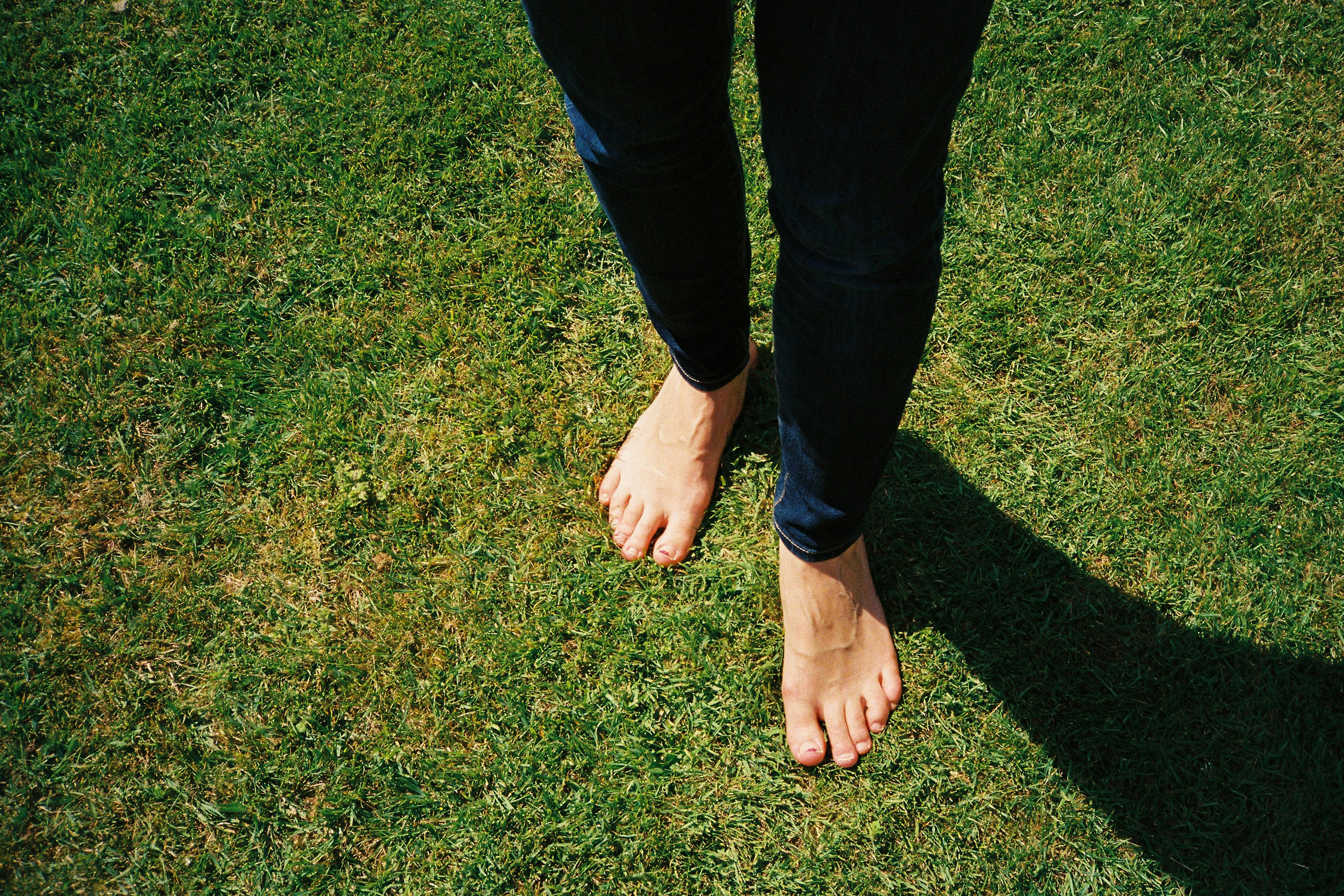
Barefoot and minimalist training has moved from ultramarathon forums into youth sport in the space of a decade. Parents show up to Under-12 track sessions with toe shoes, academies sell "foot health" programs built around zero-drop trainers, and the pitch is almost always the same: modern cushioned shoes are a cast for the foot, they weaken the muscles that should be doing the work, and stripping that support back — ideally as early as possible — builds stronger, more capable feet for life. Some of that pitch has real research behind it. Some of it is running well ahead of what the studies, particularly the ones done in children rather than adults, actually support. For a strength and conditioning coach working with growing athletes, the interesting question is not whether barefoot training "works," but which specific claims hold up, in which populations, and what changes when the skeleton in question is still developing.
The Pitch: Why Barefoot Training Went Mainstream
The underlying theory is biomechanically reasonable. A rigid, cushioned, arch-supported shoe reduces the demand placed on the intrinsic foot muscles — the small stabilizers that control the arch and the toes — much as a habitually braced joint can atrophy. Remove that support and, in theory, those muscles have to work harder, adapt, and get stronger. This is the "foot core" argument, and in adult populations it has genuine support. A 2025 systematic review in the Journal of Clinical Medicine pooled seven controlled studies of barefoot or minimalist strength-oriented training in athletic adults and found consistent increases in intrinsic foot muscle volume, particularly in the flexor digitorum brevis and flexor hallucis brevis, along with measurable gains in toe-flexor and metatarsophalangeal strength in several trials.1 The same review, however, flagged an important gap: every included study was conducted in adults with a mean age around 28, and the authors could not find enough pediatric intervention data to say anything at all about children.1 That gap is the whole reason this topic deserves scrutiny rather than an assumption that adult evidence simply transfers down in age.
What the Youth-Specific Trials Actually Found
Two Australian studies, both run out of the University of Sydney's Biomechanics Laboratory, are among the only controlled pediatric trials that exist. The first was a randomised controlled trial of 70 school students aged 9 to 12, followed for nine months, comparing a conventional structured school shoe against a moderate minimalist alternative.2 The minimalist-shoe group showed improved single-leg balance, and that improvement was statistically linked to greater toe-flexor strength and a longer standing long-jump distance — a real, measured functional adaptation, not a self-reported one.2 A follow-up study from the same research group went further, fitting 30 children aged 9 to 12 with true minimalist shoes (a minimalist index of 92 percent) as their everyday school footwear for two full school terms. Using ultrasound imaging, the researchers documented measurable increases in intrinsic foot muscle cross-sectional area, greater hallux and lesser-toe flexor strength, and improved arch integrity by the end of the intervention.3 Separately, a large cross-sectional study of 810 children and adolescents aged 6 to 18 across South Africa and Germany compared those raised habitually barefoot against habitually shod peers and found significantly higher static arch height indices and greater foot pliability in the barefoot group across every age band tested, along with larger hallux angles — a marker of less favorable toe alignment — in the shod group.4 Taken together, this is the strongest evidence in the whole literature: in children specifically, meaningful barefoot or near-barefoot exposure is associated with measurable foot-strength and structural benefits, not just a mechanism borrowed from adult data.
It is worth noting what the lead researcher on the Sydney trials, Dr Shayan Quinlan, said about applying these findings broadly: very flexible or minimalist shoes are not automatically the right choice for every child or every foot type, and individual concerns are better worked through with a health professional than assumed away by a product category.5 The trial results support minimalist footwear as one legitimate tool for pediatric foot development. They do not support treating every child's foot the same way, and they say nothing about high-volume running training, which is a different loading problem entirely.
The Missing Piece: Loading Rates and Injury Risk
That last distinction matters because the strongest caution in the pediatric literature comes from exactly the activity barefoot advocates in youth sport are often most enthusiastic about: running. A 2024 pilot study out of Oregon State University's FORCE Lab put fourteen active boys aged 8 to 12 through short runs in three conditions — barefoot, a traditional cushioned running shoe, and a minimal running shoe — while measuring impact loading through a force plate.6 The average vertical loading rate, a metric linked to bone stress injury and plantar fasciitis risk, was 173.86 bodyweights per second running barefoot and 138.71 bodyweights per second in the minimal shoe, compared with 78.06 bodyweights per second in the traditional shoe — more than double the loading rate the moment the shoe's cushioning came off, with no adaptation period built in.6 The research team's own summary of the finding was blunt: clinicians and coaches should be cautious about transitioning young, habitually shod runners into barefoot or minimal-shoe running given the immediate, dramatic jump in loading rates associated with injury risk.7
No controlled trial has yet tracked bone-injury outcomes in children over months of minimalist running, which is itself a gap in the evidence. But the mechanism has been demonstrated in adults, and there is little biomechanical reason to think a child's skeleton would be more forgiving of it. In a frequently cited 2013 trial, 36 experienced adult runners were split between a control group and a group gradually transitioning into Vibram FiveFingers over ten weeks; post-training MRI showed that 10 of 19 runners in the minimalist group developed new bone marrow edema — a precursor finding to stress fracture — compared with far fewer in the control group, despite what the researchers considered a conservative, gradual transition protocol.8 If a supervised, slow transition in adults still produced measurable bone stress in roughly half the group, the same physics applied to an enthusiastic, unsupervised switch in a child are not something to wave off.
Why Growing Feet Are a Different Risk Calculus
The reason youth athletes deserve a more conservative approach than the adult foot-core literature suggests isn't really about muscle strength at all — it's about the growth plates. Between roughly ages 8 and 15, the calcaneus carries an unossified growth plate, the apophysis, at the point where the Achilles tendon attaches. During growth spurts, bone length increases faster than the muscle-tendon unit can lengthen to match it, which puts that growth plate under chronic traction stress from the calf and Achilles complex.9 The resulting overuse injury, calcaneal apophysitis or Sever's disease, is the most common cause of heel pain in this age group, disproportionately affects boys, and is explicitly linked in the clinical literature to poorly cushioned footwear and high-impact loading on hard surfaces.9 It is also common in athletes who train barefoot for part of their sport, such as gymnasts and dancers, for exactly this reason — removing cushioning increases the traction and impact load reaching a growth plate that is already the weakest link in the chain during a growth spurt.9
The two properly controlled youth trials found real, measurable gains in toe strength and balance from minimalist footwear — but the same age group also showed impact loading rates that more than doubled the moment cushioning came off, with no adaptation period at all.
This is the tension at the center of the topic. The foot-core adaptations documented in the Sydney trials came from everyday minimalist school shoes worn for walking and normal daily activity over months, not from a rapid switch into barefoot sprint or distance training. The loading-rate spike documented in the Oregon State pilot came from exactly that kind of higher-impact activity, in the same age bracket, with no transition period at all. Both findings are real. They are not describing the same intervention, and conflating "minimalist footwear can strengthen a child's foot" with "a child should train and run barefoot" skips over the growth-plate variable entirely.
What the Evidence Actually Supports for Coaches
Given what the research does and does not show, a handful of practical conclusions are defensible without overstating the science in either direction.
- Short, supervised barefoot or minimalist drill work — single-leg balance, short-foot activation, low-impact mobility circuits — has real support in pediatric trials for building intrinsic foot strength and balance, and is a comparatively low-risk way to apply the "foot core" concept.2,3
- Everyday minimalist or lightweight, flexible footwear for walking and general daily wear has controlled-trial support in the 9-to-12 age range for improving arch integrity and toe-flexor strength over a school-term timeframe.3
- High-volume running, sprinting, or plyometric work done barefoot or in minimal shoes is where the evidence turns cautionary — loading rates more than double in this age group, and no youth trial has yet established a safe transition timeline the way partial evidence exists for adults.6,8
- Any transition to less-cushioned footwear for higher-impact training should be gradual and monitored, on the logic — imperfect as the adult evidence base is — that even a slow, staged ten-week transition still produced new bone-stress findings in a controlled adult study.8
- Heel pain during a growth spurt, especially in an athlete increasing barefoot or minimal-shoe training load, should be treated as a plausible sign of calcaneal apophysitis rather than dismissed, given how strongly footwear and impact are implicated in that condition.9
- Not every foot is the same starting point. The researchers behind the pediatric RCTs were explicit that minimalist footwear is not a universal prescription, and existing flatfoot, gait asymmetry, or pain patterns warrant individual assessment rather than a blanket policy.5
The Bottom Line
The honest summary is that barefoot and minimalist approaches to youth training sit on genuinely useful but narrower ground than the marketing around them suggests. The proprioception argument has real mechanistic support — a 2024 study found that ultra-minimalist footwear on varied terrain improved postural control markers more than either standard shoes or true barefoot walking, because a thin sole preserves ground-sensing feedback while filtering out the sharp discomfort that makes bare-skin contact on rough surfaces counterproductive.10 The foot-strength argument has direct pediatric RCT support, which is rarer and more valuable than it sounds given how much youth-training advice runs on adult data alone.2,3 But the injury-risk side of the ledger is also pediatric-specific and just as real: loading rates that more than double the moment shoes come off, and a growth plate at the heel that is uniquely vulnerable to exactly that kind of increased traction and impact during the years most youth athletes are training hardest.6,9 For a strength and conditioning coach, that argues for treating barefoot and minimalist work as a targeted tool — daily footwear choice and short strength drills on one side of the ledger, high-volume impact training on the other — rather than a single philosophy applied uniformly to every young athlete's feet.
Sources
- Rodríguez-Longobardo C, Gómez-Ruano MÁ, Canosa-Carro L. 'Effects of Barefoot and Minimalist Footwear Strength-Oriented Training on Foot Structure and Function in Athletic Populations: A Systematic Review.' Journal of Clinical Medicine, 2025;14(21):7629. https://pmc.ncbi.nlm.nih.gov/articles/PMC12609320/
- Fong Yan A, Quinlan S, et al. 'The long-term effects of wearing moderate minimalist shoes on a child's foot strength, muscle structure and balance: a randomised controlled trial.' Gait & Posture, 2022. https://www.sciencedirect.com/science/article/abs/pii/S0966636221006378
- Fong Yan A, Quinlan S, Cheung RTH. 'Minimalist school shoes improve intrinsic foot muscle size, strength, and arch integrity among primary school students.' Journal of Sports Sciences, 2024;42(12):1157-1163. https://www.tandfonline.com/doi/full/10.1080/02640414.2024.2386213
- Hollander K, de Villiers JE, Sehner S, Wegscheider K, Braumann KM, Venter R, Zech A. 'Growing-up (habitually) barefoot influences the development of foot and arch morphology in children and adolescents.' Scientific Reports, 2017;7:8079. https://pmc.ncbi.nlm.nih.gov/articles/PMC5556098/
- University of Sydney. 'Light, flexible school shoes the best option for kids: new research.' January 2022. https://www.sydney.edu.au/news-opinion/news/2022/01/24/light--flexible-school-shoes-the-best-option-for-kids--new-resea.html
- Traut AG, Hannigan JJ, Ter Har JA, Pollard CD. 'Influence of Footwear Selection on Youth Running Biomechanics: A Pilot Study.' Sports Health, 2024;16(6):913-919. https://pubmed.ncbi.nlm.nih.gov/38073161/
- Oregon State University College of Health. 'Barefoot and minimal shoes may increase injury risk in young runners.' March 2024. https://health.oregonstate.edu/news-and-stories/2024-03/barefoot-and-minimal-shoes-may-increase-injury-risk-young-runners
- Ridge ST, Johnson AW, Mitchell UH, Hunter I, Robinson E, Rich BS, Brown SD. 'Foot bone marrow edema after a 10-week transition to minimalist running shoes.' Medicine and Science in Sports and Exercise, 2013;45(7):1363-1368. https://pubmed.ncbi.nlm.nih.gov/23439417/
- Smith JM, Varacallo MA. 'Sever Disease (Calcaneal Apophysitis).' StatPearls [Internet], updated 2024. https://www.ncbi.nlm.nih.gov/books/NBK441928/
- Biscarini A, Calandra A, Marcucci A, Panichi R, Belotti A. 'Enhanced Foot Proprioception Through 3-Minute Walking Bouts with Ultra-Minimalist Shoes on Surfaces That Mimic Highly Rugged Natural Terrains.' Biomimetics, 2024;9(12):741. https://pmc.ncbi.nlm.nih.gov/articles/PMC11672953/
Want this applied to your own program, team, or school? Free 20-minute consult, no obligation.
Book a free consult →