
Personal · Combat Sports Conditioning
What Actually Conditions a Fighter, and What's Just Tradition
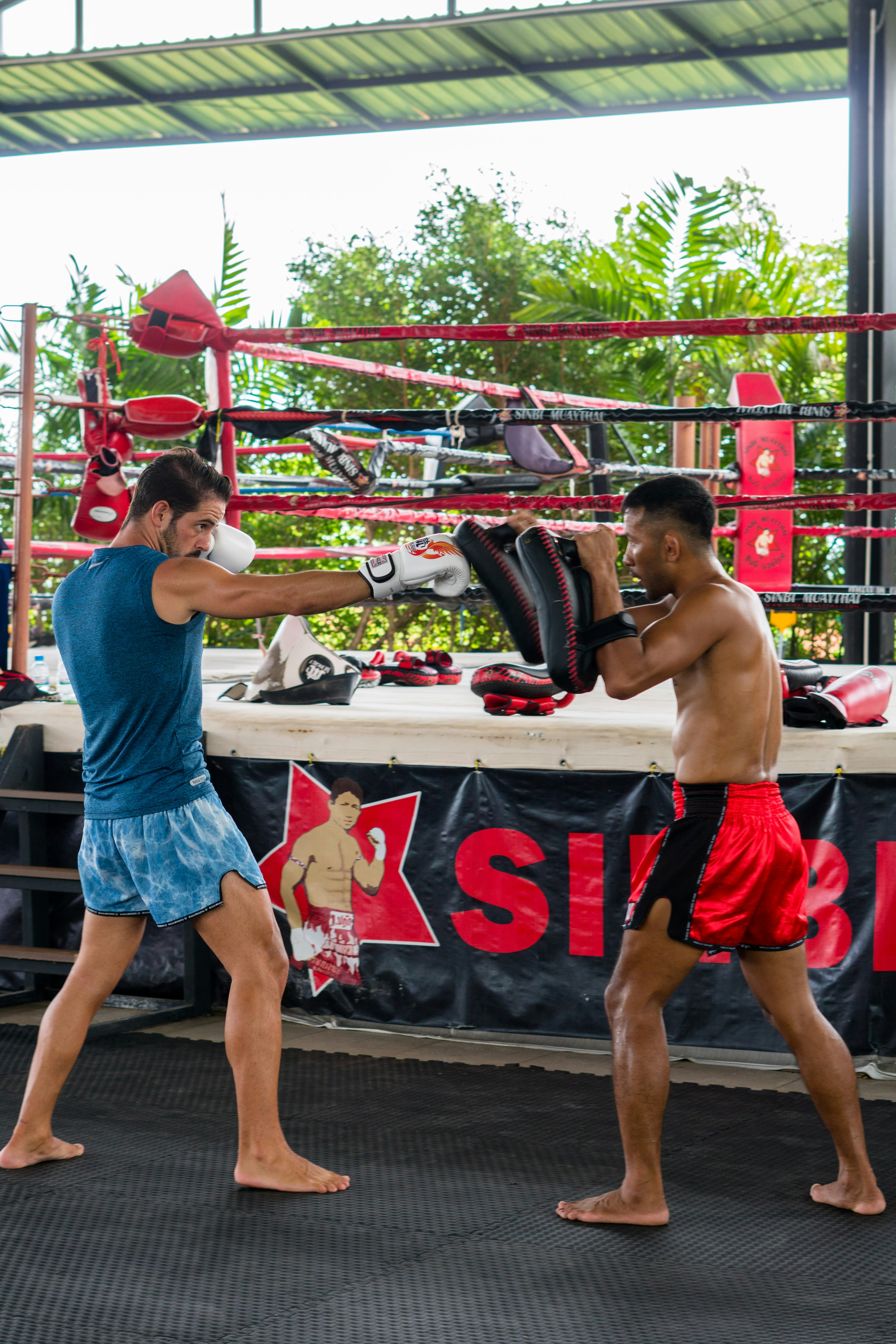
Every combat sport I've trained or coached in carries a conditioning mythology that predates the science by decades. Long morning roadwork. Skipping rope until your calves give out. "Championship rounds" of shadowboxing done purely for volume, on the theory that if you can survive fifteen rounds of shadowboxing you can survive three real ones. Some of it holds up under scrutiny. A lot of it survives for a much simpler reason — it's tradition, passed from coach to fighter for a generation, and nobody went back and actually checked it against what a round, or a real confrontation, demands of the body once the tools to measure that existed.
As a Muay Kru and a Krav Maga instructor who also holds the NSCA-CSCS and did my Master's in Sports Coaching, that gap — between "this is how it's always been done" and "this is what the evidence says actually transfers" — is the thing I keep coming back to. It's not a case for throwing tradition out. It's a case for holding it to the same standard I'd hold any other training method to. Here's my honest read on where that line actually falls.
What a round actually asks of the body
Start with what's measurable. Sports scientists have put fighters through real and simulated Muay Thai matches wearing heart rate straps and portable gas analysers, and the picture that comes back is consistent: this is not steady-state exercise. In one study of skilled male fighters during real matches, heart rate and blood lactate stayed elevated well above the anaerobic threshold for the duration of the contest — average heart rate in the high 170s bpm, with blood lactate readings in the high single digits and peaks well above 10 mmol/L, both signs of heavy anaerobic glycolytic demand layered on top of a taxed aerobic system.1 A separate simulation study using portable metabolic carts found oxygen uptake and heart rate sitting above anaerobic threshold for essentially the entire match, with a sharp spike in anaerobic glycolysis in the very first round that gradually tapered as the match wore on.2
Put simply: a fight isn't one energy system politely taking turns with another. It's explosive, alactic bursts — a combination, a clinch entry, a counter — layered onto a rising aerobic cost that climbs the longer the exchange goes on, on top of a glycolytic system that's already been dipped into repeatedly and hasn't fully recovered. Any conditioning method that only trains one slice of that — pure long steady aerobic work, or pure short sprints with full recovery — is training a caricature of the actual demand, not the demand itself.
A fight isn't one energy system politely taking turns with another. Training only the aerobic slice, or only the alactic slice, is training a caricature of the demand — not the demand itself.
Roadwork: where the tradition actually earns its keep, and where it doesn't
I'm not going to stand here as a Muay Kru and tell you roadwork is worthless — that would be its own kind of dishonesty, swapping one unexamined belief for another. A genuine aerobic base does real work: it raises the ceiling your anaerobic system operates underneath, and it speeds recovery between the explosive bursts a fight is actually made of. The physiological data above makes that plain — the aerobic system is working hard, and working harder as a match goes on. What the tradition gets wrong isn't that aerobic capacity matters. It's the assumption that steady, low-intensity distance running is the best — or only — way to build it, and that logging hours of it is sufficient conditioning on its own.
That assumption is the part the newer research actually tests directly, and it doesn't hold up well.
What the evidence says actually transfers
A 2025 systematic review and meta-analysis in Frontiers in Physiology pooled 20 studies and nearly 400 athletes across Olympic combat sports — judo, taekwondo, wrestling, boxing, karate, fencing — comparing high-intensity interval training against traditional conditioning approaches.3 The result wasn't a marginal edge. HIIT produced a large improvement in aerobic capacity (VO2max) and a small-to-large improvement in anaerobic power output (peak and mean power both improved, mean power by the larger margin), whether the intervals were run on foot or performed using sport-specific technique. In other words: short, hard, repeated efforts — not slow miles — were what moved the numbers that actually describe fight fitness. The review's own authors rate the certainty of that evidence as low, given the usual problems with small combat-sport training studies — so I'd call this a strong signal, not a closed case.
The most striking piece of evidence I've seen on this, though, is much more specific to my own sport. A 2026 randomised controlled trial in Frontiers in Sports and Active Living took twenty national-level Muay Thai fighters and split them into two groups for two weeks.4 One group kept their normal training load — five to six sessions a week of pads, bag work, and sparring. The other added just six sessions of a Muay Thai-specific interval protocol: ten rounds of thirty seconds maximal-effort punching followed immediately by thirty seconds of continuous maximal roundhouse kicks against a heavy bag, with thirty seconds of rest between rounds. Two weeks. Six sessions. The interval group's Wingate-tested peak anaerobic power jumped by over a full watt per kilogram of bodyweight — a massive effect size — while their aerobic capacity improved by roughly three times as much as the control group's, despite doing far less total training volume. The lesson isn't "do less." It's that the specific shape of the effort — matching the work-to-rest structure of an actual exchange, using the actual strikes — did more in six sessions than a full training week of general conditioning did over the same fortnight.
[ASK COACH DZUL: a real example from your own coaching of an athlete or client whose conditioning or fight performance visibly improved after you changed their programming from generic roadwork/steady-state cardio toward sport-specific interval work — what changed in the program, and what you actually observed.]
Krav Maga isn't a round sport, and that changes the answer
Everything above is built on data from ring sports with rounds, rest periods, and a pacing strategy. Krav Maga has none of that, and I think that difference gets flattened far too often when people talk about "combat sports conditioning" as one category. A self-defence encounter isn't three three-minute rounds with a minute's rest between them. It's an unscheduled, unpredictable burst of maximal output — often preceded by an adrenaline dump that spikes heart rate before a single strike has landed — with no negotiated recovery period built in. There's no corner to retreat to between exchanges.
That has real implications for how I think about preparing someone for it. Pure aerobic conditioning barely touches the actual demand. But pure anaerobic-power intervals modelled on ring-sport round structure don't fully match it either, because the structure itself — rounds, pacing, a known endpoint — is the part that's missing from a real confrontation. What I actually care about for Krav Maga is closer to unstructured repeated-effort capacity: the ability to produce a maximal, technically sound output with no warning, recover just enough to do it again immediately, and keep doing that for an unknown duration, all while managing an adrenaline response most sport-specific conditioning protocols were never designed to simulate.
A recent cross-sectional study of Krav Maga trainees found that injury rates, calculated per 100 training hours, were significantly higher among people training at high intensity compared to moderate or minimal intensity, and that lower-limb injuries — sprains and ligament tears from the rapid pivots and dynamic footwork the discipline demands — were the single largest injury category.5 Read alongside the physiological point above, that tells me something practical: conditioning for Krav Maga isn't only a cardiovascular question. It's also a question of whether the ankles, hips, and connective tissue doing that footwork have been built to tolerate the specific, repeated, high-force demand training intensity actually places on them — not just whether the lungs can keep up.
[ASK COACH DZUL: a real example from your Krav Maga instructing — a student or class where you changed how you conditioned people for scenario/pad drills after noticing a fatigue-related technical breakdown or an injury pattern like the one above, and what specifically you changed.]
The durability piece nobody puts in a highlight reel
This is where I think conditioning conversations in combat sports go wrong most often: they stop at "can you keep breathing," and never get to "can your body keep absorbing force." A 2016 epidemiological study surveying 195 professional and amateur Muay Thai fighters found 55 injuries per 100 fight exposures, with the extremities — not the head — accounting for the largest single share at close to 59%.6 That's not a knockout-rate statistic. It's a joint, tendon, and connective-tissue statistic, and it says the body part most often failing under fight load isn't the one people worry about most.
A conditioning program that only chases VO2max and anaerobic power, and never asks whether the shins, ankles, and hips can actually tolerate the repeated impact of the sport those energy systems are being trained to fuel, is solving half the problem. The evidence on energy systems tells you what to train. The injury data tells you what you're training it to survive.
What I actually build a program around
None of this is a case against tradition for tradition's sake, or a case that every old-school method is obsolete. It's a case for holding every piece of a conditioning program — including the parts that have "always been done this way" — to the same question I'd ask of any new training fad: does this actually match what the sport, or the confrontation, demands, or does it just feel like hard work?
For a Muay Thai fighter, that means the aerobic base still gets built — but partly through genuine sport-specific interval work, not distance running alone, and layered under anaerobic capacity work that mirrors the real work-to-rest structure a round imposes rather than an arbitrary sprint-and-jog ratio borrowed from track training. It also means structural and tendon capacity — shins, ankles, hips — get trained deliberately as their own component, not assumed to come along for free because the cardio work is hard. For Krav Maga, it means treating the absence of rounds, pacing, and a known endpoint as the actual design brief for conditioning, rather than routing around it with a boxing-conditioning template that was built for a different set of rules. And for both, it means testing before assuming: knowing an athlete's actual repeated-effort capacity and current durability before writing the program, the same testing-first starting point I'd insist on for any athlete regardless of sport.
Tradition built the culture of these sports, and I don't think that culture is worth discarding. But it doesn't get a free pass on the physiology just for being old. Increasingly, when it's actually tested against what a round or a real confrontation demands, that's exactly the standard the evidence is holding it to as well — and where it survives that test, as a real aerobic base clearly does, it survives for a better reason than "it's tradition." It survives because it's true.
Sources
- Cappai I, Pierantozzi E, Tam E, Tocco F, Angius L, Milia R, Crisafulli A. "Physiological Responses and Match Analysis of Muay Thai Fighting." International Journal of Performance Analysis in Sport 12(3):507–516, 2012. doi.org/10.1080/24748668.2012.11868615.
- Crisafulli A, Vitelli S, Cappai I, Milia R, Tocco F, Melis F, Concu A. "Physiological Responses and Energy Cost During a Simulation of a Muay Thai Boxing Match." Applied Physiology, Nutrition, and Metabolism 34(2):143–150, 2009. pubmed.ncbi.nlm.nih.gov/19370044.
- Yue F, Wang Y, Yang H, Zhang X. "Effects of High-Intensity Interval Training on Aerobic and Anaerobic Capacity in Olympic Combat Sports: A Systematic Review and Meta-Analysis." Frontiers in Physiology 16:1576676, 2025. pmc.ncbi.nlm.nih.gov/articles/PMC12098572.
- Tengku Sulaiman RS. "Muay Thai–Specific High-Intensity Interval Training Enhances Anaerobic Power in Elite Fighters." Frontiers in Sports and Active Living 8:1831605, 2026. frontiersin.org/journals/sports-and-active-living/articles/10.3389/fspor.2026.1831605.
- Yaacobi E, Shachar T, Shilo Yaacobi D, et al. "Injury Patterns in Krav Maga Training: A Cross-Sectional Study." Cureus 16(12):e75619, 2024. pmc.ncbi.nlm.nih.gov/articles/PMC11638398.
- Strotmeyer S Jr, Coben JH, Fabio A, Songer T, Brooks M. "Epidemiology of Muay Thai Fight-Related Injuries." Injury Epidemiology 3:30, 2016. pmc.ncbi.nlm.nih.gov/articles/PMC5149460.
Want this applied to your own program, team, or school? Free 20-minute consult, no obligation.
Book a free consult →