
Personal · Parents & Youth Sport
The Well-Meaning Mistakes That Push Young Athletes Toward Burnout
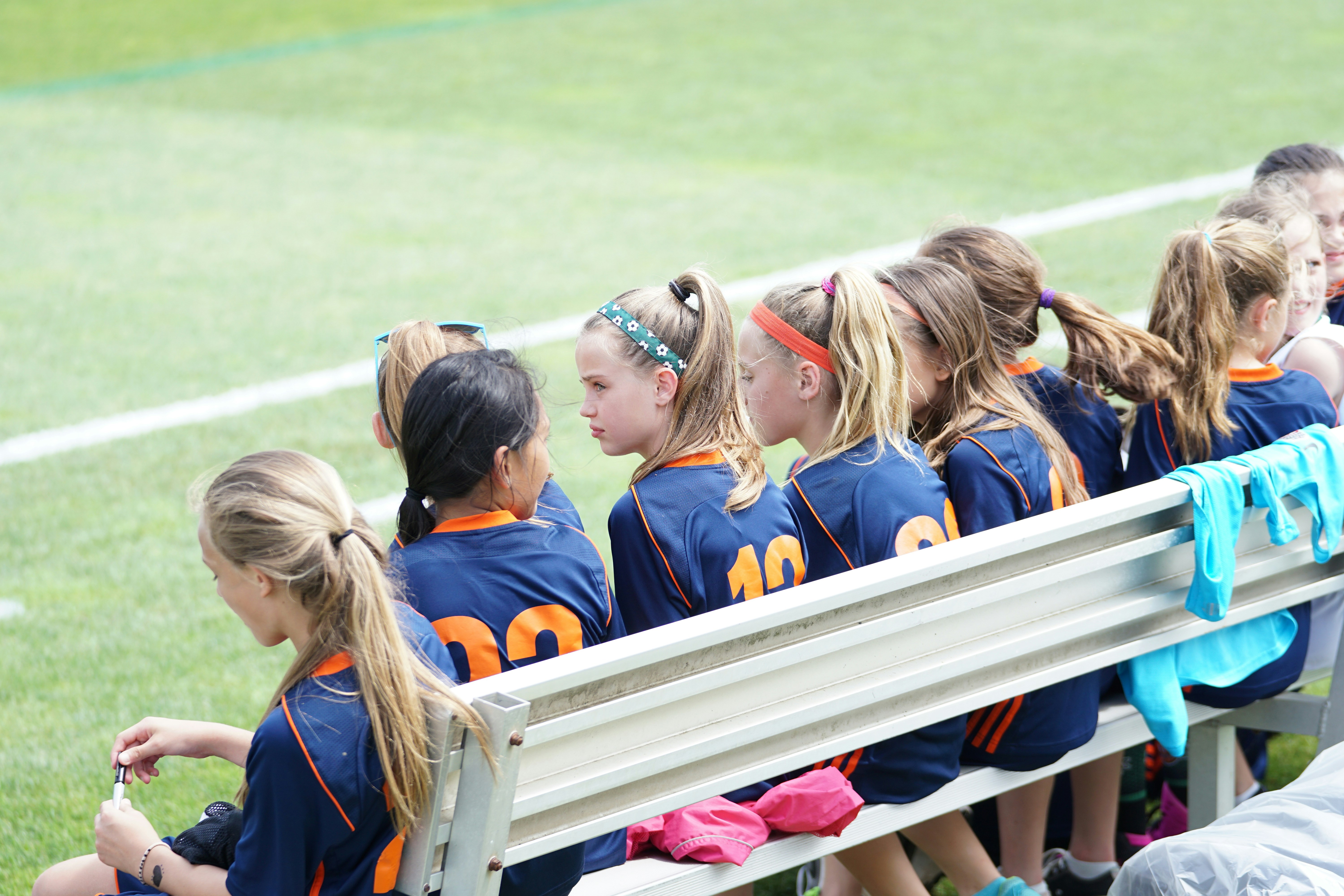
Over the years running strength and conditioning sessions for young athletes — and more recently doing the same inside MOE schools through Catch Them Young — I've had a version of the same conversation with parents more times than I can count. It usually starts the same way: a parent wants to know what more they should be doing to help their kid get better, faster, further. Almost never do they ask whether they might already be doing too much, or the right amount of the wrong thing.
[ASK COACH DZUL: a specific, real pattern or recurring conversation with parents that prompted this article — e.g. a particular question he gets asked most often, or a moment that made him want to write this down]
That gap matters, because the research on why kids actually leave sport keeps landing in the same place, and it isn't where most parents are looking. Roughly 70% of youth athletes in the United States quit organised sport by age 13, according to a 2024 clinical report from the American Academy of Pediatrics.1 The reasons aren't a shortage of parental investment. If anything it runs the other way — too much organised training, too much early narrowing into one sport, too much weight placed on outcome, arriving too early in a kid's development to carry it. The Aspen Institute's Project Play tracks a version of the same slide into the teenage years: regular participation among 15–17-year-olds sits at roughly 35%, even though more than half of teens report having "tried" a sport at least once, and the cost of organised youth sport has climbed by roughly 46% since 2019 — pricing families out of exactly the free, low-pressure play that protects kids from burnout in the first place.2
None of the five patterns below come from parents who don't care. They come from parents who care a great deal, acting on assumptions that either used to be true, or were never quite true to begin with. Here's what the evidence actually says about each one.
1. Filling every hour of the calendar
The instinct makes sense on its face: more training should mean more improvement. But the AAP's 2024 clinical report on overuse injury, overtraining, and burnout names training volume and overscheduling as the two leading risk factors for burnout in young athletes1 — not a talent ceiling, not an injury, just too much organised activity without enough recovery built around it. The report specifically calls out a pattern that's become common rather than rare: young athletes on multiple teams in the same season, training one sport year-round with no real off-season, and weekend tournaments that pack in four or five full games in a single day with no meaningful recovery between them.
The physiological version of this is overtraining syndrome — a persistent decline in performance driven by an imbalance between training stress and recovery, layered with fatigue, sleep disruption, and mood changes that don't resolve with a night's rest. Prior research cited in the same report estimates that by the time they reach adulthood, the career rate of overtraining syndrome among young athletes may run as high as 35%.1 A separate Swedish study found that roughly 9% of elite adolescent athletes met the clinical definition of burnout at any given time.1 These aren't abstractions — they're the athlete-facing cost of a calendar with no white space in it.
The corrective guidance isn't complicated. The National Athletic Trainers' Association's statement on sport specialisation puts real numbers to it: no more than one organised sport per season, a rough ceiling of weekly training hours equal to the athlete's age in years, at least one full rest day every week, and two to three months off from any given sport each year.3 None of that is about doing less for its own sake. It's recovery built into the programme as a scheduled input, not left to happen if there's time left over.
[ASK COACH DZUL: a specific overscheduling pattern he's actually seen with a young athlete's training calendar — e.g. multiple teams, back-to-back tournaments, no off-season — described generally enough not to identify anyone]
2. Betting everything on one sport, early
This one is usually driven by fear more than by a plan: if my kid doesn't specialise now, someone else's kid will get ahead of them. The data on where advancement actually comes from runs close to the opposite direction. NATA's own statement on specialisation points out that roughly 90% of athletes drafted into the NFL in 2018 played multiple sports growing up3 — sampling, not narrowing, shows up in the background of elite athletes at a far higher rate than early single-sport focus does. The same statement is direct about the odds early specialisation is usually chasing: only around 2% of high school athletes go on to receive a college athletic scholarship.3
The AAP's report adds the injury side of the picture. Growing bones and the growth plates at their ends are measurably less tolerant of repetitive stress than mature bone, and specialising in a sport with heavy biomechanical repetition — pitching, distance running, overhead throwing, tumbling — concentrates that stress on the same tissues, week after week, with no other movement pattern to balance the load.1 Two separate studies cited in the report found that athletes who specialised early were more likely to quit specifically because of burnout, not injury, not a coach's decision, not a lack of ability.1 The stated goal of specialising early — get ahead, stay ahead — ends up undercut by the mechanism used to chase it.
[ASK COACH DZUL: a specific pattern he's seen with parents pushing early specialization in a particular sport — what it actually looked like, without naming the athlete or family]
3. Coaching from the sideline
Shouted instructions, real-time tactical corrections, a running commentary on every mistake as it happens — it comes from wanting to help, and it tends to land as something else entirely. Researchers at George Washington University asked 142 young soccer players, 37 coaches, and 57 parents to map out everything that makes youth sport fun, and sorted the results into 81 distinct factors.4 Winning ranked 40th. The factors that actually topped the list were trying hard, being a good sport, and playing for a coach who stayed positive — together labelled the "youth sport ethos" by the research team.4 Adults on the sideline are, on average, optimising loudly for the one thing that matters least to the kid actually playing.
The kids in that study weren't asking to be coached less. They were asking to be coached toward effort and enjoyment instead of outcome — and the data says that's also what keeps them playing.
The AAP's report backs this up from the burnout side directly: burnout rates are consistently lower when an athlete defines success by intrinsic, personally meaningful goals, and higher when they perceive that the adults around them — parents, coaches, or teammates — are measuring them by performance instead.1 Coaching from the stands, however well-meant, adds one more performance-measuring voice to a kid's afternoon at exactly the moment they're supposed to be absorbed in playing rather than being evaluated.
[ASK COACH DZUL: a specific sideline moment he's witnessed — a parent's behaviour during a game and its visible effect on the kid — described without identifying anyone]
4. Treating pain like a weakness to push through
"Walk it off," "it's probably nothing," "don't let the team down" — these usually come from a good place, often a parent's own memory of playing hurt as a kid and being fine. But a Safe Kids Worldwide survey of 1,000 young athletes in grades 7 through 10 found that 42% had downplayed or hidden an injury specifically so they could keep playing, and 62% said they personally knew a teammate who had done the same.5 That isn't a handful of tough-it-out outliers. That's close to how the culture actually runs by default.
The physiology explains why this is a worse bet for a child than it may have been for their parent at the same age. Overuse injuries build from cumulative microtrauma rather than a single traumatic event, and growing bone — along with the growth plates at its ends — is measurably less tolerant of repetitive stress than mature bone.1 Left alone, these injuries tend to follow a predictable and worsening path: pain after activity, then during activity without limiting it, then during activity while limiting it, then finally at rest — by which point recovery is measured in months rather than days. Sever's disease, Osgood-Schlatter disease, "little league shoulder," and "gymnast's wrist" aren't dramatic names for dramatic injuries. They're overuse injuries at specific growth-plate sites, and each one is a symptom of a training load a young athlete's body wasn't given enough time to recover from.1
- Pain that changes with activity — worse during or after training, better with rest — is the clearest overuse signal. That's a different pattern from ordinary "growing pains," which don't track with activity at all.
- A change in how a child moves — a new limp, favouring one side, avoiding a specific motion — is worth acting on before they can fully explain why.
- "I'm fine" from a kid who wants to keep playing isn't the same information as an actual assessment. Kids under-report pain on purpose, not by accident, for exactly the social reasons the Safe Kids data describes.
[ASK COACH DZUL: a specific instance of a young athlete downplaying or hiding pain that he's actually encountered in his own coaching, described generally without identifying the athlete]
5. Comparing siblings
"Your brother could already do this at your age" is rarely said to wound. It's usually meant as motivation, borrowed from a family's own shorthand for pushing each other. But a 2024 study in the European Journal of Sport Science offers a useful frame for why it tends to backfire anyway. It examined how a sibling's sport participation shapes whether a young athlete experiences their family's feedback as "task-involving" — focused on effort and personal improvement — or "ego-involving" — focused on comparison and outcome.6 Athletes whose siblings played a different sport, where direct comparison wasn't really available, reported more of the task-involving climate that protects motivation over time. Comparison, even when well-meant, pulls a child's frame of reference toward "am I better or worse than," which is precisely the climate the wider burnout research already flags as the one most likely to make a kid disengage.1
Two siblings are also, almost by definition, not running the same developmental clock — different growth timing, different rates of skill acquisition, different levels of interest in the same sport at the same age. A comparison that treats them as if they're on the same timeline measures both of them against a standard neither one actually agreed to.
[ASK COACH DZUL: a specific example of siblings being compared that he's seen in a family he's coached, described generally without naming them]
The pattern underneath all five
Every one of these mistakes is a version of the same well-intentioned miscalculation: treating a child's experience of sport as something to be maximised — more hours, more specialisation, more coaching input, more grit through pain, more competitive comparison at home — when the evidence keeps pointing the other way. The kids who stay in sport the longest, get hurt the least, and by most accounts go on to perform best as they mature are the ones whose experience of it stayed closest to their own sense of ownership over it: their pace, their effort, their reasons for showing up.
That's the assumption I try to build a programme around — testing where a young athlete actually is rather than assuming it from their age or their sibling's path, treating recovery as a scheduled part of the plan rather than an interruption to it, and treating a parent's role as protecting that sense of ownership rather than managing it from the sideline. None of that is a lower bar to hold a young athlete to. If anything it's harder, because it asks a parent to sit with real discomfort — watching a kid try a second sport instead of specialising, watching them sit out a tournament to actually rest, staying quiet during the exact game they most want to shout through. The research keeps saying that discomfort is where the real advantage is sitting.
Sources
- Brenner JS, Watson A; AAP Council on Sports Medicine and Fitness. "Overuse Injuries, Overtraining, and Burnout in Young Athletes." Pediatrics 153(2):e2023065129, 2024. Full clinical report (AAP).
- The Aspen Institute, Project Play. "State of Play 2025: Trends in Youth Sports — Participation Trends." projectplay.org.
- National Athletic Trainers' Association. "NATA Releases Official Statement of Recommendations to Reduce the Risk of Injury Related to Sport Specialization for Adolescent and Young Athletes." nata.org.
- Visek AJ, Achrati SM, Mannix HM, McDonnell K, Harris BS, DiPietro L. "The Fun Integration Theory: Toward Sustaining Children and Adolescents Sport Participation." Journal of Physical Activity and Health 12(3):424–433, 2015. Journal page (Human Kinetics).
- Safe Kids Worldwide. "Changing the Culture of Youth Sports" research report, August 2014. safekids.org.
- Chu TL(A), Garst BJ. "Opposites Attract? Mixed-Sex Parents' and Siblings' Sport Participation Differentiates Youth Athletes' Perceived Parenting Climates." European Journal of Sport Science 24(6):804–811, 2024. Full text (PMC).
Want this applied to your own program, team, or school? Free 20-minute consult, no obligation.
Book a free consult →