
Research · Training Science
"Functional Training" Is a Marketing Term — Here's What the Research Actually Says Works
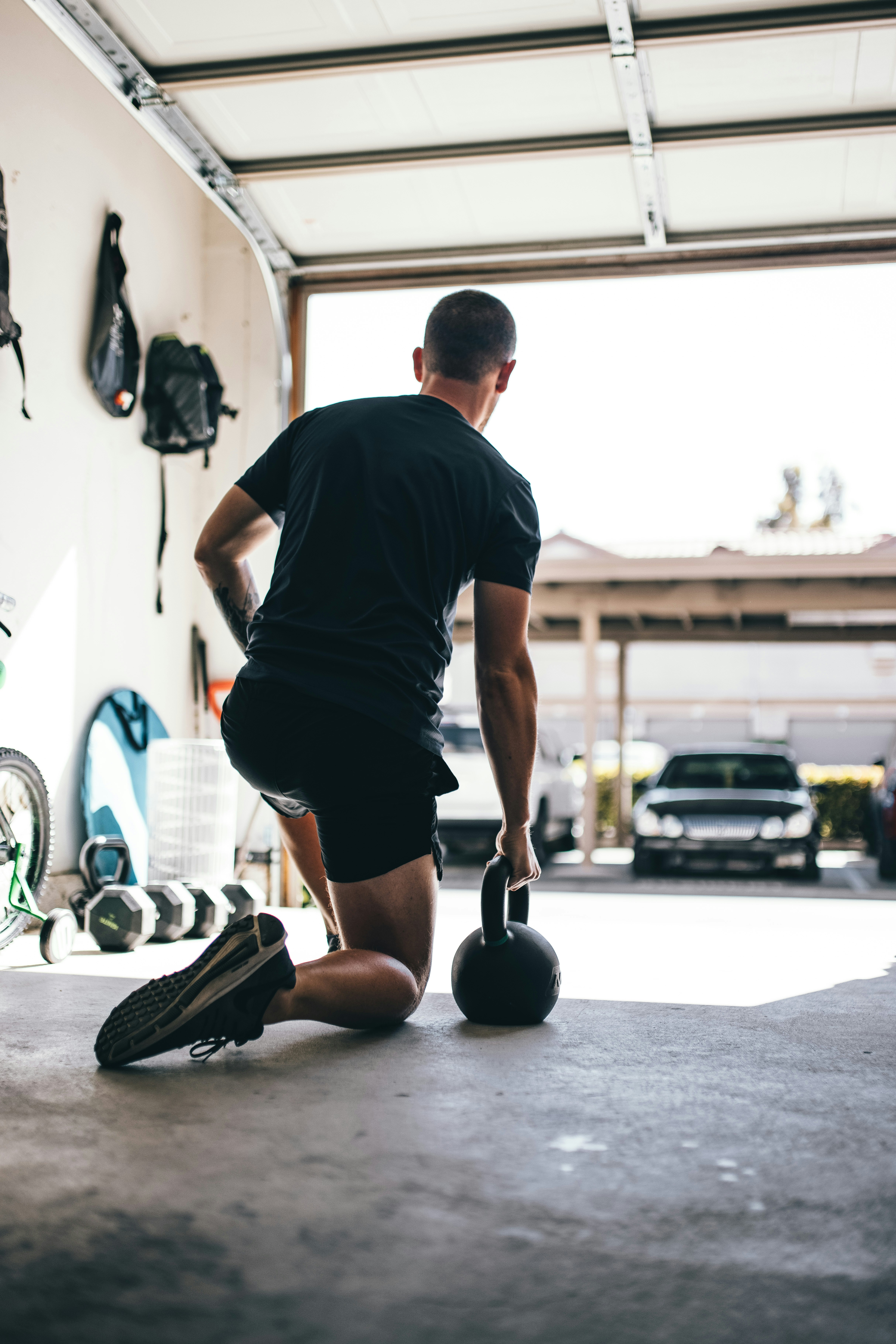
Walk into most gyms in Singapore and you will find a "functional training" zone — a BOSU ball, a cable pulley bolted at some diagonal angle, a rack of medicine balls, maybe a suspension trainer hanging in the corner. The label does a lot of quiet work. It implies a category of training that produces real-world, sport-carrying results, as opposed to some other, lesser kind of training that apparently does not. That is a strange claim on its face, and it turns out to be almost exactly the question sport scientists have spent the last two decades arguing about without resolving.
The term has no agreed definition — and the field admits it
The most direct critique came in 2022, when a group of exercise scientists led by Bernardo Ide published a conceptual review in Frontiers in Sports and Active Living asking a pointed question in its title: is there any non-functional training?1 Their argument was blunt. Functional training programs, they wrote, aim to produce the same neuromuscular adaptations — strength, power, endurance — as traditional resistance, plyometric, and aerobic training. There was no agreed, universal definition of what made a movement "functional" versus not, and the term had migrated from its original rehabilitation context into general marketing language. Their recommendation was to drop the label entirely and describe programs by the actual physiological adaptation being trained and the actual exercises used, rather than a category name that does not map onto anything measurable.
That gap in the literature was significant enough that a panel of thirteen exercise scientists — including well-known names in strength research such as Brad Schoenfeld, James Fisher, Eric Helms, and Mikel Izquierdo — ran a formal e-Delphi consensus process to try to fix it, publishing the result in the Journal of Sports Sciences in March 2025.2 It was, by the authors' own framing, the first attempt at a consensus definition the field had ever produced — itself telling, given how long "functional training" has been sold as a category. The definition they landed on: a physical intervention that enhances human performance according to individual goals in sport, daily life, rehabilitation, or fitness, accounting for the specificity of the task and the individual's own responses to it. Even after reaching that consensus, the panel flagged that the definition risked being redundant with the general concept of training itself, and debated whether the distinction was worth keeping at all. When the people trying hardest to define a term end up questioning whether it needs to exist, that is not a small problem for anyone using it as a selling point.
What the instability-training evidence actually shows
Unstable-surface training — BOSU balls, wobble boards, Swiss balls under a loaded exercise — is the clearest test case, because it is the piece of "functional training" equipment most directly marketed on the promise of superior real-world carryover, and because it has been studied in enough detail to produce hard numbers rather than opinion.
The foundational review came from David Behm and Kevin Anderson in the Journal of Strength and Conditioning Research in 2006.3 Their central finding was that instability reliably suppresses the force a muscle can produce, even while keeping — or in some cases increasing — how hard the surrounding stabiliser muscles have to work. Behm returned to the question with Juan Carlos Colado in a 2012 review in the International Journal of Sports Physical Therapy, pooling the available studies to quantify exactly how large that suppression is.4 Averaged across the literature, force and power output dropped by roughly 29% when an exercise was performed on an unstable rather than a stable surface or implement — a large effect by any standard statistical benchmark. The size of the deficit varied by exercise: leg extension force fell by around 70% under instability, plantar flexion force fell by about 20%, and isometric chest press force fell by roughly 60%. At the same time, trunk-stabilising muscle activation rose by an average of about 47% during the unstable versions of the same lifts — the muscles working harder to keep the athlete upright, not to move more load.
The Canadian Society for Exercise Physiology took this evidence seriously enough to issue a formal position stand on it in 2010, authored by Behm along with Eric Drinkwater, Jeffrey Willardson, and Patrick Cowley.5 Their conclusion was specific rather than dismissive: instability training can raise core muscle activation, but it can also reduce overall power output, and that trade-off matters directly whenever the goal of a program is to maximise force, power, or physiological loading — which describes most competitive athletic training. This is not a fringe objection. It follows from one of the oldest, least controversial principles in exercise science: the principle of specificity, which holds that the adaptation a muscle makes is specific to the demand actually placed on it. A surface that mechanically prevents a lifter from producing near-maximal force also mechanically prevents the kind of overload that drives strength and power adaptation. Trading a heavier, stable squat for a lighter, wobbling one does not sneak in extra "functional" benefit — it substitutes a smaller stimulus for a larger one, on the muscle groups a strength or power athlete most needs to overload.
If a piece of equipment makes an exercise harder only by making the athlete weaker at it, that is not the same thing as making the athlete better prepared for their sport.
Where instability training is actually the right tool
None of this means unstable-surface work is worthless — it means it is a tool with a specific, narrower use case than the marketing implies. Behm and Colado's own review is explicit that the picture changes for rehabilitation and for populations who cannot yet tolerate heavy stable-surface loading: the combination of lower absolute force with higher stabiliser activation and better motor control is a genuinely useful trade-off when the goal is protecting a healing joint or retraining movement quality, not maximising output.4
A randomised controlled trial published in BMC Geriatrics in 2016 gives a concrete example of this working as intended. Seventy-five healthy older adults aged 65–80 were split across machine-based stable training, machine-based unstable training, and free-weight unstable-surface training over ten weeks.6 The unstable free-weight group trained with roughly 20 kg on average, versus 52–56 kg for the stable and machine-based groups — yet it produced comparable or, on some measures such as functional reach and the chair-rise test, superior results. The researchers' own framing was that higher instability compensated for lower training load, which is a legitimate and useful finding for a population where loading heavy is itself the limiting factor. That is a real, defensible functional-training win. It is also not the population most gym "functional training" corners are actually marketed at.
Stuart McGill's widely cited 2010 review in the Strength and Conditioning Journal draws the same line for athletic populations across a training year rather than across a life stage.7 His recommendation is that free-weight exercises performed on a stable surface are what should drive core strength and power gains during preseason and in-season training, while Swiss-ball work involving light loads and longer isometric holds has its place in the off-season, aimed at endurance qualities rather than maximal output. The tool is not banned. It is simply not the tool for the phase of training where force and power are the actual target.
What the evidence says actually transfers
If unstable surfaces are not where real-world and sport transfer comes from, the research is fairly consistent about what is. A widely cited 2016 review by Timothy Suchomel, Sophia Nimphius, and Michael Stone in Sports Medicine lays out the case for maximal muscular strength as the foundational quality underneath sprinting, jumping, and change-of-direction performance.8 Stronger athletes produce better force-time characteristics in sport-specific tasks, potentiate more effectively into power output, and carry a lower injury risk — and the review is direct that weaker athletes see the largest returns from prioritising strength development, built through standard loaded, multi-joint, stable-surface training, before shifting emphasis toward power work.
It is worth being fair to the other side of the "functional training" label too — because some of what gets marketed under that name is not the same as an unstable surface, and the evidence for it is genuinely more favourable. A 2021 systematic review in Frontiers in Physiology by Xiao and colleagues looked specifically at studies labelled as functional training interventions in athletic populations, and found meaningful improvements in sprint speed, agility, and balance across the included trials.9 But look at what those interventions actually consisted of: medicine ball throws, single-leg squat patterns, plyometrics, and sport-specific movement sequences performed under load — not standing on a wobble board. That is a genuinely useful cluster of methods, and it works for reasons that have nothing to do with instability. It works because it is loaded, progressive, and biomechanically similar to the target skill — the same principles that make a well-programmed barbell squat or a single-leg Romanian deadlift effective, just applied through different exercise selections.
A practical way to tell the two apart
- Ask what's actually being overloaded. If an exercise gets "harder" primarily because the surface is unstable rather than because the resistance has increased, the stimulus for strength or power adaptation has likely gone down, not up.
- Ask whether the movement resembles the target skill. A loaded single-leg step-up resembles a stride pattern; standing on a BOSU ball while curling a dumbbell resembles nothing an athlete actually does in competition.
- Ask who the tool is being used for. Instability tools have real, evidence-backed value for rehabilitation, for older adults managing load tolerance, and for building basic motor control early in a program — genuinely different goals from maximising strength or power in a trained athlete.
- Watch for the word doing the selling. If "functional" is the main reason given for an exercise choice, rather than a specific adaptation it targets, that is close to what the 2022 conceptual review and the 2025 Delphi panel were both independently pointing at: a label standing in for an explanation.
None of this is an argument against variety, balance work, or single-leg training — all of those have a legitimate place in a well-built program, for reasons that can be stated in terms of the actual adaptation being targeted. The argument is narrower: "functional" is not, on its own, a reason an exercise belongs in a program, and the specific piece of equipment most commonly sold under that banner has a measured, published cost to force and power output that a program built around building strength or athletic performance cannot casually absorb. A testing-first approach means asking what a specific athlete actually needs to get stronger, faster, or more resilient, and then choosing tools — stable or unstable, barbell or BOSU ball — based on which one produces that adaptation, not which one sounds more sophisticated on a gym floor plan.
Sources
- Ide BN, et al. "Is There Any Non-functional Training? A Conceptual Review." Frontiers in Sports and Active Living 3:803366, 2022. Full text (PMC).
- Pereira HV, Teixeira DS, Fisher J, Fleck SJ, Helms E, Ide BN, Izquierdo M, Nedergaard A, Phillips S, Pinto RS, Plotkin DL, Turner AN, Schoenfeld BJ. "International Consensus on the Definition of Functional Training: Modified e-Delphi Method." Journal of Sports Sciences 43(8):767–775, 2025. tandfonline.com.
- Behm DG, Anderson K. "The Role of Instability With Resistance Training." Journal of Strength and Conditioning Research 20(3):716–722, 2006. journals.lww.com.
- Behm DG, Colado JC. "The Effectiveness of Resistance Training Using Unstable Surfaces and Devices for Rehabilitation." International Journal of Sports Physical Therapy 7(2):226–241, 2012. Full text (PMC).
- Behm DG, Drinkwater EJ, Willardson JM, Cowley PM. "Canadian Society for Exercise Physiology Position Stand: The Use of Instability to Train the Core in Athletic and Nonathletic Conditioning." Applied Physiology, Nutrition, and Metabolism 35(1):109–112, 2010. cdnsciencepub.com.
- Eckardt N. "Lower-Extremity Resistance Training on Unstable Surfaces Improves Proxies of Muscle Strength, Power and Balance in Healthy Older Adults: A Randomised Control Trial." BMC Geriatrics 16:191, 2016. Full text (PMC).
- McGill SM. "Core Training: Evidence Translating to Better Performance and Injury Prevention." Strength and Conditioning Journal 32(3):33–46, 2010. doi.org.
- Suchomel TJ, Nimphius S, Stone MH. "The Importance of Muscular Strength in Athletic Performance." Sports Medicine 46(10):1419–1449, 2016. PubMed.
- Xiao W, Soh KG, Wazir MRWN, Talib O, Bai X, Bu T, Sun H, Popovic S, Masanovic B, Gardasevic J. "Effect of Functional Training on Physical Fitness Among Athletes: A Systematic Review." Frontiers in Physiology 12:738878, 2021. Full text (PMC).
Want this applied to your own program, team, or school? Free 20-minute consult, no obligation.
Book a free consult →