
Personal · Home Training Setup
What Actually Belongs in a Young Athlete's Home Gym — And What Doesn't
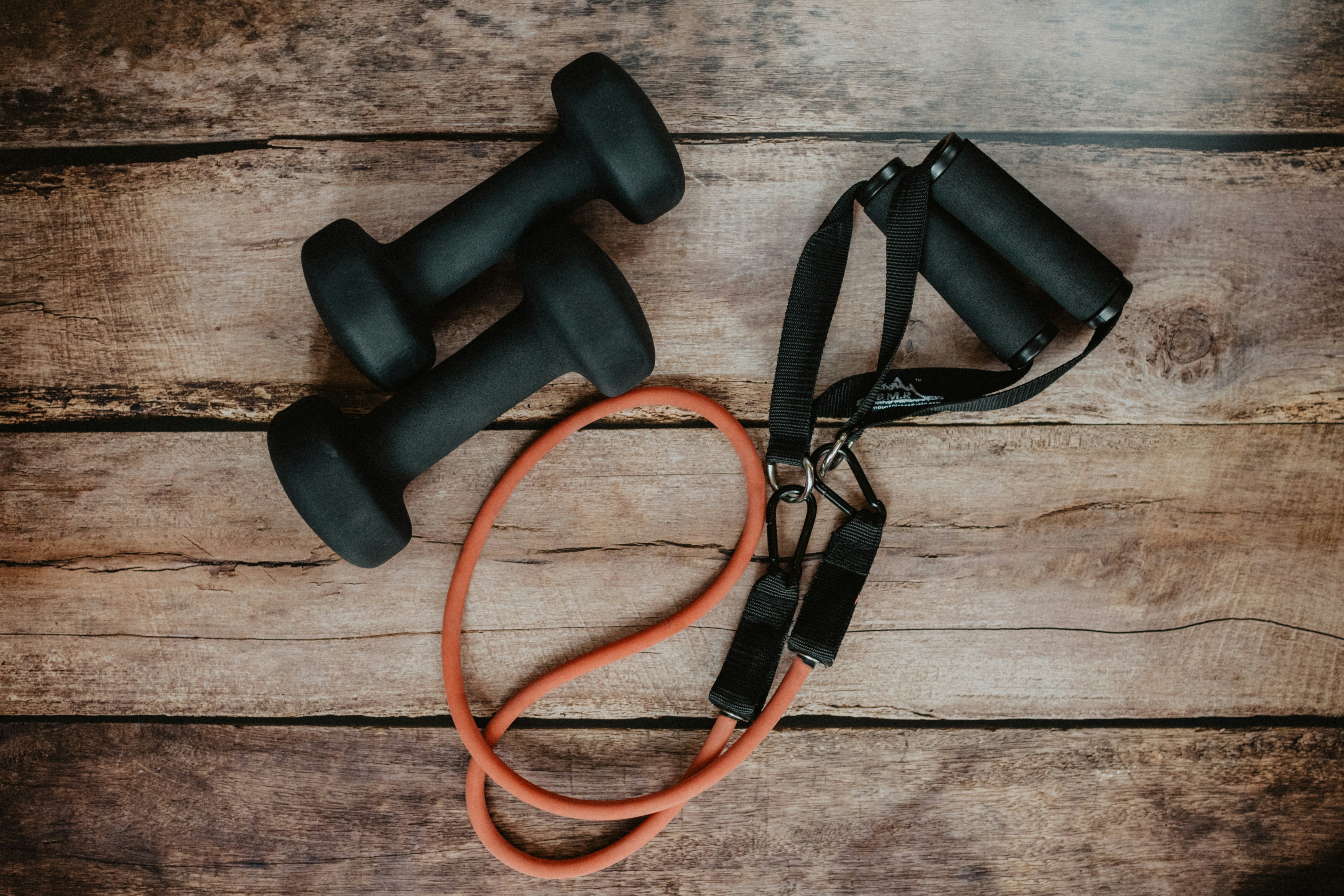
Parents ask me some version of the same question after almost every session: what should we actually buy for home? It usually comes from a good place — protecting a training investment, wanting a kid to keep improving between sessions, sometimes just wanting somewhere for restless energy to go on a Sunday afternoon. And it usually arrives already half-answered by an algorithm: a folding power rack, a smart adjustable-dumbbell set, occasionally a full home-gym package with a price tag that would cover a year of proper coaching. My honest answer disappoints most people the first time they hear it. Most of what gets bought for a young athlete's home setup does very little for their actual development. A short list of cheap, unglamorous things does almost all of the real work. And the part that gets skipped over entirely — because nobody's selling it as a feature — is what happens to that equipment the moment a qualified adult isn't standing in the room.
[ASK COACH DZUL: describe the specific, real question or moment from a parent that prompted you to want this written down — e.g. a particular request you get most often, or a specific piece of equipment a parent showed up asking about]
What a young athlete's home setup is actually for
I start from the same place I start any programme: what is this actually supposed to build. A home training corner for a young athlete isn't a smaller version of an adult gym, and it isn't there to replicate a coached session. Its real job is narrower — extending a small, low-risk dose of movement quality, mobility, and general strength work into the days a coach isn't watching, without introducing a category of risk that didn't exist before.
That narrower job matters because of something the actual research on youth strength gains keeps landing on: in children and early adolescents, most of the real strength adaptation from training comes from the nervous system learning to recruit and coordinate muscle, not from the muscle itself getting measurably bigger.1 Practically, that means the equipment doesn't need to be heavy to be useful. A young athlete gets more out of a skipping rope, a resistance band, and bodyweight work performed with real attention to technique than out of a home-gym cable stack most of them are years away from actually needing.
The short list — what actually earns a place in a small flat
Here's what I'd tell a parent to prioritise, roughly in the order it earns its keep:
- Bodyweight and gymnastics-style movement. Squats, lunges, push-up progressions, planks, single-leg balance work — the entire foundation of a young athlete's strength base costs nothing and needs no more than a few square metres of clear floor. This is most of the actual programme, not a warm-up before the "real" training.
- A set of resistance bands. Loop bands and tube bands with handles are cheap, pack into a drawer, and are one of the training modalities the sport-science literature on youth resistance training has actually studied directly — not a home-gym improvisation of something else.1 They also scale load down further than almost anything else on this list, which matters more for a growing athlete than scaling it up.
- A jump rope. Coordination, rhythm, and reactive strength in a footprint smaller than a yoga mat — the cheapest genuine plyometric tool that exists.
- A suspension trainer. One anchor point, difficulty adjusted by body angle rather than added weight, and it rolls up small enough to live in a drawer between sessions — a good fit for a room that has to keep being a bedroom or a living room the rest of the day.
- A pull-up bar — properly fixed, not just wedged in. Upper-body pulling strength is one of the things bodyweight training alone struggles to build progressively for a lot of young athletes, so a bar earns its place. The safety detail matters more than the bar itself: a tension-fit doorframe bar rated for an adult's static bodyweight is being asked a very different question by a kid kipping, swinging, or doing chin-ups while a younger sibling watches and copies. If it's going to see dynamic use, or get used unsupervised, mount it into the studs or door frame properly rather than relying on friction alone.
- A light kettlebell or a pair of dumbbells, added later. Once bodyweight and band work is genuinely competent — not just familiar — a modest amount of external load is useful. This is the one item on the list I'd actively delay rather than buy on day one.
- Interlocking rubber mats. Not glamorous, but they do two jobs a small flat actually needs: protecting joints landing on tile, and meaningfully cutting the impact noise that turns into a genuinely awkward conversation with the neighbours downstairs.
What's not worth the floor space
The equipment I'd actively steer a parent away from tends to be exactly what's marketed hardest at this audience, for reasons that have more to do with margin than with what a young athlete's body actually needs.
A home treadmill is close to the top of that list. Most of what a young athlete's conditioning actually needs — change of direction, sprint mechanics, repeated-effort capacity specific to their sport — is trained far better through field or court work, intervals, and footwork drills than through steady jogging on a belt. And a treadmill carries a real physical hazard that has nothing to do with the young athlete using it properly. A 2012 review of paediatric treadmill injuries found that in the great majority of reported cases it was a much younger child — mean age under four — who was hurt, most often a hand or forearm caught under the moving belt while an adult family member was using the machine nearby.3 Nearly all of those injuries were to the hand and wrist, and more than half needed surgery, most involving skin grafts. If there's a toddler or a younger sibling anywhere in the household, that risk profile alone is reason enough to leave the treadmill out of the plan.
A full multi-station cable machine or "home gym" tower is the other item I'd talk a family out of. Leaving cost and floor space aside — and a proper rack or multi-gym eats far more clearance than the machine's own footprint suggests, in a country where a typical HDB flat's entire internal floor area runs to roughly 60 to 70 square metres for a 3-room flat, or 85 to 95 for a 4-room, depending on the flat's generation and layout5 — the equipment itself is built for a different body than the one that would be using it. The main consensus safety specification covering this category of equipment, ASTM F2216, sets its design assumptions for users aged twelve and up.4 That's a floor, not a target: a machine engineered around adult limb lengths and adult ranges of motion is a genuinely awkward, sometimes unsafe fit for an eight- or ten-year-old, well before it's an efficient use of money.
A full barbell, bumper plates, and a squat rack sit in a greyer zone. They're not inappropriate for an older, experienced adolescent athlete — but they are inappropriate for unsupervised use at almost any age, for reasons I'll get to next. For most families the honest answer is that this is equipment to use under a coach's eye, not to install permanently in a spare room.
Fitting it into an HDB flat or condo, specifically
Space is the real constraint for almost every family I talk to here, and the honest planning conversation starts with the numbers rather than the wish list. Working with roughly 60 to 95 square metres of total flat, depending on flat type, most of it already committed to bedrooms, a kitchen, and a living room that has to keep functioning as a living room, the realistic training footprint for most households is a cleared corner, a service yard, or a section of the living-room floor that gets rolled out and packed away — not a dedicated room.
[ASK COACH DZUL: a real, specific example of a compact home setup you've actually seen work well for a family in an HDB flat or condo — what it was, roughly how much space it used, and what made it functional]
Everything on the short list above was chosen partly with that constraint in mind — bands, a rope, a suspension trainer, and interlocking mats all store flat and set up in under a minute, which matters more in daily practice than any single item's individual merit. A wall-mounted, foldable pull-up bar, or a doorframe unit that comes down when it's not in use, solves the same problem for the one item on the list that doesn't naturally pack away. Condo residents often have an additional option — a shared gym, function room, or covered court most HDB blocks don't offer in quite the same way, though newer HDB precincts increasingly include outdoor fitness corners near the void deck. Either way, house rules on noise, equipment use, and supervision in shared facilities are worth checking before assuming a young athlete can actually use that space unsupervised.
The part that actually matters most — safety when nobody's watching
This is the section most equipment guides skip, and it's the one I actually care about. A coached session has a qualified adult in the room making constant small judgement calls — is this rep breaking down, is this load appropriate today, is this athlete's technique holding up as they fatigue. A home setup, almost by definition, doesn't have that. The equipment and the environment have to do more of that job on their own, because a parent checking in periodically isn't the same thing.
The NSCA's own position statement on youth resistance training — the same expert-panel review I've cited elsewhere on this site — is direct about what that actually means: "If qualified supervision, age-appropriate exercise equipment, and a safe training environment are not available, youth should not perform resistance exercise due to the increased risk of injury."1 That's not a throwaway caution. It sits alongside the same statement's finding that children are, in fact, more likely to be injured by exercise equipment at home than in a supervised setting — due in part to unsafe behaviour, equipment malfunction, and the simple absence of anyone watching.1 The same review cites a case report of a nine-year-old boy who died after a barbell rolled off an unattended bench-press support onto his chest — a genuinely rare, catastrophic outcome, but one the authors point to specifically as the reason close supervision and secure equipment storage matter for every home resistance-training setup, not only the ones using heavy loads.1
A few concrete rules follow from that, and from mechanical failure points that come up with equipment marketed for exactly this use case:
- No maximal or near-maximal lifts without supervision, ever. The position statement is explicit that unsupervised maximal-effort testing should not be performed by children or adolescents under any circumstances1 — not because a young athlete can't handle the load, but because there's no margin for a technical breakdown with nobody there to catch it.
- Door-anchored resistance bands need a real anchor, inspected regularly. This isn't theoretical: a 2011 recall of roughly 447,000 resistance-cord kits followed reports that the door-anchor mechanism could release unexpectedly and strike the user, including three reported eye injuries, two of them resulting in permanent vision loss.2 A band and anchor that look intact after months of use can have quietly worn to the point of failure — worth an actual visual check, not an assumption.
- Anything with a moving belt, a pinch point, or stored elastic energy is a different risk category the moment a younger sibling is in the house. The pattern in the treadmill injury data — a young child's hand caught while someone else was using the machine — generalises to any home equipment with a motor, a moving part, or a band under tension.3 If a toddler or young child could wander into the room, that changes which equipment belongs in the plan at all, not just how it's stored.
- Free weights get racked, collared, and put away — every time, not just when it's convenient. The basic weight-room habits the position statement calls out — correct use of collars, proper storage, sensible starting weights — exist specifically because untrained young people tend to overestimate what they can safely handle and underestimate what an unsecured plate or an unracked bar can do.1
[ASK COACH DZUL: a real, specific safety issue or mismatch you've actually noticed and corrected in a client's home training setup — described generally enough not to identify the family]
A home gym doesn't need to replace a coach's judgement. It needs to not require it every single time — which is a much higher bar than most equipment on the market is actually built to clear.
What I'd actually tell a parent to buy, in order
If I had to put a sequence on it, here's roughly how I'd build it up, rather than buying everything at once:
- First: interlocking mats, a jump rope, and a set of resistance bands. Total cost is low, the training value for a young athlete is high, and none of it introduces a new category of risk into the house.
- Next: a suspension trainer and a properly mounted pull-up bar, once bodyweight competency is genuinely established rather than assumed.
- Later, and only with real technique already in place: a light kettlebell or a modest pair of dumbbells, added deliberately rather than because a set happened to be on sale.
- Skip, or keep strictly supervised: treadmills, multi-station machines, and a full barbell-and-rack setup for anything approaching unsupervised use, at almost any age.
None of this is really a shopping list. It's the same testing-first, build-the-foundation-before-the-load principle I'd apply to any programme, applied to a room instead of a session — and a reminder that the equipment sitting in a corner of an HDB flat is never actually the whole plan. It's meant to extend one, under supervision that doesn't get to stop just because the session did.
Sources
- Faigenbaum AD, Kraemer WJ, Blimkie CJR, Jeffreys I, Micheli LJ, Nitka M, Rowland TW. "Youth Resistance Training: Updated Position Statement Paper From the National Strength and Conditioning Association." Journal of Strength and Conditioning Research 23(Suppl 5):S60–S79, 2009. Full position statement (PDF, NSCA).
- U.S. Consumer Product Safety Commission. "Target Recalls to Repair Embark Resistance Cords Due to Injury Hazard." September 2011. cpsc.gov.
- Lohana P, Hemington-Gorse S, Thomas C, Potokar T, Wilson YT. "Paediatric Injuries Due to Home Treadmill Use: An Emerging Problem." Annals of The Royal College of Surgeons of England 94(2):e58–e61, 2012. pmc.ncbi.nlm.nih.gov/articles/PMC3954134.
- ASTM International. "F2216-17a: Standard Specification for Selectorized Strength Equipment" (design scope for users aged 12 and above). store.astm.org/f2216-17a.
- Housing & Development Board, Singapore, and Singapore property listings (99.co, ERA Singapore, Weiken). Typical internal floor areas for standard flat types — approx. 60–68 sqm (3-Room) and 85–93 sqm (4-Room); figures vary by flat generation, estate, and whether air-con ledge is included. 99.co/singapore/insider/hdb-space-really-need.
Want this applied to your own program, team, or school? Free 20-minute consult, no obligation.
Book a free consult →