
Research · Injury & Recovery
The Bendiest Kid in the Squad Is the One Who Most Needs to Lift
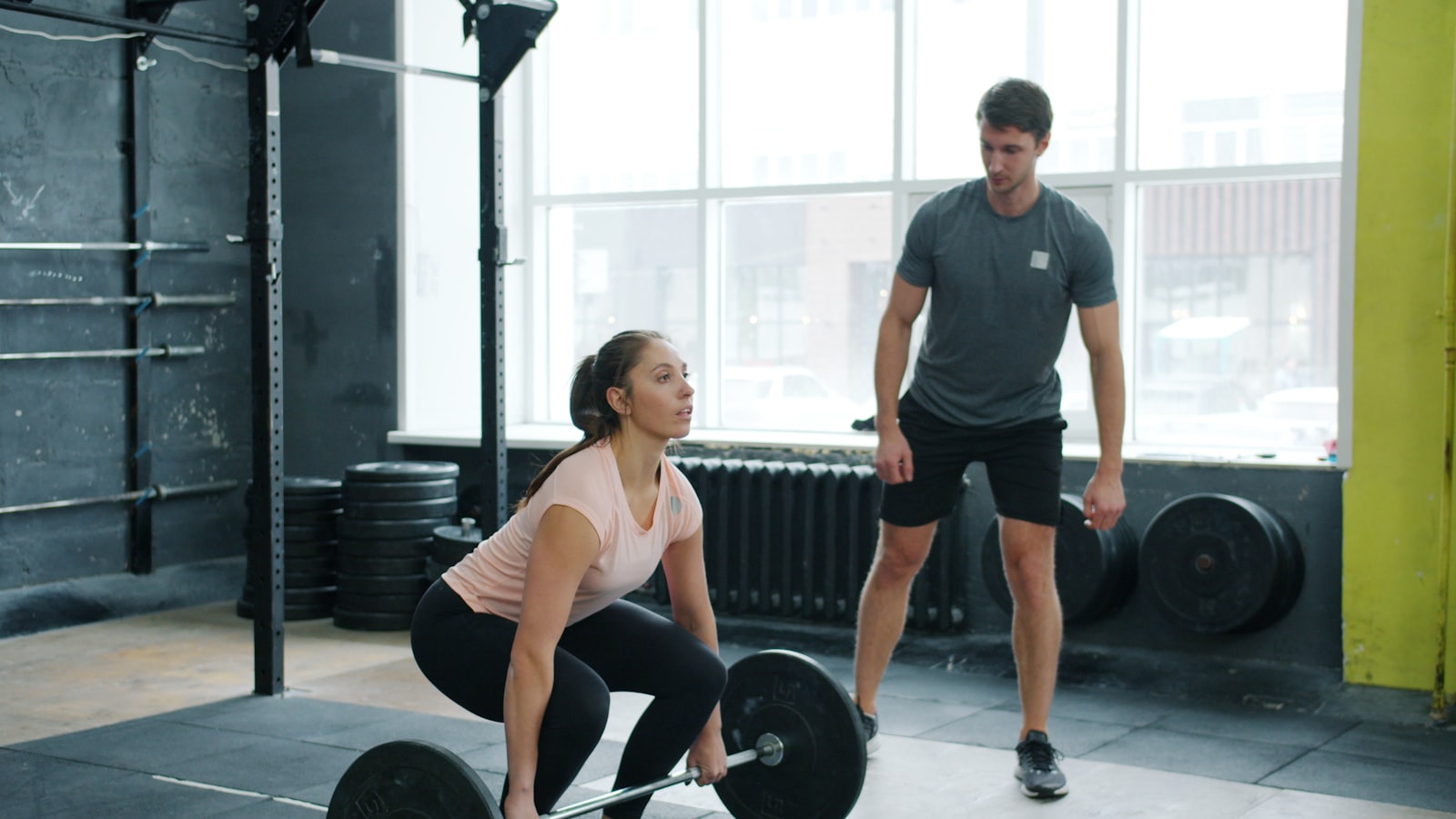
A twelve-year-old who can put both palms flat on the floor with straight knees, bend her thumb back to her forearm and sit in positions that make the rest of the squad wince. In gymnastics or dance this gets called a gift. Her shoulder, though, has started to feel "loose" after training. Somewhere along the way the family has heard that she is too flexible for the weights room, because heavy lifting will stretch her joints even further.
That advice sounds protective, and it is close to the opposite of what the evidence suggests. A joint with less passive restraint needs more active control. The athlete with the least natural stability is the one who has the most to gain from getting strong.
First, what this post is not
Hypermobility covers a wide range. At one end are the large number of children who are simply flexible and have no symptoms. At the other end is a group of heritable connective tissue disorders. The 2017 international classification recognises 13 subtypes of Ehlers-Danlos syndromes (EDS). For every subtype except one, a definite diagnosis relies on finding a causative genetic variant. The exception is hypermobile EDS (hEDS), which still has no molecular test and is diagnosed against clinical criteria.1 Those criteria were revised specifically to separate hEDS more clearly from other joint hypermobility disorders.1
For a coach, the practical consequence is that this is not something to identify from the sideline. A high Beighton score is a measure of joint range, not a diagnosis. Whether a child is simply flexible, has a hypermobility spectrum disorder or meets the criteria for hEDS is a clinical judgement made by a doctor, usually with a rheumatologist or geneticist involved. The coach's job is to notice, to refer, and then to train sensibly whatever the answer turns out to be. Nothing below should be read as a way to tell those groups apart.
Flexibility is not neutral
The best prospective youth data comes from the Avon Longitudinal Study of Parents and Children, a large UK birth cohort. Researchers measured joint hypermobility with the Beighton score at a mean age of 13.8, using a strict cut-off of 6 or more out of 9. They then asked about musculoskeletal pain four years later, at 17.8. The analysis included 2,901 adolescents with complete data.2
The distribution is the interesting part. Hypermobility at 14 predicted later pain at the shoulder, knee and ankle/foot. It did not predict pain at the spine, elbows, hands or hips.2 The link also became much stronger with body mass. In obese participants, the odds ratio for knee pain was 11.01, against 1.57 in non-obese participants.2 The authors read this as consistent with a mechanical pathway, in which hypermobility leads to pain at the sites that take the greatest forces.
That explanation matters for training. If the problem were just loose tissue, the answer would be to avoid load. If the problem is joints handling large forces with too little control, the answer is to build the control.
The injury picture in athletes
Pain is not the same as injury, so the second question is whether hypermobile athletes actually get hurt more. A 2021 systematic review and meta-analysis looked at the shoulder, an area the authors noted had been studied far less than the knee. Earlier reviews had already linked joint hypermobility in athletes with a higher risk of knee injury.3 Six observational studies met the criteria, covering 2,335 athletes with a mean age of 19.9.
Athletes with joint hypermobility had 3.25 times the odds of shoulder injury compared with athletes without it (95% CI 1.64–6.43).3 How hypermobility was defined made a large difference. When it meant generalised hypermobility across the body, the odds ratio was 1.97. When it meant hypermobility or instability at the shoulder itself, the figure rose to 8.23.3
That gap carries a coaching lesson. A whole-body flexibility score tells you something. How the specific joint behaves under sport-specific load tells you much more. A swimmer or thrower whose shoulder feels unstable is a different case from one who simply scores highly on the Beighton test.
What happened when they loaded it
The obvious next question is whether heavy strengthening helps or hurts a hypermobile joint. The most useful direct test is a Danish randomised controlled trial. It recruited 100 adults from primary care with hypermobility spectrum disorder and at least three months of shoulder pain or instability.4 Both groups trained three times a week for 16 weeks. The HEAVY group did full-range, high-load exercise, supervised twice a week. The LIGHT group did neutral or mid-range, low-load exercise designed to mirror standard Danish care, and was supervised three times in total.
"High load" was set relative to each person, not in absolute kilograms. After an estimated 10-repetition maximum, the HEAVY group spent three weeks familiarising at 50%, 70% and then 90% of that load. Weeks 4 to 9 were 3 sets of 10RM, and weeks 10 to 15 were 4 sets of 8RM, followed by a taper.4 This was genuine progressive overload, not a token band programme.
The heavier, more supervised programme produced better self-reported shoulder function. Patients in that group were also less likely to have a positive shoulder rotation test above 180°.4 In other words, heavy loading did not make the joint looser. If anything it made it less lax. The costs were real but minor: more temporary muscle soreness and more headaches (40% against 20%).4
Two honest qualifications belong right next to that result. First, the effect was smaller than the 252-point difference the investigators had set as clinically important, so "statistically superior" should not be read as "dramatically better". Second, when the same trial reported its one-year follow-up, the between-group difference in function had shrunk to −92.9 points and was no longer statistically significant (95% CI −257.4 to 71.5).5 The HEAVY group did keep a significant advantage on the emotional subscale, which covers how patients felt about their shoulder.5
So the trial does not prove that heavy loading is a long-term cure. What it does show, in a population many clinicians would instinctively handle with caution, is that progressive, supervised, genuinely heavy strength work was at least as good as the gentle option, better in the short term, and did not cause serious harm.
What this changes in practice
Refer, do not diagnose. If a young athlete is very flexible and has recurrent pain, a sense of joints slipping or giving way, frequent sprains or symptoms beyond the joints, that belongs with a doctor. Whether it is hEDS, a hypermobility spectrum disorder or neither is a clinical question.1 Training can continue alongside that process. It should not replace it.
Do not take the athlete out of the weights room. Avoiding strength work leaves joints with the least passive restraint also short of active control. The trial evidence points towards progressive loading, not away from it.4 The general case that supervised resistance training is safe for young people, covered in what the research says about lifting and growth, applies here with extra emphasis on supervision.
Train control at the end of range, and stop chasing more range. A hypermobile athlete rarely needs more passive flexibility. They need strength and control through the range they already have. This is exactly the distinction drawn in the difference between mobility and flexibility. Long passive stretching that a hypermobile child finds easy is unlikely to be the priority.
Supervise more than you would for other athletes. The HEAVY group had more supervised sessions than the LIGHT group, so supervision was part of the package that worked.4 Technique drift at end range is precisely where these athletes are vulnerable.
Look at the specific joint, not just the score. Shoulder-specific hypermobility carried far higher injury odds than generalised hypermobility.3 For overhead and contact athletes, how the shoulder behaves under load is more informative than a Beighton number.
Warn about soreness in advance. More transient soreness and headaches came with the heavier programme.4 An athlete who has been told for years that their joints are fragile may read ordinary soreness as damage. Saying beforehand that it is expected helps keep them in the programme.
Mind the body-mass interaction. In the cohort data, the knee-pain link was much stronger in obese adolescents.2 For a hypermobile young athlete carrying excess mass, general conditioning and lower-limb strength are probably more important, not less.
Where this evidence stops
The biggest gap is age. The randomised trial enrolled adults aged 18 to 65, with a mean age of 37.8, and none of the 100 participants had hEDS.4 The authors state openly that whether the results generalise to hEDS, to specialist-clinic patients or to other settings is unanswered. Applying it to a twelve-year-old is an extrapolation, a reasonable one, but still an extrapolation. It also studied only the shoulder.
The shoulder-injury meta-analysis pooled six observational studies of mostly young adult athletes. The authors rated the overall quality of evidence as low and expected future research to change the estimate.3 Heterogeneity was high (I² = 75.3%). The ALSPAC cohort is large and prospective, but it measured self-reported pain rather than diagnosed injury, and only about 1 in 22 participants met its hypermobility threshold. The obesity subgroup estimates rest on small numbers.2 All three are associations, not proof that hypermobility causes the pain or injury.
None of these studies tested a strength programme designed to prevent injury in hypermobile youth athletes, and the trial benefit had faded by one year.5 What the evidence does support is narrower than a guarantee and still useful. Hypermobility is not a neutral trait in sport, the joints it affects are the ones that take load, and in the best trial available, heavier supervised strengthening was safe and at least as effective as the cautious alternative. The fear that lifting will make a loose joint looser is not what the data show.
Sources
- Malfait, F., Francomano, C., Byers, P., Belmont, J., Berglund, B., Black, J., Bloom, L., Bowen, J. M., Brady, A. F., Burrows, N. P., Castori, M., Cohen, H., Colombi, M., Demirdas, S., De Backer, J., De Paepe, A., Fournel-Gigleux, S., Frank, M., Ghali, N., … Tinkle, B. (2017). The 2017 international classification of the Ehlers-Danlos syndromes. American Journal of Medical Genetics Part C: Seminars in Medical Genetics, 175(1), 8-26. https://doi.org/10.1002/ajmg.c.31552
- Tobias, J. H., Deere, K., Palmer, S., Clark, E. M., & Clinch, J. (2013). Joint hypermobility is a risk factor for musculoskeletal pain during adolescence: findings of a prospective cohort study. Arthritis & Rheumatism, 65(4), 1107-1115. https://doi.org/10.1002/art.37836
- Liaghat, B., Pedersen, J. R., Young, J. J., Thorlund, J. B., Juul-Kristensen, B., & Juhl, C. B. (2021). Joint hypermobility in athletes is associated with shoulder injuries: a systematic review and meta-analysis. BMC Musculoskeletal Disorders, 22(1), 389. https://doi.org/10.1186/s12891-021-04249-x
- Liaghat, B., Skou, S. T., Søndergaard, J., Boyle, E., Søgaard, K., & Juul-Kristensen, B. (2022). Short-term effectiveness of high-load compared with low-load strengthening exercise on self-reported function in patients with hypermobile shoulders: a randomised controlled trial. British Journal of Sports Medicine, 56(22), 1269-1276. https://doi.org/10.1136/bjsports-2021-105223
- Liaghat, B., Juul-Kristensen, B., Faber, D. A., Christensen, E. O., Søgaard, K., Skou, S. T., Søndergaard, J., & Juhl, C. B. (2024). One-year effectiveness of high-load compared with low-load strengthening exercise on self-reported function in patients with hypermobile shoulders: a secondary analysis from a randomised controlled trial. British Journal of Sports Medicine, 58(7), 373-381. https://doi.org/10.1136/bjsports-2023-107563
Want this applied to your own program, team, or school? Free 20-minute consult, no obligation.
Book a free consult →