Personal · School Sports Systems
Two School Systems, One Island: What Coaching Inside Both Taught Me About Developing Young Athletes
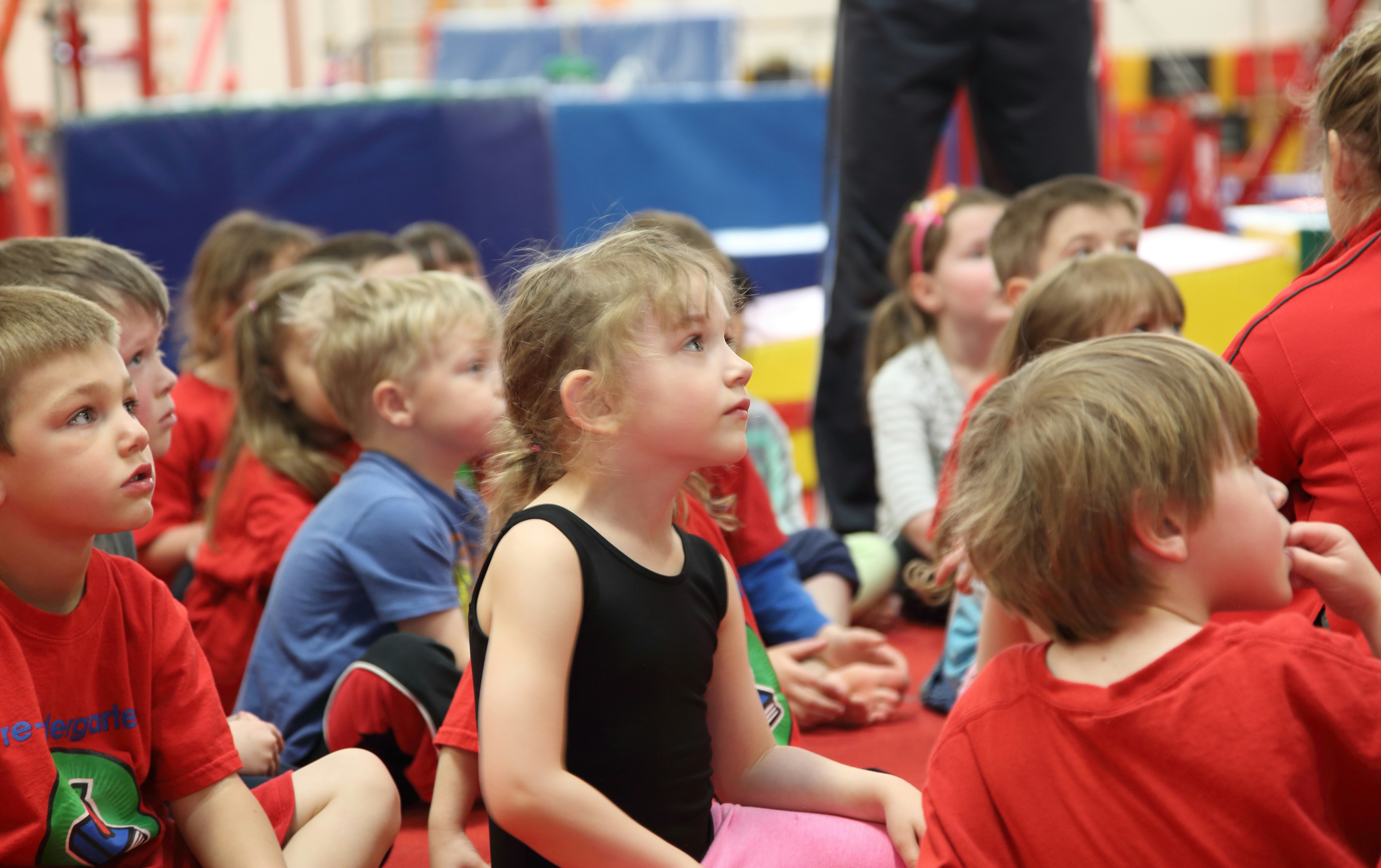
People assume the difference between an MOE school and an international school, when it comes to sport, is basically a uniform and a fee structure. Having spent years as a Head of Department for sport at an international school, and now doing hands-on work inside MOE schools through the Catch Them Young programme, I can tell you the gap is a lot more structural than that — and it starts long before a single ball gets kicked. It's built into how each system funds a coach, times a lesson, and decides which 13-year-old gets a shot at competing seriously.
Neither system is "better" in some clean, overall sense. They are solving genuinely different problems, for genuinely different populations, under genuinely different constraints. But if you're a parent trying to work out what your child is actually walking into — or a coach trying to understand why the same drill lands so differently in two gyms twenty minutes apart — the structural differences are worth naming plainly.
The same national syllabus, run through two very different machines
Start with something that surprises a lot of parents: Singapore takes Physical Education, the classroom subject, seriously as a specialism. Trainee PE teachers go through a 24-month programme at the National Institute of Education, against 16 months for most other subjects — and MOE's own parliamentary reply on this notes that the longer course hasn't dented the number of people applying to teach PE.1 That's a real signal about how MOE treats PE pedagogy: not as a subject any generalist teacher can pick up, but as its own trained discipline, taught through structured approaches like the Games Concept Approach and the Sport Education Model that MOE-syllabus schools describe on their own curriculum pages.3
Where it gets structurally different is what happens once you step outside that classroom subject and into competitive sport. Since 2010, MOE has run school sport on an explicit three-tier national framework: mass participation programmes to build a habit of activity for every student, specialised programmes for students interested in sports science, coaching, or sports administration as a pathway, and a talent-development tier aimed at grooming students who might represent Singapore internationally — with the Singapore Sports School, opened in 2004, sitting at the top of that funnel as a dedicated, specialised school for teenagers training seriously for sport.2 That's a national civic system, built to serve every government-school student on the island, with all the tradeoffs a system that size has to make.
An international school doesn't run a parallel version of that national system — it doesn't need to, and it isn't trying to. It builds vertically, inside one campus, for one enrolled population: a single Athletic Director or Head of Sport, a single set of facilities, a single continuous programme that can run a student from their first year of primary sport through to a varsity leaving certificate, without ever touching a national talent-identification funnel or a Ministry framework at all.
Curriculum time versus the after-school block — sport isn't scheduled the same way
Inside the MOE system, PE is a timetabled academic subject, and competitive sport is a separate thing layered on top of it: the CCA (co-curricular activity) period, typically an after-school session once or twice a week, run by a coach who is very often engaged specifically for that slot. MOE only allows schools to engage coaches who are registered with the Ministry, and the standard contracting arrangement — the "Pay-As-You-Use" hourly mode, revised in 2021 after feedback from the coaches' own professional body — pays for a defined block of training hours, not a coach's full-time attention.6 It's an efficient way to staff sport across hundreds of schools with wildly different enrolment sizes and sporting interests. It is also, structurally, a part-time relationship: the same registered coach is frequently splitting their week across more than one school's CCA slot, because no single school's programme is large enough to justify a full-time hire in most sports.
At an international school, the shape of a sporting "season" looks different in a way that matters more than people realise. Conferences like IASAS — the six-school Southeast Asian association that Singapore American School represents8 — and ACSIS, the Athletics Conference of Singapore International Schools spanning over thirty campuses9 both run on a three-season structure, where a sport becomes the after-school programme for that entire school, every school day, for roughly a ten-week block, rather than a fixed weekly CCA slot running year-round alongside everything else. A student on the swim season isn't attending "swim CCA twice a week" — for that block of the year, swimming effectively is the after-school day.
A CCA period twice a week and a full season of daily training are not the same sport — even when the sport has the same name on the timetable.
[ASK COACH DZUL: describe a real, specific difference in facilities or timetabling you personally observed moving between an international school's sport department and an MOE school's CCA structure — for example, a concrete comparison of training frequency, field/pool access, or how a training week was actually built at each.]
Two very different competitive ladders
The MOE pathway for a genuinely talented young athlete runs through Direct School Admission (DSA-Sec): a Primary 6 student can be recognised for sporting talent — demonstrated through CCA representation, competition results, or simply assessed potential if they haven't competed formally yet — and offered a place at a specific secondary school before PSLE results are even out.4 It's a real, meaningful pathway, but it is not sport instead of academics: MOE's own eligibility page is explicit that the student still needs a PSLE score that qualifies for the posting group the school is offering, and once admitted through DSA, they're committed to that school for the length of the programme — no switching schools after results come in.4 Above the school level, competition runs through the National School Games, organised by the Singapore Schools Sports Council and the Singapore Primary Schools Sports Council for every level from primary through junior college — the largest inter-school competition in the country. MOE has also been deliberately reforming this ladder to widen it: between 2019 and 2024, the youngest divisions stopped competing for outright divisional championships and moved instead into ability-matched leagues, and MOE's own recent parliamentary answer frames this explicitly as balancing "competitive excellence" against genuinely inclusive participation, while stating that resourcing across schools is meant to be equitable rather than tilted toward traditionally strong sporting schools.5
An international school's competitive ladder solves a different problem entirely. There's no PSLE, no national talent-identification tier, and no ministry framework balancing mass participation against elite pathways across an entire school system — because the population itself is already self-selected by enrolment, not filtered by a national exam. IASAS and ACSIS run varsity and junior-varsity structures inside a closed membership of a handful of schools, and the "top of the pathway" for a strong athlete in that world usually points toward athletic recruitment into a specific country's university system, not toward a Singapore national team — a genuinely different endpoint from what DSA-Sec and the Singapore Sports School are built to feed.
Who's actually standing on the field, and why
This is where the two systems diverge most, in my experience actually coaching inside both. MOE's coach-engagement model — the registered, hourly-contracted CCA coach — is a genuinely sensible answer to an enormous logistics problem: how do you put a qualified coach in front of every CCA sport, at every school, across the whole country, without every school needing to carry a full-time specialist coaching staff it may not have room in its budget or timetable for? Where MOE clearly recognises the limits of that model, it has built a workaround: Strategic Partnership CCAs (SP-CCA), which are centralised, non-school-based CCAs run jointly with SportSG, using coaches and instructors vetted by both MOE and MCCY, specifically so students can access a higher, more specialised level of coaching than any single school's CCA budget could otherwise guarantee on its own.7 That's MOE, in effect, admitting that the standard school-by-school coaching model has a ceiling — and building a separate, centralised track to raise it for the sports and students where it matters most.
An international school, structurally, doesn't need that separate track, because it usually builds specialist coaching directly into the campus's own staff. A Head of Sport or Athletic Director is typically a dedicated, often full-time role — sometimes a faculty position, sometimes a specifically recruited coaching hire — embedded in one school, working with the same cohort of athletes across multiple years rather than a rotating hourly contract split across several campuses. Facilities usually follow the same logic of concentration rather than distribution: it's not unusual for a single international school campus to carry a 50-metre pool, several full-size sports halls, and multiple dedicated pitches and courts — Overseas Family School's own published facilities list, for instance, includes an Olympic-size 10-lane 50-metre pool, three sports halls, and five covered basketball courts on one campus.10 That's an entire national-competition-grade sporting infrastructure sitting inside one school's enrolment fees, rather than shared, as MOE facilities and coaching necessarily are, across an entire public system serving every child on the island regardless of sporting interest.
[ASK COACH DZUL: describe a real, specific example from your own hiring or staffing experience — for instance, how an international school's coaching staff was actually structured or recruited compared to how an MOE CCA coach was engaged for the same sport — to make this concrete rather than general.]
What this actually means for a family choosing between them
I get asked constantly which system gives a child the better shot at a serious sporting future, and the honest answer is: it depends entirely on what "serious" is supposed to mean for that child. If the goal is representing Singapore — a national team pathway, the Singapore Sports School, DSA into a strong sporting secondary — the MOE system is the one actually built to funnel a talented child there, PSLE and all. If the goal is a specific sport played at a high, well-resourced, daily intensity inside one continuous programme, often pointed toward university athletic recruitment overseas, an international school's model is built for exactly that, at a cost most families understand going in.
What neither system reliably gives a child, in my experience working across both, is dedicated strength and conditioning — the physical preparation work that actually determines whether a talented young athlete stays healthy and improves year over year, rather than plateauing or getting hurt. An MOE CCA coach engaged for a handful of hours a week is coaching the sport, not periodising a training year. An international school's sport season is often intense enough, three times a year, that recovery and physical preparation between seasons becomes the actual bottleneck. That gap — not "which system is better" — is the one I think about most, and it's the one I built this practice to sit inside, regardless of which uniform a young athlete happens to be wearing on a Tuesday afternoon.
Sources
- Ministry of Education, Singapore. "Physical Education Teachers" (Parliamentary Reply, 4 July 2023) — NIE PE-teacher training duration (24 months vs 16 months for other subjects). moe.gov.sg/news/parliamentary-replies/20230704-physical-education-teachers.
- National Library Board, Singapore (BiblioAsia). "Physical Education and Sports in Singapore Schools (Part II): Developing National Sports Talents" — MOE's 2010 three-tier sports framework, Singapore Sports School (2004), SSSC age-division reforms. biblioasia.nlb.gov.sg/vol-6/issue-3.
- Bedok South Secondary School. "Physical Education — Curriculum" — MOE PE syllabus delivery via Games Concept Approach and Sport Education Model. bedoksouthsec.moe.edu.sg.
- Ministry of Education, Singapore. "Direct School Admission (DSA-Sec): Explore school choices" — sports-talent DSA pathway, PSLE score requirement, programme commitment. moe.gov.sg/secondary/dsa/eligibility.
- Ministry of Education, Singapore. "Assessing Current Structure of National School Games to Better Balance Competitive Excellence and Inclusive Participation" (Parliamentary Reply, 7 May 2026). moe.gov.sg/news/parliamentary-replies/20260507.
- Ministry of Education, Singapore. "Engagement of coaches and instructors" — CCA coach registration and Pay-As-You-Use hourly contracting mode. moe.gov.sg/education-in-sg/our-programmes/cca/engagement.
- Ministry of Education, Singapore. "Strategic Partnership CCA" — centralised, SportSG/MCCY-vetted coaching track for secondary CCA sport. moe.gov.sg/education-in-sg/our-programmes/cca/strategic-partnership-cca.
- Wikipedia. "Interscholastic Association of Southeast Asian Schools" — IASAS structure and Singapore American School's membership. en.wikipedia.org/wiki/Interscholastic_Association_of_Southeast_Asian_Schools.
- Middleton International School. "ACSIS" — Athletic Conference of Singapore International Schools overview. middleton.edu.sg/acsis.
- Overseas Family School. "Campus and Facilities — Sports" — published facilities list (50m pool, sports halls, courts). ofs.edu.sg/about/campus/sports.
Want this applied to your own program, team, or school? Free 20-minute consult, no obligation.
Book a free consult →