
Research · NS & IPPT Preparation
The IPPT Isn't the Test You Think It Is — What the Research Says About Actually Preparing for It
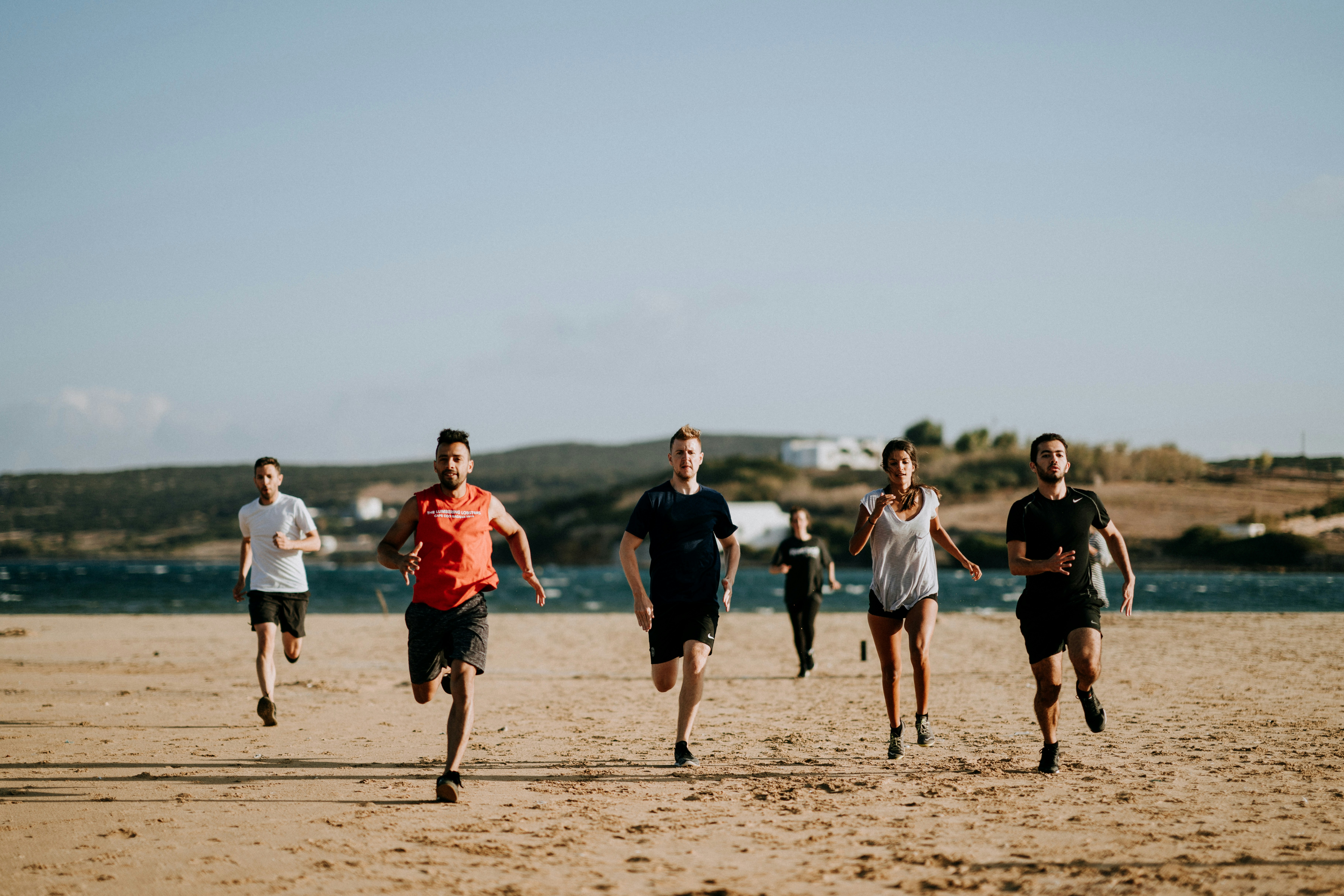
Ask a group of 17-year-olds what's on the IPPT and you'll usually hear five things: push-ups, sit-ups, standing broad jump, chin-ups, and the 2.4km run. It's a reasonable answer. It's also describing a test that hasn't existed since 2015.
That gap matters more than it looks like it should, because a training plan built around the wrong test wastes exactly the months a student actually has before enlistment. Before getting into what the evidence says builds a better score, it's worth being precise about what's actually being scored — and then looking at what the research on training for it, and for tests like it, actually supports.
What the IPPT actually tests, verified as of August 2026
The Singapore Armed Forces restructured the Individual Physical Proficiency Test in 2014, with the new format rolled out from 2015. According to MINDEF's own announcement of the change, the previous five-station test — which did include the standing broad jump and chin-ups — was replaced by three stations chosen specifically because they require "no specialised technique or equipment": push-ups, sit-ups, and the 2.4km run.1 That's still the format today. Push-ups and sit-ups are each worth a maximum of 25 points (one minute, maximum reps), and the 2.4km run carries the heaviest weighting at a maximum of 50 points, for a total possible score of 100. Passing requires at least 51 points overall, with a minimum of 1 point at each of the three stations.
This isn't a separate, easier test for students, either. The Pre-Enlistee IPPT (PE-IPPT) that pre-enlistees take before enlistment uses the identical three stations and the identical scoring — sit-ups and push-ups tested for "strength and endurance," the run for cardiovascular fitness — with one genuinely useful detail attached: pre-enlistees medically classified PES A or B1 who score at least 61 points (the "Pass with Incentive" band) at least two weeks before their Physical Training Phase enlistment qualify for an 8-week reduction in full-time National Service.2 That's a concrete, verifiable reason to take pre-enlistment training seriously beyond simply clearing 51.
So where does the standing-broad-jump-and-chin-ups version come from? Almost certainly from NAPFA — the National Physical Fitness Award every Singapore student already sits through in school, which is a genuinely different test. NAPFA still runs six stations: sit-ups, standing broad jump, sit-and-reach, pull-ups (inclined for younger students, standard pull-ups for males 15 and older), the 4×10m shuttle run, and a 1.6km or 2.4km run.3 A student who's spent five or six years being assessed on NAPFA, then hears "IPPT" and assumes it's the same list, is making a completely understandable mistake — it's just one that's worth correcting before it shapes a training plan, because a program built to maximise a standing broad jump you'll never be tested on again is time not spent on the three things that actually determine your score.
What the research says actually moves push-up, sit-up, and run scores
The instinctive plan most students build for themselves is to drill the test directly — more push-ups, more sit-ups, more running, in roughly that order of enthusiasm. The evidence on how these qualities actually adapt says that instinct undersells the run and oversells doing more of the same movement at the expense of getting genuinely stronger.
Push-ups and sit-ups for one minute are, physiologically, strength-endurance tasks — how many times a muscle group can produce sub-maximal force before it fails. That ceiling is set largely by how much maximal strength sits underneath the endurance, which is why building real upper-body and core strength, not just accumulating push-up and sit-up reps, raises the number of reps available before fatigue. Practising the test movement itself still matters for technique and pacing — but it's supporting a strength base, not substituting for one.
The run is where the tension between "more strength work" and "more running" actually gets tested directly, and this is where a 2012 meta-analysis in the Journal of Strength and Conditioning Research is genuinely useful. Pooling 21 studies and 422 effect sizes on concurrent strength-and-endurance training, the review found a real interference effect on strength and hypertrophy when the two are combined carelessly — strength-only training produced a mean effect size of 0.91 for power development versus 0.55 when combined with endurance work, and 1.23 versus 0.85 for hypertrophy.4 Critically, the interference wasn't uniform: resistance training combined with running produced significant strength and hypertrophy decrements, while resistance training combined with cycling did not, and the negative effect on strength and power grew stronger as the frequency and duration of the endurance sessions increased. The practical read for IPPT prep isn't "don't run" — the run is half your score. It's that running volume has a cost against your push-up and sit-up numbers specifically, which is exactly the tradeoff a plan that just stacks more of everything never accounts for.
What a program that gets this balance right actually looks like, and what it's worth compared to the "just drill the test" default, was tested directly in a 2024 study at a US senior military college.5 Researchers took 138 first-year cadets who had already failed their initial fitness test and split them between two remedial programs. One — the traditional approach — ran twice a week, non-periodized, mostly high-repetition push-ups and sit-ups in a Tabata format on flat pavement: essentially, drilling the test. The other, called CAPTI, ran three times a week for 16 weeks with real periodization: a block of compound strength work, plyometrics, and rotational stability training, followed by varied cardiovascular work — steady-state runs, hill repeats, sprint intervals, cross-country terrain — rather than more flat-pavement mileage.
Both groups improved. The group that trained real strength, power, and varied conditioning alongside the test movements passed at roughly three times the rate, and their total fitness-test score improved more than twice as much (+42 points versus +16) over the same 16 weeks.5 This is about as direct a test as exists of the two competing philosophies a self-coached student is choosing between without realising it.
Doing more push-ups is not the same training stimulus as getting stronger — and in a direct, controlled comparison, only the group that trained for the second one actually moved the score.
Mistake one: letting running eat the entire program
Because the 2.4km run is worth half the total score, it's the station students tend to over-index on — adding extra runs, extra distance, extra intensity, on top of whatever else they're doing. The research on how aerobic fitness and injury actually relate to each other says this is where the most training time gets wasted on the wrong lever, and where the real overuse risk sits.
The relationship isn't what "more running fixes running" assumes. A 2006 National Research Council review of the military-training injury literature found that being more aerobically fit is strongly protective against injury — in one cited study of male recruits, only 36% of the fastest runners reported a musculoskeletal injury during training, against 61% of the slowest; in a second study of female recruits, the figures were 50% versus 71%. Injury risk rose by roughly 13% for every one-quartile drop in run performance.6 Better aerobic fitness clearly helps. But that's a different claim from "more running mileage always helps" — the same body of research treats high running mileage on its own as a contributing risk factor for overuse injury, alongside low overall fitness and a rapid jump in training load. The two findings aren't contradictory: an athlete who arrives fitter tends to get there through better-rounded training, not simply more of the same run, logged more often.
This is also exactly the principle behind the NSCA's own Tactical Strength and Conditioning framework — the certification track built specifically around training tactical and military populations. Its stated approach is specificity through complex, multi-joint strength and power work, not conditioning volume alone.7 A student layering on extra unstructured runs because the run is worth the most points, without addressing lower-body strength and structural capacity underneath it, is choosing the version of "more" that the evidence says builds the least resilient runner — and, per the concurrent-training research above, actively taxes the push-up and sit-up gains at the same time.
What this looks like in practice
- Cap dedicated running sessions at a number that leaves room for strength work in the same week, rather than treating "more running" as the default response to a slow run time.
- Vary the terrain and format — intervals, hills, tempo efforts — instead of only logging more distance at the same steady pace, which is the running profile the interference-effect research associates with the largest strength cost.
- Build lower-body and core strength deliberately, not as an afterthought to running — it's the leg and hip strength underneath the run, not extra mileage on top of it, that the evidence ties to fewer overuse injuries.
Mistake two: skipping strength work because "it's not on the test"
The mirror-image mistake is treating anything that isn't push-ups, sit-ups, or running as wasted time — no squats, no pulling work, no general strength training, because none of it shows up as a station. The CAPTI comparison above is a direct answer to that logic: the program that included real strength and power training, not just the test movements, produced roughly three times the pass rate.
The mechanism isn't mysterious. A one-minute push-up or sit-up test is capped by the strength ceiling underneath it — a stronger chest, shoulders, and core support more reps before failure, the same way a stronger set of legs supports a faster, more durable 2.4km. Training exclusively in the test's own rep ranges (one all-out minute) misses the general strength development that raises that ceiling in the first place. It's the training equivalent of only ever taking practice exams instead of also learning the material the exam is drawn from.
[ASK COACH DZUL: a general note here on how you typically structure the strength-versus-test-drilling balance for a student with roughly 3 months' runway before enlistment would fit well — happy to insert your actual framing rather than leaving this as research-only.]
Realistic timelines: what to actually expect
The honest answer is that meaningful change here takes months, not the final two weeks before an enlistment date most students actually give it. In the CAPTI study, the group that trained properly needed the full 16 weeks to move from an average of 41 push-ups, 43 sit-ups, and a 16.8-minute 2-mile run at baseline to 48 push-ups, 57 sit-ups, and a 15.4-minute run — and that was a supervised, periodized program, not a self-directed one.5 On the aerobic side specifically, controlled endurance-training studies commonly report meaningful VO2max gains — on the order of 10–13% — over roughly 10 weeks of consistent, structured training, not days or single weeks.
The practical takeaway is less about a specific number of weeks and more about the shape of the timeline: strength-endurance gains in push-ups and sit-ups tend to show up steadily across a 10–16 week block once real strength training is in the program, and aerobic gains follow a similar multi-week arc rather than a sudden jump. A student starting three months out with a plan that balances strength work, varied conditioning, and test-specific practice — instead of maximising one station at the expense of the others — is working with a timeline the evidence actually supports. A student starting two weeks out with nothing but extra push-up sets and extra runs is not giving either adaptation the time it needs, regardless of effort.
Sources
- Ministry of Defence, Singapore. "New IPPT Format and Scoring System." News release, 24 July 2014. mindef.gov.sg. Verified live 27 August 2026.
- Central Manpower Base (CMPB), Singapore. "Pre-Enlistee IPPT and Body Mass Index." cmpb.gov.sg. Verified live 27 August 2026 — figures such as award-band cash incentives can be adjusted over time; check the NS Portal / OneNS for the current schedule before relying on exact dollar amounts.
- Catholic High School. "NAPFA" (test components and scoring, as a standalone protocol page). catholichigh.moe.edu.sg.
- Wilson JM, Marín PJ, Rhea MR, Wilson SM, Loenneke JP, Anderson JC. "Concurrent Training: A Meta-Analysis Examining Interference of Aerobic and Resistance Exercises." Journal of Strength and Conditioning Research 26(8):2293–2307, 2012. journals.lww.com/nsca-jscr.
- Thornton MT, Welch AS, Caulfield S, Pojednic RM. "The Cadet Athlete Physical Training Intervention (CAPTI): A 16-week Periodized Program to Remediate Underdeveloped Tactical Athletes at a Senior Military College." International Journal of Exercise Science 17(4):1083–1091, 2024. DOI: 10.70252/SSZU9761.
- National Research Council. "Assessing Fitness for Military Enlistment: Physical, Medical, and Mental Health Standards," Chapter 4: Physical Fitness and Musculoskeletal Injury. Washington, DC: The National Academies Press, 2006. DOI: 10.17226/11511 (citing Jones, 1992 and Westphal et al., 1996).
- National Strength and Conditioning Association. "Tactical Strength and Conditioning (TSAC) Program" and TSAC-F certification overview. nsca.com.
Want this applied to your own program, team, or school? Free 20-minute consult, no obligation.
Book a free consult →