
Research · Youth Athlete Nutrition
Nutrition Timing for Young Athletes: What the Evidence Actually Supports
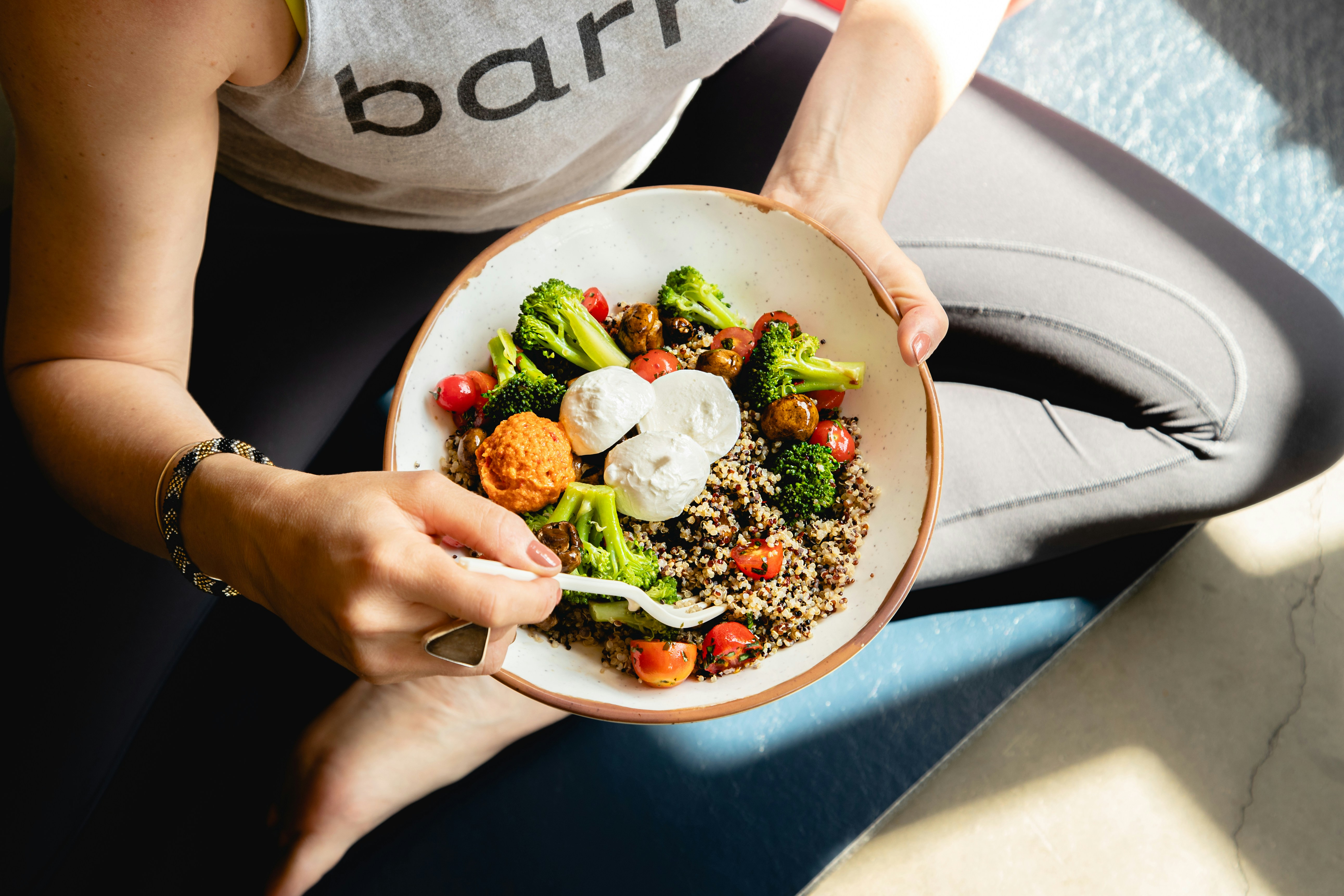
Young athletes carry two jobs at once that adults training for sport do not: building a body that is still growing, and asking that same body to train, recover, and compete. That dual demand is a large part of why nutrition timing for young athletes — when protein, carbohydrate, and fluid show up relative to a training session, not just how much of each appears over a week — has become its own area of pediatric and adolescent sports nutrition research, distinct from (though built on top of) the adult sports nutrition literature.
What follows draws on position statements from the Academy of Nutrition and Dietetics, Dietitians of Canada, and the American College of Sports Medicine1; the International Society of Sports Nutrition2; the International Olympic Committee's consensus statement on youth athletic development3; Sports Dietitians Australia's position statement on the adolescent athlete4; and the Canadian Paediatric Society5 — alongside controlled studies conducted specifically in children, rather than adult data scaled down by body weight. It covers three areas: protein distribution across the day, carbohydrate timing around training, and hydration basics. It is general education, not an individualized nutrition prescription. A young athlete's actual needs depend on age, sex, sport, training volume, and health history, and any family with a specific concern — unexplained weight change, persistent fatigue, a restrictive eating pattern, or a weight-class or aesthetic sport where those pressures run higher — should raise it with a pediatrician or a registered dietitian experienced in youth sport, not settle it from a blog post.
A Different Nutritional Job: Growth and Training at the Same Time
The IOC's 2015 consensus statement on youth athletic development frames nutrition education for this age group around supporting balanced diets for health, growth, and performance together, rather than performance in isolation3. That framing matters because it changes what "getting it wrong" looks like. An adult athlete who under-fuels a training block mainly loses performance and recovers slowly. A young athlete who chronically under-fuels risks interference with the growth and maturation happening at the same time — which is a large part of why pediatric-specific research exists at all, rather than adult sports nutrition numbers simply being divided by a smaller body weight.
Protein: Steady Supply Appears to Matter More Than One Big Dose
Position statements converge on a daily protein range for adolescent athletes of roughly 1.3–2.0 g per kilogram of body weight. Sports Dietitians Australia's position statement specifies approximately 1.35 g/kg/day for adolescent girls and 1.6 g/kg/day for adolescent boys, to support the added demands of training on top of growth4. The ISSN's position stand on protein and exercise, covering the broader athlete population this pediatric guidance draws on, gives a similar range of 1.4–2.0 g/kg/day for building and maintaining muscle through a positive protein balance2.
The daily total, though, is only part of the picture. The same ISSN position stand notes that protein is better spread across the day than concentrated in one or two meals — general servings of roughly 20–40 g (about 0.25 g/kg) spaced every three to four hours appear to support muscle protein synthesis more consistently than the same total eaten in fewer, larger meals2. A 2025 review of adolescent athlete nutrition illustrates what the failure case looks like in practice: it cites data on college soccer players whose protein intake skewed heavily toward dinner, with breakfast and lunch each supplying well under a fifth of the day's total — a pattern the review flags as a plausible drag on recovery even when the daily total looks adequate on paper8.
Pediatric-specific research adds a genuine nuance here rather than just restating the adult numbers. A randomized trial in healthy children by Volterman, Moore, and colleagues found that as little as 5 g of high-quality protein taken after exercise was enough to shift children from a negative to a positive whole-body protein balance — a notably smaller dose than the 20–40 g figures typically studied in adults7. That doesn't mean five grams is an optimal or sufficient daily strategy on its own; it means children's bodies appear to respond efficiently to modest amounts of protein around training, which supports the same underlying principle as the adult evidence — several protein-containing meals and snacks spread through the day — without necessarily requiring the same per-meal size to get there.
The youth athletes who look like they're not eating enough protein almost never are — they're eating it all at one meal instead of across the day.
- Aim for a protein source at breakfast, lunch, dinner, and one or two snacks, rather than saving most of it for the evening meal.
- A serving is roughly palm-sized — a glass of milk, a cup of yogurt, an egg or two, or a similar portion of meat, fish, tofu, or legumes.
- There's no evidence a young athlete needs a large specialized protein supplement immediately after training; ordinary food, eaten within a reasonable window afterward, does the job.
Carbohydrate: Timing Fuel Around the Session
Carbohydrate is the primary fuel for the higher-intensity, glycogen-dependent work most youth sport involves, and its timing guidance is more session-specific than protein's. The Canadian Paediatric Society's practice point on sport nutrition for young athletes recommends a carbohydrate-containing meal or snack one to two hours before activity, keeping fat and fibre moderate to low so the meal digests comfortably before the session starts5. For sessions or games longer than about an hour, the Society recommends roughly 30–60 g of carbohydrate per hour during exercise, most practically delivered through diluted juice, a carbohydrate-electrolyte drink, or an easily digested snack — a range echoed in a 2025 review of adolescent athlete nutrition5,8.
After training, the Canadian Paediatric Society describes a two-step pattern: a carbohydrate-containing snack within about 30 minutes of finishing, followed by a full meal combining carbohydrate and protein — roughly a 3:1 carbohydrate-to-protein ratio — within two to three hours5. The 2025 adolescent-athlete review frames the same recovery window in gram terms for harder or longer sessions: roughly 1.0–1.2 g of carbohydrate per kilogram of body weight in the hour after training, continued at intervals through the following four to six hours when the session was demanding8. For a young athlete training once a day at a moderate volume, the simpler food-based version is usually the more useful frame than chasing a specific gram target.
Hydration: The Basics, Before the Sports Drink Aisle
Hydration guidance for young athletes starts from a finding that runs against older assumptions. The American Academy of Pediatrics' clinical report on climatic heat stress in exercising children and adolescents notes that, contrary to earlier thinking, children do not have meaningfully worse thermoregulatory ability or cardiovascular tolerance for exercise in the heat than adults, provided hydration is adequate6. The same report identifies the real drivers of heat-illness risk in youth sport as modifiable factors — too much exertion, too little recovery between repeated same-day sessions, and clothing or protective equipment that traps heat — rather than an inherent physiological disadvantage, and concludes that exertional heat illness in youth sport is usually preventable6. That reframes hydration as a controllable variable rather than a special pediatric vulnerability.
The Canadian Paediatric Society's practical numbers are a reasonable starting point: fluids through the 24 hours before a session, roughly 125–300 mL every 15–20 minutes during exercise, and at least 500 mL after activity to rehydrate5. The National Athletic Trainers' Association's position statement on fluid replacement adds a qualifier that applies just as much to youth sport as to adult athletics: fluid needs vary with sweat rate, environment, and the individual, so a fixed volume is a starting estimate rather than a rule, and the goal is avoiding both under-drinking and the less common but more serious risk of over-drinking, which can cause exercise-associated hyponatremia9.
On water versus sports drinks, the pattern across this guidance is consistent: for sessions under an hour at moderate intensity, plain water is an adequate default. For longer sessions, higher-intensity work, or hot and humid conditions, a carbohydrate-electrolyte drink — typically in the range of 6–8% carbohydrate, with some sodium and potassium to help offset sweat losses — can support both fluid balance and the fluid intake itself, since flavour and palatability genuinely affect how much a child is willing to drink8.
Practical hydration checklist
- Before: normal fluid intake with meals through the day; there's no need for large volumes right before a session.
- During: small, frequent sips rather than large infrequent gulps — roughly every 15–20 minutes for sessions over an hour.
- After: water or a carbohydrate-electrolyte drink alongside the post-training snack; thirst and pale urine colour are reasonable everyday guides for most healthy young athletes.
The Caution Every Parent Should Hear
None of the above is a case for tighter control over what a young athlete eats — if anything, the research argues the opposite. The 2025 review of adolescent athlete nutrition summarizes a growing body of evidence on low energy availability — insufficient total energy intake relative to training load and growth needs — and its consequences specifically in developing athletes: delayed puberty, menstrual dysfunction, impaired bone health, short stature, disordered eating patterns, and higher injury risk8. One study cited in that review found that just five days of reduced energy availability measurably lowered luteinizing hormone pulse frequency in adolescents but not in adults, evidence that growing bodies may be more sensitive to energy shortfalls than mature ones, not less8. The review also notes these risks aren't limited to female athletes or to obviously restrictive diets: low bone mineral density during a critical bone-accrual window has been documented in male high-school athletes too, and fat restriction in weight-class or aesthetic sports — gymnastics, wrestling, figure skating, swimming — is flagged as a common, often unintentional route into the same problem8.
The nutrition-timing principles above are meant to sit on top of sufficient total intake, not substitute for it. None of the source position statements frame timing as a tool for weight management, and none suggest restriction is appropriate for a growing child regardless of sport or aesthetic pressure. Where a family has specific concerns about a young athlete's weight, eating pattern, energy levels, or growth trajectory, that's a conversation for a pediatrician or a registered dietitian with pediatric or adolescent sports nutrition experience — general guidance like this is a starting point for understanding the evidence, not a substitute for individual assessment.
Where This Fits Into a Youth Training Program
Coach Muhammad Dzulhisham, NSCA-CSCS, applies these timing principles as background structure rather than as rules imposed on young athletes: a snack before a session, water within reach during it, and a meal with some protein and carbohydrate afterward, layered onto the athlete's normal eating pattern rather than replacing it. That mirrors the tone of the underlying position statements themselves, which consistently describe nutrition timing as one tool among several — alongside adequate total energy, sleep, and appropriately progressed training — for supporting a young athlete's performance and recovery, without treating a still-growing body as a smaller version of an adult one.
Quick reference
- Protein: roughly 1.3–2.0 g/kg/day, spread across three meals and one or two snacks rather than loaded onto dinner.
- Carbohydrate: a carb-containing snack or meal 1–2 hours before training; 30–60 g/hour during sessions over an hour; a carb-and-protein snack or meal within 30 minutes to 3 hours afterward.
- Hydration: regular fluids through the day, small frequent sips during activity, and rehydration afterward — water for most sessions, a carbohydrate-electrolyte drink for longer or hotter ones.
- The bigger picture: none of this replaces adequate total daily energy intake, and none of it is a basis for restriction in a growing child.
Sources
- Thomas DT, Erdman KA, Burke LM. Position of the Academy of Nutrition and Dietetics, Dietitians of Canada, and the American College of Sports Medicine: Nutrition and Athletic Performance. J Acad Nutr Diet. 2016;116(3):501-528. https://pubmed.ncbi.nlm.nih.gov/26920240/
- Jäger R, Kerksick CM, Campbell BI, et al. International Society of Sports Nutrition Position Stand: protein and exercise. J Int Soc Sports Nutr. 2017;14:20. https://pmc.ncbi.nlm.nih.gov/articles/PMC5477153/
- Bergeron MF, et al. International Olympic Committee consensus statement on youth athletic development. Br J Sports Med. 2015;49(13):843-851. https://pubmed.ncbi.nlm.nih.gov/26084524/
- Desbrow B, McCormack J, Burke LM, et al. Sports Dietitians Australia position statement: sports nutrition for the adolescent athlete. Int J Sport Nutr Exerc Metab. 2014;24(5):570-584. https://pubmed.ncbi.nlm.nih.gov/24668620/
- Purcell LK; Canadian Paediatric Society, Paediatric Sports and Exercise Medicine Section. Sport nutrition for young athletes. Paediatr Child Health. 2013;18(4):200-202. https://pubmed.ncbi.nlm.nih.gov/24421690/
- Bergeron MF, Devore C, Rice SG; American Academy of Pediatrics Council on Sports Medicine and Fitness and Council on School Health. Climatic heat stress and exercising children and adolescents. Pediatrics. 2011;128(3):e741-e747. https://pubmed.ncbi.nlm.nih.gov/21824876/
- Volterman KA, Moore DR, Breithaupt P, Grathwohl D, Offord EA, Karagounis LG, Timmons BW. Timing and pattern of postexercise protein ingestion affects whole-body protein balance in healthy children: a randomized trial. Appl Physiol Nutr Metab. 2017;42(11):1142-1148. https://pubmed.ncbi.nlm.nih.gov/28683243/
- Everett S. Optimizing Performance Nutrition for Adolescent Athletes: A Review of Dietary Needs, Risks, and Practical Strategies. Nutrients. 2025;17(17):2792. https://doi.org/10.3390/nu17172792
- McDermott BP, Anderson SA, Armstrong LE, et al. National Athletic Trainers' Association Position Statement: Fluid Replacement for the Physically Active. J Athl Train. 2017;52(9):877-895. https://doi.org/10.4085/1062-6050-52.9.02
Want this applied to your own program, team, or school? Free 20-minute consult, no obligation.
Book a free consult →