
Research · Coaching Collaboration
Same Gym, Different Mandate: What Research Says About PE Teacher–Coach Collaboration
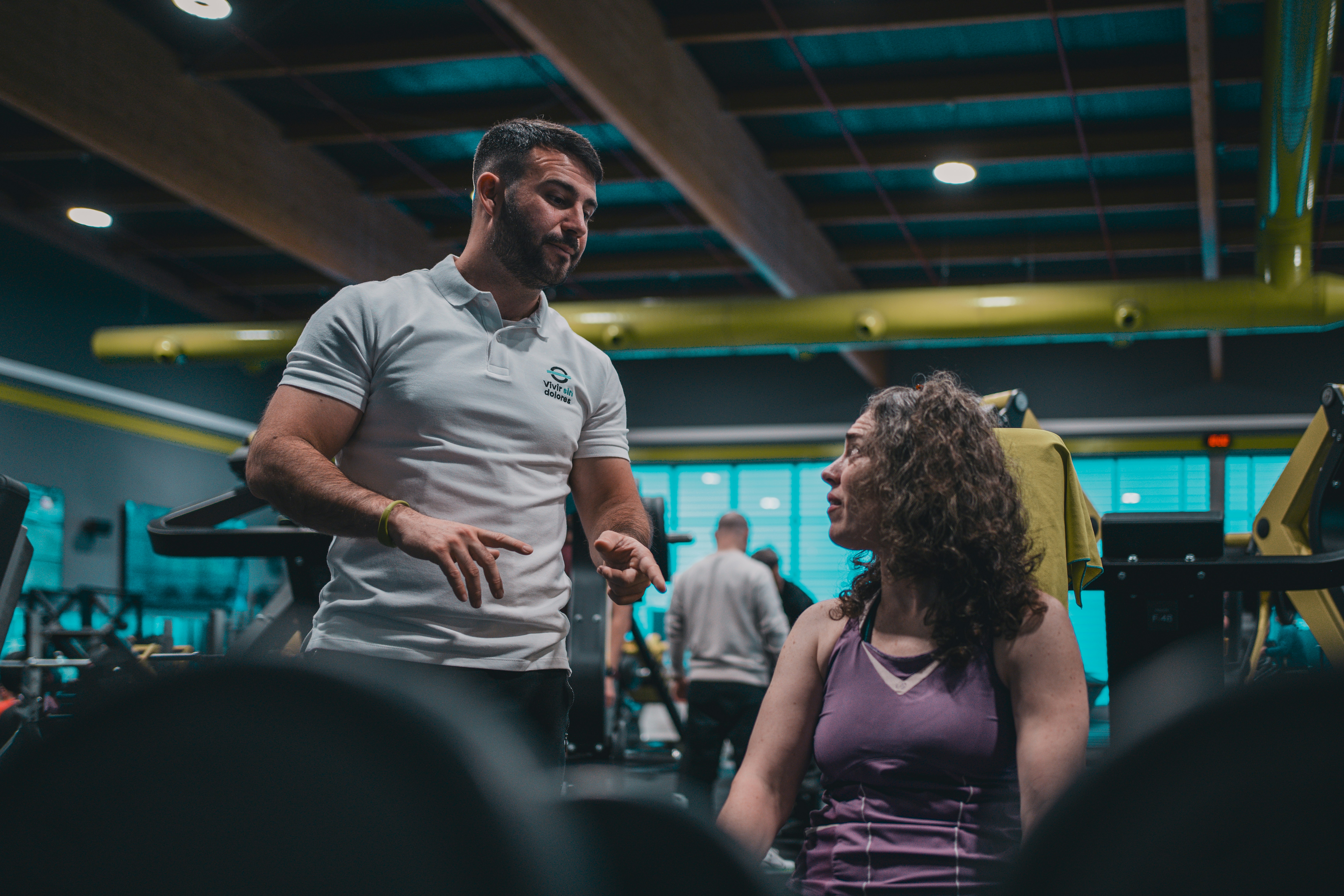
In a growing number of schools, the person leading a physical education session is no longer only the classroom PE teacher. A strength and conditioning coach, sport-specific specialist, or external provider now regularly shares the gym, field, or timetable slot — brought in for expertise the generalist teacher may not have, equipment the school does not own, or simply capacity the timetable cannot otherwise fill. Singapore's own Sports Education Programme and School Sports Partnership, run jointly by Sport Singapore and the Ministry of Education, formalise exactly this arrangement, embedding ActiveSG Academy and club coaches inside schools alongside PE staff. The model is not an edge case; it is now closer to the default.
What the physical education and sport pedagogy literature makes clear, however, is that placing two professionals with different training, different mandates, and different accountability in the same space does not automatically produce collaboration. Left undefined, it produces something else entirely: role drift, duplicated effort, or a quiet handover in which the specialist absorbs work the teacher used to do, rather than a partnership that leaves the school more capable than it found it.
When the Specialist Walks In, What Happens to the Teacher?
The most direct evidence on this question comes from Smith's 2015 study of School Sport Partnerships in north-west England, published in Sport, Education and Society.1 The policy intent behind bringing sports coaches into state primary schools was explicit: exposure to specialists was meant to build generalist teachers' confidence and competence to teach PE themselves. The study found the opposite dynamic taking hold in practice. Coach involvement became widespread and normalised, particularly in extracurricular PE, which in several schools functioned as what the study called a "coach-only zone." In some cases coaches delivered the entire PE offering without a teacher present at all; where teachers were present, their role was frequently reduced to supervision rather than co-delivery. A mechanism designed to transfer capability instead tended to substitute for it.
More recent research suggests the pressure behind this pattern has not eased. Cowan, Hogan, Sperka and Macdonald's 2025 study in Sport, Education and Society examined a New Zealand primary school where funding constraints had made external providers effectively indispensable for delivering specialist curriculum areas cost-effectively, based on interviews with nine school staff.2 Separately, Allen, Quarmby and Dillon's 2023 study in the same journal found that external providers typically arrive with their own curriculum frameworks, pedagogical approaches, and assessment practices, shaped by their own commercial training rather than built in coordination with the host school's curriculum.3 Analysed through Penney and colleagues' three "message systems" of curriculum, pedagogy, and assessment, the finding points to a structural risk: without deliberate integration, the specialist's programme and the classroom teacher's curriculum can run in parallel rather than reinforcing one another.
None of this suggests coaches or external providers are the problem. Spittle, Spittle and Itoh's 2022 survey in Frontiers in Sports and Active Living found that roughly three-quarters of the Australian schools sampled outsourced at least some PE delivery, with primary schools (78.1%) doing so at notably higher rates than secondary schools (59.5%).4 Access to specialist expertise and equipment were the strongest reasons cited, and schools with the fewest in-house PE specialists rated their own insufficient knowledge as a significantly stronger driver than schools with large specialist departments. Specialist input is filling a real gap. The literature's concern is narrower and more specific: whether that input is structured to build the school's standing capacity, or to quietly stand in for it.
Why Ambiguity Costs More Than Awkwardness
There is a well-established theoretical account of why undefined roles cause problems, and it long predates school sport. Kahn and colleagues' 1964 role episode model, developed in organisational psychology, established role ambiguity and role conflict as measurable sources of tension, dissatisfaction, and impaired performance. Sport psychology researchers Eys and Carron adapted this model specifically for interdependent sport teams in a 2003 paper in the Journal of Sport and Exercise Psychology, and Beauchamp, Bray, Eys and Carron went on to validate a four-dimensional structure for it in Small Group Research in 2005.5,6 The four dimensions are: the scope of one's responsibilities, the specific behaviours required to fulfil them, how role performance is evaluated, and the consequences of failing to meet the role. It is a useful checklist precisely because it goes beyond "who does what" to ask who evaluates, who is accountable, and what happens when something falls through the gap.
The scope of a role is rarely the part that goes undefined — it is the evaluation and the consequences that get skipped, and that is exactly where PE teacher–coach partnerships tend to break down.
Konukman and colleagues' 2010 literature review in Biomedical Human Kinetics on teacher-coach role conflict adds a complementary angle.7 Their focus is the individual who holds both jobs at once — a PE teacher who also coaches — and the review documents measurable stress and burnout arising from the structural tension between teaching's inclusive, curriculum-bound, developmental mandate and coaching's more selective, results-oriented one. The two mandates do not disappear when they are split between two people sharing the same gym instead of held by one. They simply change shape, moving from an internal conflict inside one person's job to a negotiation between two professionals with genuinely different training, incentives, and definitions of success working with the same students in the same space.
Borrowing a Working Model: What Co-Teaching Research Offers
Physical education is not the first field to face this exact structural problem. Special education has spent decades studying what happens when two credentialed professionals share instructional responsibility for the same students, and Friend, Cook, Hurley-Chamberlain and Shamberger's 2010 paper in the Journal of Educational and Psychological Consultation remains a central reference point.8 Their research describes six distinct, explicitly named co-teaching configurations — among them one-teach-one-assist, station teaching, parallel teaching, and team teaching — each specifying in advance who leads instruction and who supports at any given moment, rather than leaving it to be worked out in the room.
The translation to a PE teacher and a specialist coach sharing a period is direct. One-teach-one-assist might mean the coach leads a technical lifting block while the teacher circulates for behaviour management and inclusion needs; station teaching might mean the teacher runs a skills circuit while the coach runs a conditioning station concurrently. What Friend and colleagues are emphatic about, however, is the precondition beneath all six models: protected, recurring co-planning time. Their research is explicit that without consistently scheduled planning between the two professionals, the benefits of any of these structures are significantly diminished — a warning that applies as directly to a 35-minute PE period as to a co-taught classroom.
What Deliberate Shared Understanding Looks Like
Ashford, Taylor, Payne, Waldouck and Collins's 2023 paper in Frontiers in Sports and Active Living examined how elite rugby union coaching staffs build what the sport psychology literature calls "shared mental models" — genuinely overlapping understanding of a shared plan, rather than each specialist quietly running their own.9 Working through first-person case studies with practising elite coaches, the authors found that this alignment did not happen by proximity or goodwill; it required a deliberate process of exposing an initial plan to structured challenge and debate until it became something the wider coaching and playing group actually shared, and it required including the interdisciplinary support staff — medical, strength and conditioning, performance analysis — in that same alignment process rather than treating them as a separate lane reporting in afterwards. The specific setting is elite performance sport, not a school gym, but the underlying mechanism is the one this literature keeps surfacing: coordination between specialists is a designed process, not a byproduct of everyone being competent and well-intentioned.
Applied, practitioner-facing literature aimed specifically at strength and conditioning coaches converges on the same answer from ground level. Guidance published in NSCA Coach on boundaries between strength and conditioning coaches and sport coaches argues that communication has to actively establish boundaries rather than assume they are obvious, recommends documenting how responsibilities are divided so disagreements have a reference point rather than a memory to argue over, and stresses that roles should be expected to shift over a season and revisited rather than fixed once and forgotten.10 A related 2023 applied doctoral research project by Hermans at Liberty University, examining communication between athletic trainers and strength and conditioning coaches in American high schools, found that even adjacent, school-based sport performance professions reported communication breakdowns with injury-relevant consequences, and identified concrete, low-cost fixes: scheduled joint meetings, shared documentation, and a common vocabulary bridging the two professions' different training backgrounds.11
Turning the Research Into a Working Agreement
Read together, this literature does not argue against bringing specialist coaches into schools — the evidence on outsourcing suggests the opposite is often impractical given real gaps in staffing and expertise. It argues for treating the collaboration itself as something that has to be designed, using dimensions the research keeps returning to independently of each other:
- Scope, not just tasks. Following Eys and Carron's framework, define not only who runs which drill but who is accountable for load monitoring, who signs off on modifications for an injured or unfit student, and who owns communication with parents.
- Protected joint planning time. Friend and colleagues' co-teaching research treats this as non-negotiable, not a nice-to-have squeezed around timetables.
- A named evaluation and escalation path. What happens when the teacher and coach disagree on a call for a specific student, and who has the final word — decided before it is needed, not during the disagreement.
- Capacity transfer as an explicit goal, not a side effect. Given Smith's and Cowan and colleagues' findings on specialists quietly replacing rather than building teacher capability, schools gain more when the arrangement is designed to leave the teacher more capable of independent delivery over time.
- A shared vocabulary and light documentation. Hermans's high school findings suggest this alone closes much of the communication gap between two professionals trained in different systems.
For Singapore schools working within MOE-endorsed structures like the School Sports Partnership, none of this requires new infrastructure — the programme already places specialist coaches inside the timetable alongside PE staff. What the research suggests is worth adding is deliberate role definition at the front end, rather than assuming shared understanding will emerge from two competent professionals occupying the same space.
The consistent thread across four decades of role theory, co-teaching research, elite coaching case studies, and school-specific outsourcing studies is that role clarity is not the natural byproduct of good intentions and professional competence. It is a designed artefact — written down, reviewed, and renegotiated as circumstances change — and schools that treat it that way get measurably more out of the specialist coaches they bring in.
Sources
- Smith, A. (2015). Primary school physical education and sports coaches: evidence from a study of School Sport Partnerships in north-west England. Sport, Education and Society, 20(7). https://www.tandfonline.com/doi/abs/10.1080/13573322.2013.847412
- Cowan, J., Hogan, A., Sperka, L., & Macdonald, D. (2025). Outsourcing in HPE: finding cost-efficiencies in specialist curriculum areas. Sport, Education and Society. https://www.tandfonline.com/doi/full/10.1080/13573322.2025.2463489
- Allen, J., Quarmby, T., & Dillon, M. (2023). 'To a certain extent it is a business decision': exploring external providers' perspectives of delivering outsourced primary school physical education. Sport, Education and Society, 29(9), 1099–1113. https://www.tandfonline.com/doi/full/10.1080/13573322.2023.2264319
- Spittle, S., Spittle, M., & Itoh, S. (2022). Outsourcing Physical Education in Schools: What and Why Do Schools Outsource to External Providers? Frontiers in Sports and Active Living, 4:854617. https://www.frontiersin.org/journals/sports-and-active-living/articles/10.3389/fspor.2022.854617/full
- Konukman, F., Agbuga, B., Erdogan, S., Zorba, E., Demirhan, G., & Yilmaz, I. (2010). Teacher-coach role conflict in school-based physical education in USA: a literature review and suggestions for the future. Biomedical Human Kinetics, 2, 19–24. https://files.eric.ed.gov/fulltext/EJ911757.pdf
- Eys, M.A., & Carron, A.V. (2003). Role Ambiguity in Sport Teams. Journal of Sport and Exercise Psychology, 25(4). https://journals.humankinetics.com/view/journals/jsep/25/4/article-p534.xml
- Beauchamp, M.R., Bray, S.R., Eys, M.A., & Carron, A.V. (2005). Leadership Behaviors and Multidimensional Role Ambiguity Perceptions in Team Sports. Small Group Research, 36, 5–20. https://journals.sagepub.com/doi/10.1177/1046496404266684
- Friend, M., Cook, L., Hurley-Chamberlain, D., & Shamberger, C. (2010). Co-Teaching: An Illustration of the Complexity of Collaboration in Special Education. Journal of Educational and Psychological Consultation, 20(1), 9–27. https://www.tandfonline.com/doi/full/10.1080/10474410903535380
- Ashford, M., Taylor, J., Payne, J., Waldouck, D., & Collins, D. (2023). 'Getting on the same page' enhancing team performance with shared mental models—case studies of evidence informed practice in elite sport. Frontiers in Sports and Active Living, 5:1057143. https://www.frontiersin.org/journals/sports-and-active-living/articles/10.3389/fspor.2023.1057143/full
- Gillham, A. The Importance of Boundaries and Roles for Coaches. NSCA Coach. https://www.nsca.com/education/articles/nsca-coach/importance-of-boundaries-and-roles/
- Hermans, C.S. (2023). Using Interprofessional Collaboration to Bridge Athletic Training and Strength and Conditioning Programs in High School Settings to Reduce Injuries. Applied Doctoral Research Project, Liberty University. https://digitalcommons.liberty.edu/cgi/viewcontent.cgi?article=6208&context=doctoral
- Sport Singapore. School Sports Partnership. https://www.activesgcircle.gov.sg/schoolengagement/school-based-programmes/school-sports-partnership
Want this applied to your own program, team, or school? Free 20-minute consult, no obligation.
Book a free consult →