
Research · Youth Development
Does Jump Training Stunt Growth? What the Evidence on Youth Plyometrics Actually Shows
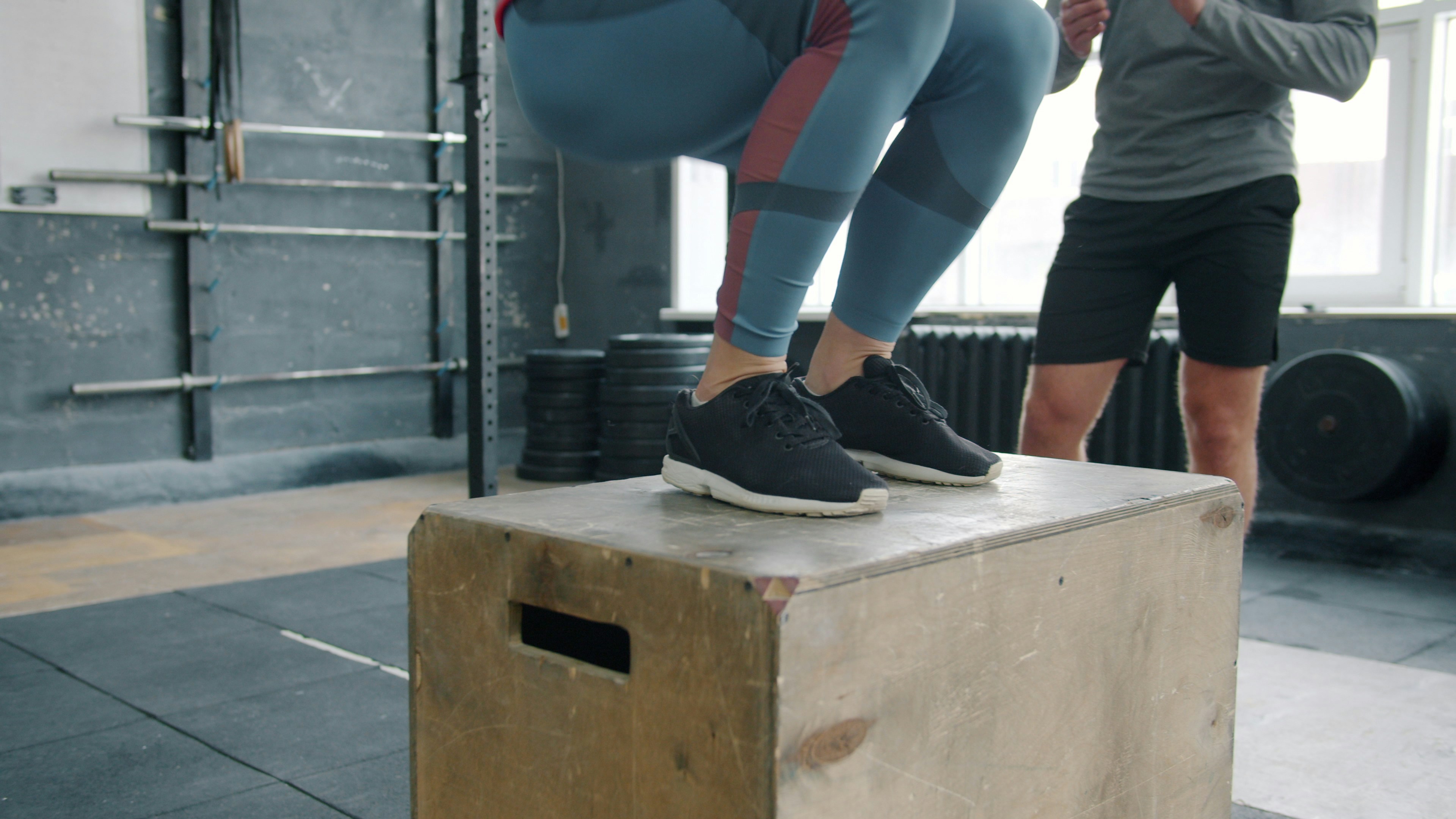
Depth jumps, bounding, box jumps — of everything in a strength and conditioning program, jump training draws the sharpest parental reaction. It looks violent in a way a goblet squat doesn't: a child leaping off a box and slamming into the floor, over and over. The worry that follows is specific and physiological, not vague — that repeatedly loading a growing skeleton this way will damage the growth plates or stunt the child's eventual height. It's a real enough question that the National Strength and Conditioning Association's own coaching journal ran a paper titled, simply, "Are Plyometrics Safe For Children?" back in 2000.1
The American College of Sports Medicine has since taken an official position on exactly this question. Its Current Comment on the topic — a public-facing statement written by exercise scientists Avery D. Faigenbaum and Donald A. Chu — states plainly that "plyometric training is a safe, beneficial and fun activity for children and adolescents provided that the program is properly designed and supervised."2 That qualifier is doing real work, and unpacking exactly what it's guarding against — versus what it isn't — is most of what the evidence on this topic actually turns on.
What a growth-plate injury from jumping would actually look like
Before weighing the evidence, it helps to be precise about what's anatomically at stake. There are two different structures that get lumped together under "growth plate" in casual conversation. The epiphyseal growth plate sits near the end of a long bone and is where the bone actually lengthens. An apophysis is a separate, smaller growth center where a major tendon attaches to bone — the kind of site behind conditions like Osgood-Schlatter disease at the knee or Sever's disease at the heel. According to the American Orthopaedic Society for Sports Medicine, apophyseal injuries cluster around ages 8–15, are driven by "forceful eccentric contractions" during sports like track and field, soccer, basketball, and gymnastics, and their most significant contributing factors are early sports specialization and overtraining — not exposure to any single training modality.3 Prevention, per the same source, runs through varied, well-conditioned training rather than avoidance of loading altogether.
That distinction matters because it reframes the actual question. It isn't "can jumping ever hurt a growing joint" — any repetitive movement can, if volume and recovery are mismanaged. It's whether structured plyometric training, specifically, carries a documented risk to growth cartilage above and beyond what a child already generates running around a schoolyard.
Does it stunt growth or damage growth plates? The research says no
The most direct answer available comes from the NSCA's Position Statement on Long-Term Athletic Development, a 2016 consensus paper from nine researchers across pediatric exercise science and sports medicine, published in the Journal of Strength and Conditioning Research.4 Addressing the training methods it covers — which include the speed, power, and jump training that plyometrics fall under — the statement is unambiguous: "evidence now indicates that well-supervised physical training does not impair the development of secondary sex characteristics, does not delay age at menarche, and does not restrict eventual growth height." The paper goes further on the injury-risk side, noting that the actual driver of elevated injury risk during childhood is the adolescent growth spurt itself — a period when bone lengthens faster than the muscle and tendon around it, producing genuine, temporary imbalances in strength and flexibility around a joint — not a specific training method layered on top of it.
A 2011 systematic review in the same journal gives the closest thing available to a direct empirical check on plyometrics specifically. Johnson, Salzberg, and Stevenson reviewed eight controlled studies of plyometric training in children aged roughly 8–14, screening explicitly for safety and effectiveness outcomes.5 Two of the studies reported specifically on adverse events, finding no injuries and no complaints of muscle soreness across their training programs. Just as tellingly, growth-plate injury doesn't appear anywhere in the review's findings as a reported outcome at all — despite the review team looking directly for safety data across every included study. The honest caveat the reviewers themselves flagged is worth stating plainly rather than glossing over: all eight studies scored low on a standardized quality scale (3–6 out of 10), so this isn't a large, high-certainty evidence base. It is, however, the actual literature that exists, and none of it surfaces the specific harm parents ask about.
Safety outcomes across the eight controlled studies of youth plyometric training reviewed by Johnson, Salzberg & Stevenson, 2011.
None of this means jump training is risk-free in every configuration — the ACSM statement is explicit that "there is the potential for injury to occur if the intensity and volume of the training program exceeds the abilities of the participants." That's a real caveat, but notice what it's actually about: program design and progression, not a structural vulnerability unique to a growing skeleton that adult loading doesn't also carry.
What age is actually appropriate to start
There's no single chronological cutoff in the research — and the NSCA's position statement is direct about why that's the right conclusion rather than a gap in the evidence. It recommends readiness be judged by whether a child is "emotionally mature enough to accept and follow directions" and possesses "competent levels of balance and postural control," criteria typically met by around 6–7 years of age.4 Before that, the guidance isn't to wait in a training vacuum — it's that free, exploratory play building fundamental movement skills is the appropriate input for children from birth to roughly age 5–6, with structured strength and conditioning layered in once a child is already old enough to participate in organized sport.
Applied specifically to jump training, the ACSM statement makes a related point that's easy to miss: plyometrics aren't an exotic addition to a young child's movement diet, they're already there. "Common games and activities such as hopscotch, jumping rope and jumping jacks can also be characterized as plyometrics because every time the feet make contact with the ground... the muscles are subjected to the stretch-shortening cycle."2 The practical question for a coach isn't whether a 7-year-old should be exposed to jumping loads — that's already happening on the playground — it's when to move from that natural, self-regulated volume into a structured, progressively loaded program, starting with lower-intensity drills before anything like a true depth jump enters the picture.
The maturation window that actually changes what works
Beyond readiness, there's a more specific, better-supported finding about timing: plyometric training and traditional resistance training don't produce identical benefits at every stage of growth, and two independent reviews converge on the same pattern. The NSCA's position statement cites a training study showing that boys who had not yet reached peak height velocity (PHV) — the point of maximum growth rate during the adolescent spurt — made their greatest sprint-speed improvements from plyometric training alone, while boys who had already passed PHV responded more favorably to combined strength-and-plyometric training.4 The authors describe this as "synergistic adaptation": plyometric training before puberty promotes the same kind of neural adaptations that occur naturally during that stage of growth, while combined training better matches the structural, hormonally-driven adaptations that follow the pubertal growth spurt.
A separate, independently conducted systematic review in PLOS ONE reaches the same conclusion from different data. Peitz, Behringer, and Granacher compared plyometric and resistance training studies in youth directly and found that "maturation affects plyometric and resistance training outcomes differently, with the former eliciting greater adaptations pre-peak height velocity (PHV) and the latter around- and post-PHV."6 Two separately conducted reviews, using different underlying studies, landing on the same maturation-based pattern is a meaningfully stronger signal than either one alone — and it reframes "what age" from a safety question into a programming one: plyometric-dominant work earlier, blended strength-and-power work as the growth spurt passes.
"Plyometric training is a safe, beneficial and fun activity for children and adolescents provided that the program is properly designed and supervised." — American College of Sports Medicine, Current Comment
What dosage and volume the evidence actually supports
The most concrete, pediatric-specific guidance available comes directly from the ACSM statement, and it's considerably more conservative than the volumes often quoted in general strength-and-conditioning material written for older, trained athletes. Its guidance: one to three sets of six to ten repetitions, covering one upper-body exercise (such as a one-kilogram medicine ball chest pass) and one lower-body exercise (such as a double-leg hop), performed twice per week on non-consecutive days, with two to four minutes of rest between sets if multiple sets are performed.2 The statement is also specific that plyometrics shouldn't be a stand-alone program — it belongs folded into a broader plan that includes strength, aerobic, flexibility, and agility work, on supportive footwear and a surface with some give.
That conservative starting point sits in useful contrast to the volume ranges commonly cited for general — typically adult or well-trained adolescent — populations in strength-and-conditioning coaching material, which run from roughly 80 to over 140 foot contacts per session across beginner-to-advanced trained lifters.8 The gap between those numbers isn't a contradiction; it's the point. Pediatric dosage guidance is intentionally set well below what's appropriate once someone has years of training age behind them, and the evidence doesn't support skipping straight to the higher end because a young athlete is enthusiastic or looks physically capable.
Two further findings help calibrate how much volume is actually necessary to see a benefit, rather than how much can theoretically be tolerated. A 2023 systematic review and meta-analysis in Sports Medicine – Open, pooling 11 studies and 744 youth participants, found that plyometric-jump training produced measurable improvements in physical fitness with a genuinely minimal dose: as little as four weeks of training (eight sessions total) and roughly 92 jumps per week.7 The same review found training effects were similar across pre- and post-PHV groups for most outcomes, with change-of-direction speed the one measure that favored younger, less mature athletes specifically. Separately, the Peitz et al. comparative review found plyometric programs in the literature averaging about seven weeks in duration, with two to three sessions per week, and noted that lower-to-moderate training volumes can be as time-efficient as higher ones when the exercises are chosen to match the specific demands of the athlete's sport.6
Youth-specific dosage benchmarks the peer-reviewed literature actually supports, side by side.
Put together, the dosage evidence doesn't ask for restraint out of caution alone — it points to something closer to "more is unnecessary" than "more is dangerous." A young athlete doesn't need advanced-athlete foot-contact volumes to see real gains; a well-designed, low-volume program produces measurable results inside a single training block.
What effectiveness actually looks like at that dosage
The Johnson et al. review found that, even across low-quality studies, plyometric training had "a large effect on improving the ability to run and jump" in young children, with preliminary evidence of large effects on kicking distance, balance, and agility — while producing only a small effect on general strength.5 That pattern lines up with what the maturation research would predict: plyometrics are a power-and-coordination intervention first, not a strength-building one, which is precisely why the position statement's synergistic-adaptation model pairs it with resistance training once an athlete moves past the growth spurt.
There's also a specific injury-prevention upside worth naming rather than treating jump training purely as a risk to be managed. The ACSM statement notes that preseason plyometric training "may decrease the risk of sports-related injuries," a benefit it flags as being of particular relevance to young female athletes, who face a documented higher risk of knee injury than their male peers.2 The NSCA's position statement makes the same connection from the other direction: it credits early engagement in neuromuscular training — power, balance, and landing-mechanics work of the kind plyometric programming provides — with a reduced risk of anterior cruciate ligament injury later in an athlete's career, attributing this to a developmental window before puberty when movement biomechanics and force-attenuation capability are still being established.4 The exercise being asked about as a potential source of harm shows up in the literature more often as a documented tool for preventing a much more common and serious injury.
What this means in practice
None of the available evidence supports the specific fear that sends most parents looking for an answer — that jump training will damage a growing skeleton or blunt a child's eventual height. What it does support is a narrower, more useful set of guardrails: readiness judged by balance, coordination, and the ability to follow instruction rather than by age alone; a lower starting dose than what's appropriate for a trained older athlete, built up gradually rather than front-loaded; plyometric-dominant programming before the growth spurt shifting toward combined strength-and-power work as it passes; and qualified supervision throughout, since the actual, evidenced failure mode is volume and intensity outrunning a young athlete's current capacity — not the movement pattern itself. That's a considerably more specific, and considerably less alarming, set of conclusions than the instinct to keep a young athlete off a box entirely.
Sources
- Brown LE, Faigenbaum AD. "Are Plyometrics Safe For Children?" Strength and Conditioning Journal 22(3):45, 2000. journals.lww.com.
- Faigenbaum AD, Chu DA. "Plyometric Training for Children and Adolescents." ACSM Current Comment, American College of Sports Medicine, 2007. Full statement (PDF, ACSM).
- American Orthopaedic Society for Sports Medicine. "Apophyseal Injuries in Youth." Reviewed November 2025 by Matthew V. Smith, MD, MSc. sportsmed.org.
- Lloyd RS, Cronin JB, Faigenbaum AD, Haff GG, Howard R, Kraemer WJ, Micheli LJ, Myer GD, Oliver JL. "National Strength and Conditioning Association Position Statement on Long-Term Athletic Development." Journal of Strength and Conditioning Research 30(6):1491–1509, 2016. Full position statement (PDF, NSCA).
- Johnson BA, Salzberg CL, Stevenson DA. "A Systematic Review: Plyometric Training Programs for Young Children." Journal of Strength and Conditioning Research 25(9):2623–2633, 2011. pubmed.ncbi.nlm.nih.gov/21849911.
- Peitz M, Behringer M, Granacher U. "A Systematic Review on the Effects of Resistance and Plyometric Training on Physical Fitness in Youth — What Do Comparative Studies Tell Us?" PLOS ONE 13(10):e0205525, 2018. DOI: 10.1371/journal.pone.0205525.
- Ramirez-Campillo R, Sortwell A, Moran J, Afonso J, Clemente FM, Lloyd RS, Oliver JL, Pedley J, Granacher U. "Plyometric-Jump Training Effects on Physical Fitness and Sport-Specific Performance According to Maturity: A Systematic Review with Meta-analysis." Sports Medicine – Open 9:23, 2023. DOI: 10.1186/s40798-023-00568-6.
- Kite R, Benstead-Banthorpe J. "Understanding Plyometrics: A Coach's Guide." UKSCA Professional Strength and Conditioning Journal, Issue 73, 30 May 2025. uksca.org.uk.
Want this applied to your own program, team, or school? Free 20-minute consult, no obligation.
Book a free consult →