
Research · Mental Performance
Before the Shot: What the Research Says About Pre-Competition Routines in Young Athletes
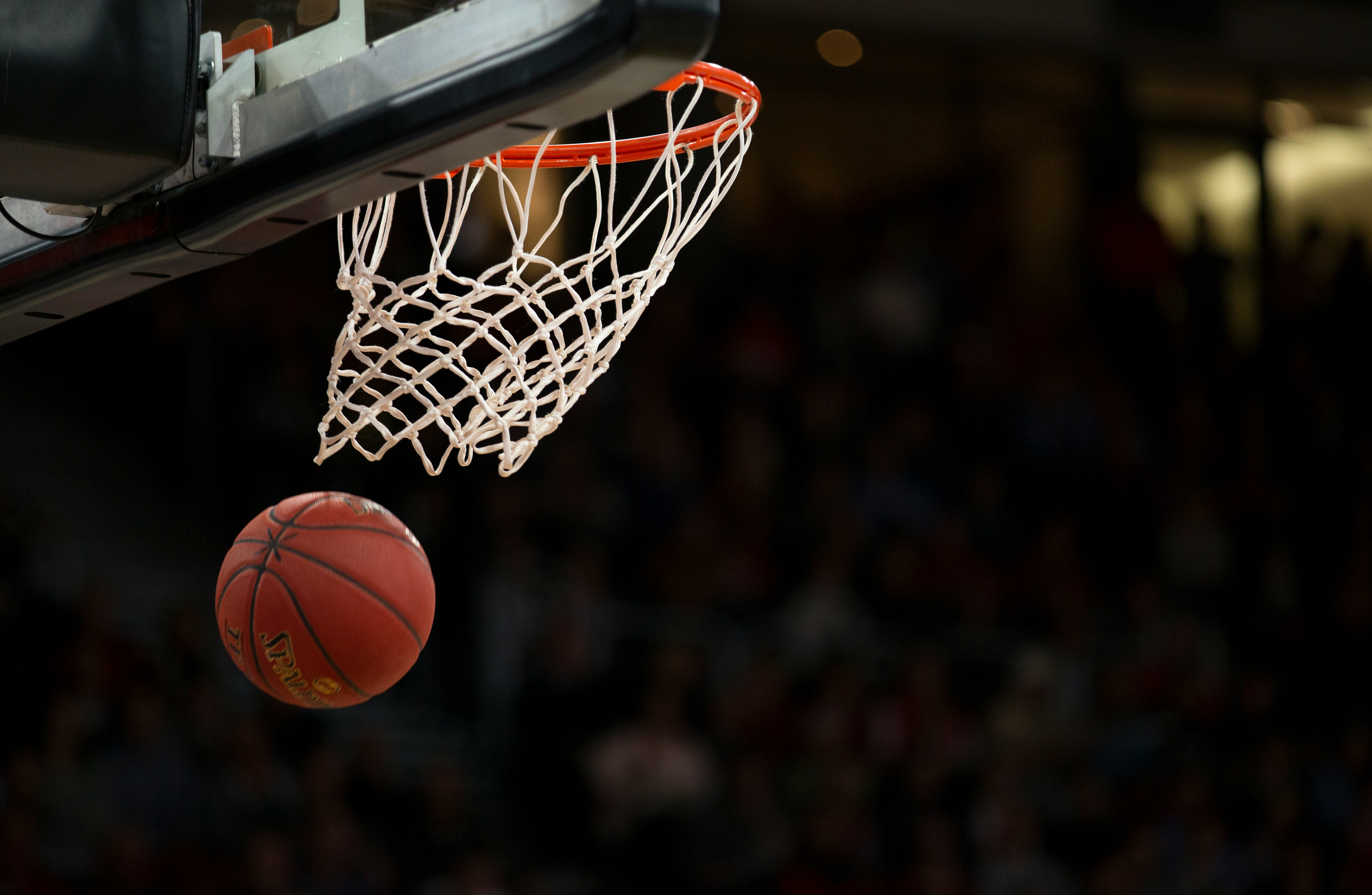
Watch a youth basketball team warm up for a free throw and the same small sequence repeats: bounce the ball twice, spin it once, exhale, shoot. Watch a 13-year-old tennis player before a second serve: bounce the ball three times, look at the target, breathe. Coaches often wave this off as habit, or worse, as superstition to be discouraged. Sport psychology research treats it very differently. A structured, task-relevant sequence performed before a self-paced skill has a name — a pre-performance routine (PPR) — and a genuine evidence base showing it changes outcomes, including for athletes well under 18.
This is a narrower question than whether young athletes can be mentally tough or resilient in general. It is about a specific, learnable behavior — what an athlete does in the ten to twenty seconds before executing one discrete skill — and what happens to accuracy, consistency, and arousal when that behavior is trained rather than left to chance.
What a Pre-Performance Routine Actually Is
In the research literature, a PPR is defined as a systematic sequence of task-relevant thoughts and actions that an athlete engages in before executing a self-paced skill — a free throw, a golf putt, a volleyball serve, a penalty kick.1 It is distinct from a superstitious ritual in one important way: every component of a true PPR is meant to serve a specific psychological or biomechanical function, whether that is narrowing attention, regulating physiological arousal, or cueing a specific movement pattern. A routine that includes an irrelevant, magically-thought-to-help element (touching a specific spot on a jersey, for instance) shades into superstition; a routine built from breathing, a fixed number of ball bounces, and a cue word is functional preparation.
The Headline Evidence: A Meta-Analysis Spanning Fifteen Sports
The most comprehensive test of whether PPRs work comes from a 2021 meta-analysis published in the International Review of Sport and Exercise Psychology by researchers at the University of Vienna, pooling 112 effect sizes from studies across roughly 800 athletes and 15 sports.1 The analysis separated naturalistic pre-post comparisons from tightly controlled experiments, and it separated low-pressure practice conditions from simulated competitive pressure. The routine helped in every condition: a small but reliable effect in pre-post designs, and a moderate-to-large effect in controlled experiments — Hedges' g = 0.64 under low pressure and g = 0.70 under pressure.1 The pressure finding matters most for a youth-sport audience, since the entire argument for teaching a routine to a 12-year-old rests on it holding up when the score is close and the crowd is loud, not just at a quiet Tuesday practice.
The detail most relevant to this article is what the researchers found when they tested age as a moderator. Athletes in the pooled studies ranged from 11 to 40 years old, and age did not significantly change the size of the benefit.1 A routine was not something that only paid off once an athlete reached some minimum level of experience or maturity — the youngest athletes in the sample benefited just as reliably as adults. The authors go further, suggesting routines may be especially useful for young and novice athletes specifically because those athletes have not yet independently developed skills like deep breathing or external focus of attention, and a routine hands them a ready-made structure for skills they have not built for themselves.1
Using a pre-performance routine improves performance regardless of how simple or complex the routine is.
That line, from the research team behind the 2021 meta-analysis, captures the practical takeaway for coaches working with younger athletes: the routine does not need to be elaborate to work. What matters is that it exists, that it is practiced, and that the athlete actually uses it under pressure rather than abandoning it when the game gets tight.
Why a Fixed Sequence Helps a 12-Year-Old More Than It Looks Like It Should
Underneath the behavioral evidence is a physiological argument. Preparatory routines are theorized to work partly by giving an athlete direct control over arousal — the level of physiological and mental activation right before a skill is executed — nudging it toward whatever zone produces the best performance for that task.8 A 2022 theoretical and applied paper in Frontiers in Psychology outlines a model in which a routine's components (a breathing pattern, a brief relaxation cue, a short burst of imagery, a concentration cue word) are sequenced deliberately to bring arousal down from a spike to a level suited to the shot at hand.8 The paper's own case example is a young basketball player — an 18-year-old whose free-throw accuracy rose from roughly 40 percent to 60–65 percent after a structured routine combining quick relaxation, controlled breathing, a fixed dribble count, a concentration cue word, and a few seconds of imagery was trained into her pre-shot behavior.8 A single case cannot establish causation on its own, but it illustrates concretely what "arousal regulation" looks like as an actual sequence of behavior rather than an abstract concept.
There is also emerging evidence that the underlying self-regulation skill itself is trainable in very young, elite athletes. A small 2024 study in Frontiers in Psychology put eight elite pre-pubescent female gymnasts (average age just under 11) through four weeks of biofeedback training designed to teach conscious control over skin conductance and peripheral temperature — physiological markers of the stress response.9 The gymnasts showed measurable improvements in physiological self-regulation and in self-reported interoceptive awareness, including specific gains on the "self-regulation" and "attention regulation" subscales of a standard body-awareness questionnaire.9 The sample is tiny, and the authors present it as preliminary, but it is a rare direct demonstration that the raw capacity a pre-performance routine depends on — noticing and adjusting one's own arousal state — can be built in athletes who have not yet reached puberty.
Imagery: A Component Young Athletes Can Use, With Caveats
Imagery is one of the most common ingredients folded into a pre-performance routine, and it raises a fair question for anyone working with children: do young athletes even have the cognitive machinery to "see" a successful free throw in their mind before shooting it? The evidence says mostly yes, with a developmental wrinkle worth knowing.
A 2020 study in Frontiers in Psychology compared imagery ability directly between 48 competitive young athletes and 48 non-athlete peers, all aged 8 to 13.6 Using a standardized battery of imagery tasks, the athletes scored significantly higher than non-athletes on overall mental imagery ability (62.40 versus 44.02), suggesting that sustained sport participation itself strengthens the capacity to generate, hold, and manipulate mental images well before adolescence.6 That is a meaningfully different claim than "imagery works for adults and we assume it transfers down" — it is direct evidence that imagery ability is present, and elevated, in child athletes.
The caveat comes from a study of 169 youth sport performers aged 12 to 21 across 14 sports, which found that imagery vividness was not flat across the youth years.7 Younger athletes in the sample reported strong vividness for internal visual imagery (seeing the shot from their own eyes) but weaker vividness for kinesthetic imagery — the felt, muscular sensation of performing the movement — with a significant gap opening up between the 12–13 and 20–21 age groups specifically on that kinesthetic dimension.7 The practical read for a coach building a routine with a younger athlete is not to skip imagery, but to lean on the visual and simple end of it early — "see the ball go through the net" — and layer in more demanding kinesthetic and multi-sensory imagery as the athlete matures and that capacity develops.
Before the Specific Skill: Free Throws, Serves, and the Quiet Eye
Zooming in from the general theory to a single skill is where the evidence gets most concrete — and most useful for a coach designing something an athlete will actually use in a game.
Learning a new skill
A frequently cited pair of studies by Lidor and Mayan asked whether beginning learners — not elite performers — benefit from a pre-performance routine when first learning the volleyball serve.2 After observing the behavioral patterns elite servers used before serving, the researchers taught beginning female learners either a motor-emphasized or a cognitive-emphasized version of a routine while they acquired the skill. The finding relevant here is conceptual as much as statistical: a routine is not just a performance-day polish applied after a skill is mastered. Introduced early, it can help a learner build a stable motor execution plan from the start, rather than being bolted on once bad habits are already in place.2
The free throw, tested directly in high schoolers
A 2015 study in Biomedical Human Kinetics put the question to 34 freshman high school basketball players directly, having each athlete shoot 20 free throws using their own pre-performance routine and 20 with all routine behaviors — dribbling, deep breaths, ball spins — stripped out.3 The routine condition significantly outperformed the no-routine condition (Z = –4.61, p < .01), though the researchers were careful to note the practical size of the difference was small.3 That combination — statistically real, modest in magnitude — is a more honest summary of the free-throw evidence than either "routines are magic" or "routines don't matter," and it is consistent with the broader meta-analytic pattern of small effects in naturalistic, single-session designs.1
The quiet eye: a specific, trainable gaze routine
One well-studied component deserves its own mention: the "quiet eye," a final, prolonged fixation of gaze on a target just before a self-paced skill is executed. A 2011 study trained novice basketball players to hold a long quiet-eye fixation on the rim before shooting free throws, and found it produced larger accuracy gains than training focused on shooting mechanics alone — including under simulated pressure, where the trained group's shooting held up better than a technically-trained control group.4 A subsequent meta-analysis confirmed the underlying pattern across sports and skill levels: longer quiet-eye duration is reliably associated with better performance on aiming and targeting tasks, and it is trainable.5
Whether that specific timing advantage differs by age within youth sport is a newer question. A 2026 study fitted 46 male youth basketball players across three age bands — U14, U16, and U18 — with eye-tracking glasses during standardized free-throw shooting.10 Shooting accuracy correlated with chronological age and years of training experience, as expected, but quiet-eye duration itself did not differ significantly across the three age groups.10 In other words, the capacity to hold a steady, extended gaze before the shot appears to be present well before the U18 level — which is encouraging for the idea that quiet-eye-style routine training is not something to delay until an athlete is older.
- The effect is real at 11–12 years old, not just for adults. Age did not moderate the benefit in the largest pooled analysis of PPR research to date.1
- Routines can be introduced while a skill is still being learned, not only added once the skill is polished.2
- Effects on any single skill, like the free throw, tend to be small in a single testing session — the value compounds with practice and under pressure, not necessarily in one afternoon.1,3
- Imagery is usable well before the teenage years, but younger athletes lean more on visual imagery than kinesthetic imagery, so simple, visual cueing works best early.6,7
- A specific gaze behavior — the quiet eye — is trainable and does not appear to require years of development to instill in youth basketball players.4,10
What the Evidence Does Not Yet Show
None of this should be read as a settled science. The free-throw and volleyball-serve studies here involve modest sample sizes, and the gymnastics biofeedback study involved only eight athletes.3,9 Almost none of the studies followed young athletes for more than a few weeks, so how a trained routine holds up across an entire competitive season — or across the physical and cognitive changes of adolescence itself — is largely untested. The honest summary a research-literate coach should give a parent is that structured pre-performance routines are one of the better-supported, lowest-cost interventions in youth sport psychology, not a guaranteed fix for a nervous shooter or an inconsistent server.
What the research supports clearly enough to act on is this: a short, consistent, practiced sequence before a specific skill — built from a breath, a fixed physical cue, and where appropriate a few seconds of simple imagery — is worth teaching early rather than waiting for an athlete to "grow into" needing it. The evidence suggests the opposite of the intuitive assumption: younger, less experienced athletes may have more to gain from an externally structured routine than athletes who have already built their own regulation strategies through years of competition.1
Sources
- Rupprecht, A., Tran, U. S., & Gröpel, P. (2021). The effectiveness of pre-performance routines in sports: a meta-analysis. International Review of Sport and Exercise Psychology, 17(1), 39–64. https://www.tandfonline.com/doi/full/10.1080/1750984X.2021.1944271
- Lidor, R., & Mayan, Z. (2005). Can beginning learners benefit from preperformance routines when serving in volleyball? The Sport Psychologist, 19(4), 343–363. https://journals.humankinetics.com/view/journals/tsp/19/4/article-p343.xml
- Phelps, A., & Kulinna, P. H. (2015). Pre-performance routines followed by free throw shooting accuracy in secondary basketball players. Biomedical Human Kinetics, 7(1), 171–176. https://sciendo.com/article/10.1515/bhk-2015-0025
- Vine, S. J., & Wilson, M. R. (2011). The influence of quiet eye training and pressure on attention and visuo-motor control. Acta Psychologica, 136(3), 340–346. https://www.sciencedirect.com/science/article/abs/pii/S0001691810002404
- Lebeau, J.-C., Liu, S., Sáenz-Moncaleano, C., Sanduvete-Chaves, S., Chacón-Moscoso, S., Becker, B. J., & Tenenbaum, G. (2016). Quiet eye and performance in sport: A meta-analysis. Journal of Sport and Exercise Psychology, 38(5), 441–457. https://journals.humankinetics.com/view/journals/jsep/38/5/article-p441.xml
- Di Corrado, D., et al. (2020). Mental imagery skills in competitive young athletes and non-athletes. Frontiers in Psychology, 11, 633. https://www.frontiersin.org/journals/psychology/articles/10.3389/fpsyg.2020.00633/full
- Parker, J. K., & Lovell, G. P. (2012). Age differences in the vividness of youth sport performers' imagery ability. Journal of Imagery Research in Sport and Physical Activity, 7(1). https://www.degruyterbrill.com/document/doi/10.1515/1932-0191.1069/html
- Orbach, I., & Blumenstein, B. (2022). Preparatory routines for emotional regulation in performance enhancement. Frontiers in Psychology, 13, 948512. https://www.frontiersin.org/journals/psychology/articles/10.3389/fpsyg.2022.948512/full
- Proietti, G., Borozan, M., Chaigneau, A., Cannito, L., Palumbo, R., Thouvarecq, R., & Iodice, P. (2024). Self-regulation training improves stress resilience in elite pre-pubescent female gymnasts. Frontiers in Psychology. https://doi.org/10.3389/fpsyg.2024.1341437
- Developmental differences in gaze behaviors and performance during basketball free throws in youth athletes. (2026). Sports, 14(3), 105. https://doi.org/10.3390/sports14030105
Want this applied to your own program, team, or school? Free 20-minute consult, no obligation.
Book a free consult →