
Research · Sport Psychology
What Sport Psychology Research Actually Says About Mental Toughness in Young Athletes
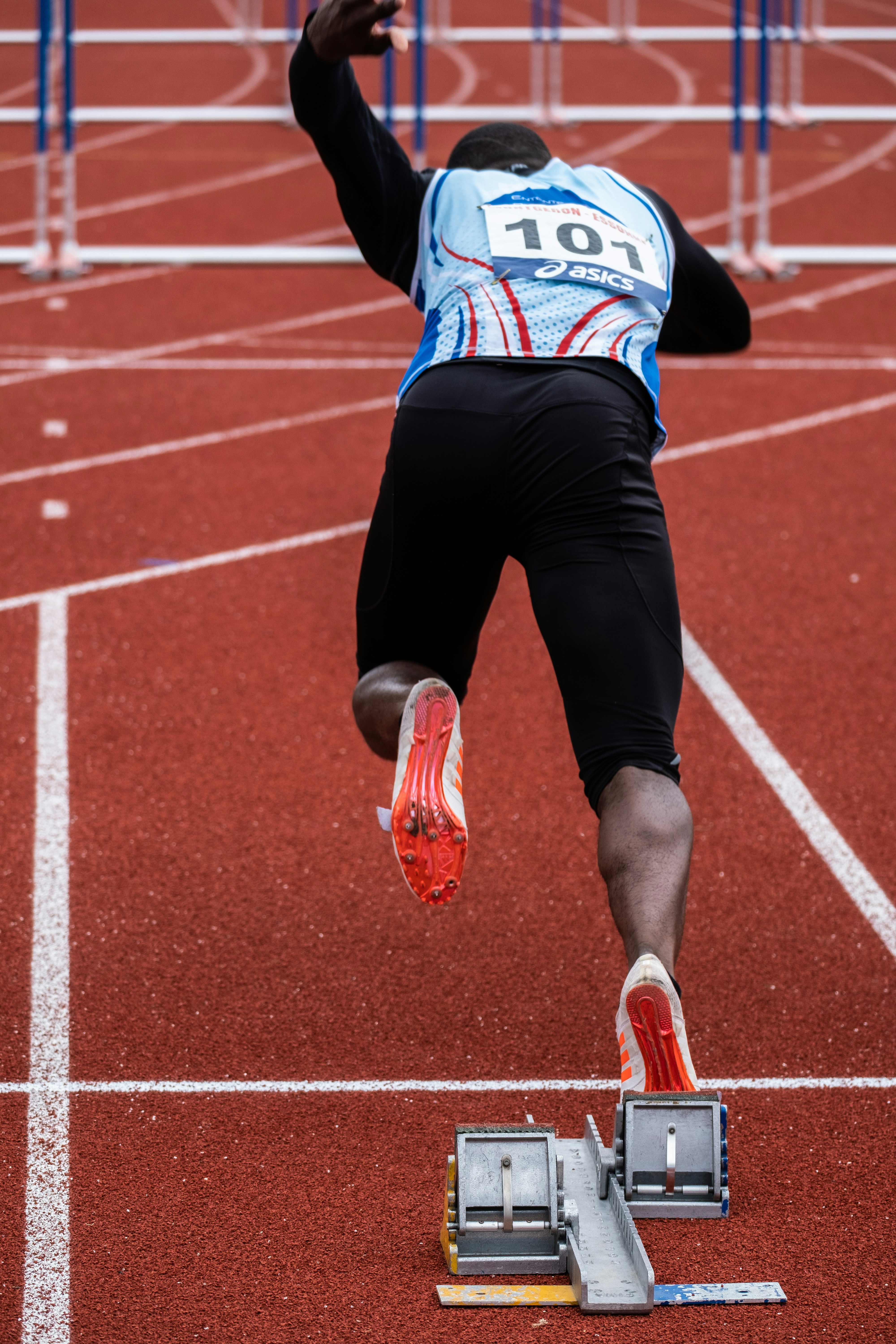
Ask a youth sports program what it does beyond teaching the physical skills of the game, and "mental toughness" or "resilience" comes up almost immediately — usually attached to a specific product: a workshop, a questionnaire, a branded curriculum. The words carry weight because the underlying need is real. What's examined far less often is how much of the marketing around them is actually backed by the sport psychology literature, and how much is intuitive appeal dressed in academic language.
The research base is real, and parts of it are genuinely useful. It is also narrower, more qualified, and — in at least one widely sold case — more contested than most sales pitches suggest.
What "resilience" actually means in the research
The most-cited working definition in sport psychology, from David Fletcher and Mustafa Sarkar's 2013 review in European Psychologist1, describes psychological resilience as "the role of mental processes and behaviour in promoting personal assets and protecting an individual from the potential negative effect of stressors." Two things stand out in that phrasing. First, resilience isn't a trait an athlete either has or lacks — it's a process, something that plays out in the interaction between a person and a stressor. Second, it's explicitly protective: the goal isn't to eliminate stress, it's to stop stress from degrading wellbeing and performance.
Fletcher and Sarkar's earlier grounded-theory study of Olympic champions2, published in Psychology of Sport and Exercise, remains one of the field's foundational pieces of work on what resilience looks like at the elite level. It identified five psychological factors distinguishing athletes who withstood major setbacks without lasting damage to performance or wellbeing: positive personality, motivation, confidence, focus, and perceived social support — operating through a central mechanism the authors call metacognition, the athlete's ability to monitor and adjust their own thinking under pressure.
A 2022 systematic review in Frontiers in Psychology that synthesised 92 separate resilience studies3 extended this into what it calls a "sporting resilience model," describing resilience as operating through a biopsychosocial protective filter — social support, self-regulation, and metacognitive appraisal working together to determine whether an athlete emerges from a setback intact or diminished. It's a genuinely useful framework, and it's worth being equally honest about its limits: the review draws heavily on Olympic-level and adult elite populations, and its own authors call for development of a sport-specific measure of resilience as a dynamic process, because most existing tools still treat it as a fixed trait. There is, in other words, no settled, validated way to simply score a 14-year-old's resilience the way you might time their 20-metre sprint.
What resilience is actually protecting against
One of the more detailed pictures of what young athletes specifically need resilience for comes from a 2021 review in the International Journal of Environmental Research and Public Health, focused on young female athletes4. It documents a genuinely heavy stressor load: body image pressure that intensifies through puberty, a 14% prevalence of disordered eating among elite adolescent female athletes against 5.1% in non-athlete peers, Relative Energy Deficiency in Sport (RED-S), sleep disturbance linked to both mental health problems and injury risk, higher rates of anxiety and depression than male counterparts, and compounded stress for athletes holding minoritized identities.
The same review is useful for what it says resilience actually correlates with in practice: personal competence, hardiness (approaching rather than avoiding stressors), optimism, supportive coaching, and strong parent and peer relationships. It names a specific set of interventions with some research support too — mindfulness training, mental skills training (imagery, self-talk, goal setting, arousal regulation), and CBT-style "general optimism" skill-building around disputing catastrophic thinking. Its authors are just as careful to flag the gap on the other side of that list: few interventions have actually been designed and tested specifically for young athletes' stressors, longitudinal data on how resilience develops across adolescence is thin, and almost nothing has been tested in minoritized youth athlete populations specifically.
Growth mindset: a real effect, smaller than the pitch
Carol Dweck's growth-mindset theory — that believing ability can be developed through effort, rather than being fixed, changes how people respond to failure — has one of the more direct experimental tests in an actual youth sport setting of anything covered here. A 2006 study in Psychology of Sport and Exercise5 experimentally induced either an "entity" (fixed) or "incremental" (growth) belief about sport ability in 123 secondary school students (mean age 13.4) before having them attempt a sport task and experience failure on it. The manipulation worked: it causally changed the achievement goals students adopted and how they responded to the setback, both before and after failure. That's a genuinely useful, sport-specific finding — mindset language isn't just correlational noise, it can be shown to change behaviour in a controlled sport setting.
What's worth being honest about is the size of that effect once it has been tested at scale. The largest meta-analysis of growth-mindset interventions on academic achievement, published in Psychological Science in 20186, pooled 43 intervention studies covering more than 57,000 participants and found an average effect of d ≈ 0.08 — a small effect, meaningfully larger only for academically at-risk and lower-income subgroups, with clear signs of publication bias inflating even that modest number. The single largest, most rigorously controlled test of the theory — the National Study of Learning Mindsets, a nationally representative U.S. experiment published in Nature in 20197 — found a brief, under-one-hour online mindset intervention improved GPA by roughly 0.10 points on a 4-point scale among lower-achieving ninth-graders, and only in schools where peer norms already supported the message. Both studies are from academic settings, not sport — there is no equivalent large-scale meta-analysis of growth-mindset interventions specifically in youth athletes. The honest summary: the underlying theory is real, and sport-specific evidence for its causal mechanism exists, but nothing in the literature supports treating a mindset talk or a locker-room poster as a reliable performance lever on its own.
Coping-skills training: better evidence, mostly built on adults
A 2019 systematic review in The Sport Psychologist8 — the most thorough attempt to date to catalogue what actually helps youth athletes' psychological development — screened the literature back to 2002 and found 25 empirical studies meeting its criteria, identifying 19 psychological skills and characteristics believed to be facilitative. Eight were categorised as trainable skills, including goal-setting, social-support seeking, and self-talk; eleven were categorised as underlying characteristics, including self-confidence, focus, and motivation.
The review's own methodological audit is worth reading in full, because it is unusually candid for the genre. Its authors note that most of the measurement tools used across those 25 studies were originally designed and validated for adult athletes, not adapted to the "ecological needs" of youth participants. Several qualitative studies primed participants with an academic definition of a term like "mental toughness" before asking them to describe it — a design choice that risks manufacturing the very consensus it then reports. And the bulk of the evidence relies on retrospective recall, asking athletes or coaches to remember what helped years earlier, a method known to be vulnerable to memory bias. None of this makes the identified skills useless. It does mean the review's own authors concluded the underlying literature remains, in their words, "a diverse and evolving body of research" — not a settled one.
Where the field has better controlled evidence, it is almost entirely in adult and university-level athletes. A 2020 randomized controlled trial in BMC Psychology9 compared four weeks of psychological skills training — arousal regulation, imagery, self-talk, goal setting — against mindfulness training and a wait-list control in 95 competitive tennis, curling, floorball, and badminton athletes averaging 24 years old. Both interventions produced comparable improvements in emotional and attentional control relative to the control group; mindfulness training additionally improved athletes' ability to observe their own thoughts without over-identifying with them. A broader 2017 meta-analysis in Sports Medicine, pooling 35 randomized controlled trials10, found psychological and psychosocial interventions produce a moderate positive effect on sport performance that persists for at least a month after the intervention ends. That's useful evidence for the general approach — but again, drawn overwhelmingly from adult samples, not the youth population these skills are usually marketed to.
The clearest youth-specific randomized evidence currently available is narrower still. An 8-week mindfulness training program tested against a control group in 60 adolescent athletes (ages 14–18) at a single sports school, published in Frontiers in Psychology in 202511, found large improvements in resilience scores — a Cohen's d of 1.35 immediately post-intervention and 1.58 at three-month follow-up — on the Connor-Davidson Resilience Scale. It's a genuinely promising result. It's also a single site, self-report only, with no follow-up beyond three months — exactly the kind of finding that needs independent replication before it gets scaled into a program promise.
The trouble with commercially sold "mental toughness"
This is where the evidence gets uncomfortable, because one of the most widely used mental toughness assessments in schools and sporting organisations has a fairly direct conflict-of-interest problem sitting inside its own research literature.
The Mental Toughness Questionnaire 48 (MTQ48) was developed in 2002 by Peter Clough, Keith Earle, and Doug Strycharczyk — who is also the Managing Director of AQR International, the company that owns and commercially sells the measure across "occupational, educational, social and sporting sectors," in its own marketing language. That commercial relationship would matter less if the measure's psychometrics were uncontroversial. They aren't.
Daniel Gucciardi and colleagues opened a formal critique of the MTQ48's measurement development process in a 2012 paper in Sport, Exercise, and Performance Psychology12. A 2019 factor-analysis study in Frontiers in Psychology13, testing shortened MTQ-18 and MTQ-10 versions, found the MTQ-18 only functioned as a single-factor scale after researchers correlated the error terms of more than half its items — a statistical patch the authors themselves describe as evidence of "structural contamination." A 2021 paper in Stress and Health14, testing the original 48-item instrument against two large university samples (combined n > 5,300), reported flatly that "none of one-, four- and six-factor models with 48 items satisfactorily fit the data set" — meaning the commercial 48-item version doesn't statistically hold together the way its own four-factor "4Cs" model (Control, Commitment, Challenge, Confidence) claims it should.
Notably, the paper defending the original measure's structure — a 2021 bifactor analysis in Frontiers in Psychology using a dataset of 78,947 respondents15 — is co-authored by Strycharczyk and Clough themselves, drawing on proprietary data from people who had already paid to take the commercial test. That doesn't automatically make the analysis wrong. It does mean the strongest defence of the measure's validity currently comes from the people who profit from its continued sale, while every independent replication attempt has kept finding that the original structure doesn't fit — and has kept needing to build shorter, revised versions to compensate.
The strongest published defence of the MTQ48's validity comes from the two people who profit from selling it. Every independent replication attempt has found its original structure doesn't hold together.
None of this means "mental toughness" as a concept is fake, or that every commercial mental skills program is worthless. It means one specific, extremely widely used branded assessment has a measurement problem that hasn't been resolved by the people selling it — worth knowing before a school or club treats a mental toughness score as if it were as objective as a vertical jump measurement.
What actually holds up
- Resilience is a process, not a personality type. The strongest theoretical models describe it as an interaction between stressors and protective factors — social support, self-regulation, confidence — not a fixed trait a single test can capture in one sitting.
- Growth-mindset framing has real, causally demonstrated effects on how young athletes respond to failure, but even the largest, best-controlled tests of the theory find modest, context-dependent effect sizes. It's a genuine tool, not a transformation switch.
- Coping skills like goal-setting, imagery, self-talk, and mindfulness training have a reasonable evidence base — largely established in adult athletes, with youth-specific evidence still thin, mostly correlational, and often built on tools not originally designed for young participants.
- A specific score from a commercial mental-toughness questionnaire deserves real scrutiny, particularly when the strongest published defence of its validity comes from the people who sell it.
The practical version of all this is unglamorous compared to the marketing: build resilience the way strength is built, through graduated, manageable adversity with real support attached — not through a single workshop, a poster, or a score on a questionnaire that hasn't held up to independent scrutiny.
Sources
- Fletcher D, Sarkar M. "Psychological Resilience: A Review and Critique of Definitions, Concepts, and Theory." European Psychologist 18(1):12–23, 2013. DOI: 10.1027/1016-9040/a000124.
- Fletcher D, Sarkar M. "A Grounded Theory of Psychological Resilience in Olympic Champions." Psychology of Sport and Exercise 13(5):669–678, 2012. DOI: 10.1016/j.psychsport.2012.04.007.
- Gupta S, McCarthy PJ. "The Sporting Resilience Model: A Systematic Review of Resilience in Sport Performers." Frontiers in Psychology 13:1003053, 2022. DOI: 10.3389/fpsyg.2022.1003053.
- McManama O'Brien KH, Rowan M, Willoughby K, Griffith K, Christino MA. "Psychological Resilience in Young Female Athletes." International Journal of Environmental Research and Public Health 18(16):8668, 2021. DOI: 10.3390/ijerph18168668.
- Spray CM, Wang CKJ, Biddle SJH, Chatzisarantis NLD, Warburton VE. "An Experimental Test of Self-Theories of Ability in Youth Sport." Psychology of Sport and Exercise 7(3):255–267, 2006. DOI: 10.1016/j.psychsport.2005.05.001.
- Sisk VF, Burgoyne AP, Sun J, Butler JL, Macnamara BN. "To What Extent and Under Which Circumstances Are Growth Mind-Sets Important to Academic Achievement? Two Meta-Analyses." Psychological Science 29(4):549–571, 2018. DOI: 10.1177/0956797617739704.
- Yeager DS, Hanselman P, Walton GM, et al. "A National Experiment Reveals Where a Growth Mindset Improves Achievement." Nature 573:364–369, 2019. DOI: 10.1038/s41586-019-1466-y.
- Dohme LC, Piggott D, Backhouse S, Morgan G. "Psychological Skills and Characteristics Facilitative of Youth Athletes' Development: A Systematic Review." The Sport Psychologist 33(4):261–275, 2019. DOI: 10.1123/tsp.2018-0014.
- Röthlin P, Horvath S, Trösch S, grosse Holtforth M, Birrer D. "Differential and Shared Effects of Psychological Skills Training and Mindfulness Training on Performance-Relevant Psychological Factors in Sport: A Randomized Controlled Trial." BMC Psychology 8:80, 2020. DOI: 10.1186/s40359-020-00449-7.
- Brown DJ, Fletcher D. "Effects of Psychological and Psychosocial Interventions on Sport Performance: A Meta-Analysis." Sports Medicine 47(1):77–99, 2017. DOI: 10.1007/s40279-016-0552-7.
- Wang S, Liu J. "Intervention Research on Cultivating Psychological Resilience in Adolescent Athletes: An Empirical Analysis Based on Mindfulness Training." Frontiers in Psychology 16:1589786, 2025. DOI: 10.3389/fpsyg.2025.1589786.
- Gucciardi DF, Hanton S, Mallett CJ. "Progressing Measurement in Mental Toughness: A Case Example of the Mental Toughness Questionnaire 48." Sport, Exercise, and Performance Psychology 1(3):194–214, 2012. DOI: 10.1037/a0027190.
- Dagnall N, Denovan A, Papageorgiou KA, Clough PJ, Parker A, Drinkwater KG. "Psychometric Assessment of Shortened Mental Toughness Questionnaires (MTQ): Factor Structure of the MTQ-18 and the MTQ-10." Frontiers in Psychology 10:1933, 2019. DOI: 10.3389/fpsyg.2019.01933.
- Kawabata M, Pavey TG, Coulter TJ. "Evolving the Validity of a Mental Toughness Measure: Refined Versions of the Mental Toughness Questionnaire-48." Stress and Health 37(2):378–391, 2021. DOI: 10.1002/smi.3004.
- Perry JL, Strycharczyk D, Dagnall N, Denovan A, Papageorgiou KA, Clough PJ. "Dimensionality of the Mental Toughness Questionnaire (MTQ48)." Frontiers in Psychology 12:654836, 2021. DOI: 10.3389/fpsyg.2021.654836.
Want this applied to your own program, team, or school? Free 20-minute consult, no obligation.
Book a free consult →