Research · Injury & Recovery
Sever's Disease: The Heel Insert Is Not the Treatment
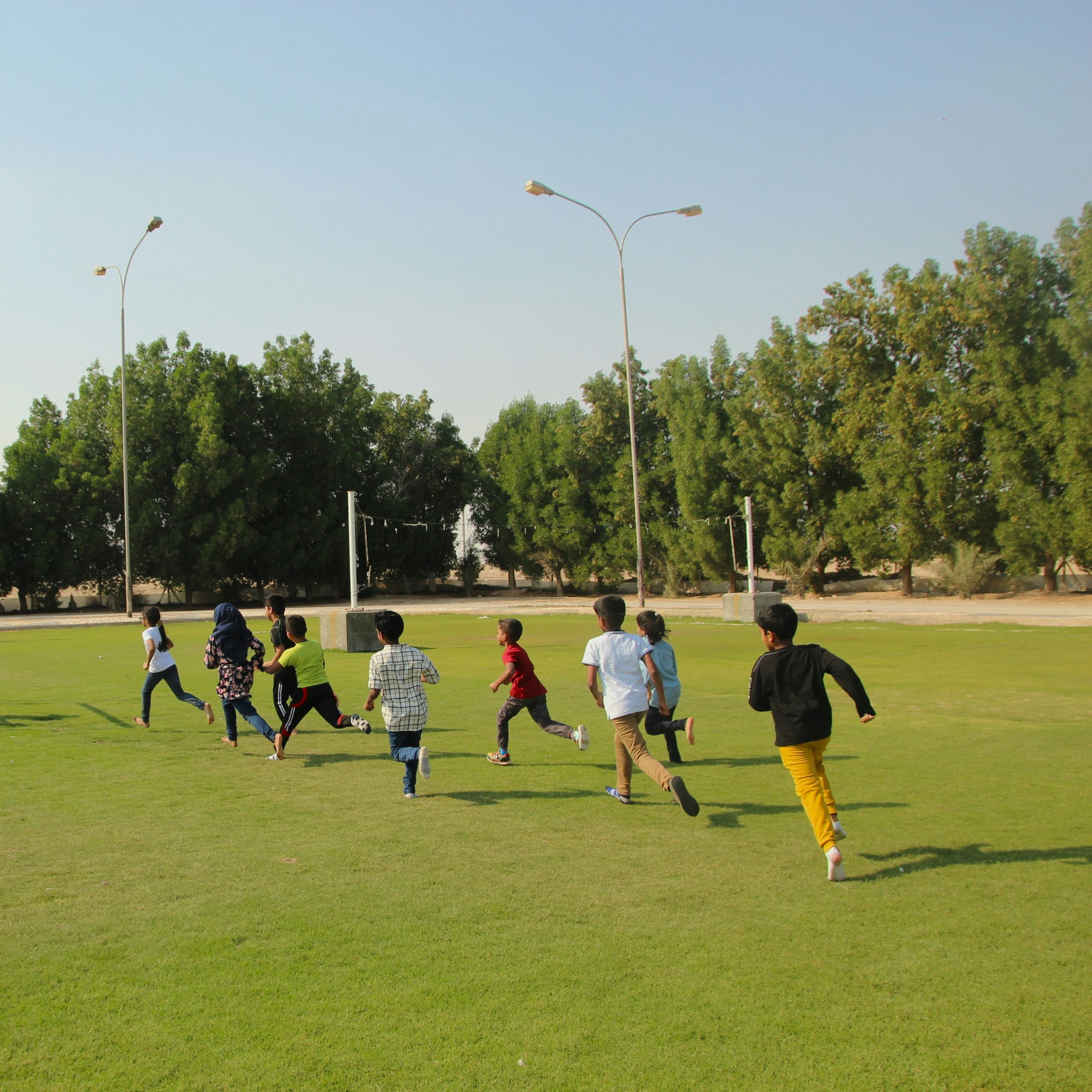
A ten-year-old who has just moved from twice-weekly football to four sessions a week starts landing on their toes after training. The back of the heel is tender to squeeze from both sides. It is worst the day after a hard session, settles over a weekend off, and returns within a week of going back. Somebody says Sever's disease, and the advice arrives in a familiar order: a heel cup, then an insole, then rest.
That sequence is so standard it reads like a protocol. In July 2026 a Cochrane review went through the entire randomised evidence base underneath it. The evidence is mostly low to very low certainty, and the single finding it could state with reasonable confidence is that the two options most often argued over make no meaningful difference to each other.1
What it is — and how much we can honestly say about the cause
Calcaneal apophysitis is pain at the growth region at the back of the heel, where the Achilles tendon attaches to the calcaneus. In a growing child that attachment sits on an active apophysis, and the standard explanation is repetitive impact plus traction loading through the Achilles irritating it.
Past that sentence, the field is less confident than the textbook version suggests. Nieto-Gil and colleagues screened 736 studies and included 11 observational studies covering 1,265 children with a mean age of 10.7 years.2 Across them, the factors examined were limitation of ankle dorsiflexion, foot alignment, stiffness and mobility of the midfoot, plantar pressures and ground reaction force, body mass index, age, sex, the presence of other osteochondroses, and sport participation. Limited ankle dorsiflexion was the most frequently studied intrinsic factor, followed by peak plantar pressures and foot malalignment.2
The review's most useful line for anyone coaching these children is its caveat rather than its list: the included studies do not agree on which of these are risk factors, which are merely associated features, and which are consequences of having the condition.2 A child with a sore heel does tend to have less ankle dorsiflexion. Whether the stiff ankle produced the sore heel, or the sore heel produced the stiff ankle, is unsettled. Treating that measurement as the cause is an assumption, not a finding.
How common, how long, and which sports
Two datasets frame the scale of it. Wiegerinck and colleagues searched 16,383 patient records from 34 general practices across 2008–2010 and found 61 children diagnosed with calcaneal apophysitis, an incidence of 3.7 per 1,000 registered patients aged 6 to 17 — and noted the true figure is likely higher, since their inclusion criteria were strict.3 That counts only the children whose heel pain was taken to a doctor.
The more useful picture comes from a 5.5-year prospective cohort of Danish primary-school children, in which parents sent weekly text messages reporting injuries and leisure-time sport participation, with each injury report triggering a clinical evaluation. Across 878 girls and 792 boys, the researchers identified 1,265 episodes of apophysitis.4
Two details in that cohort deserve more attention than they get. The first is the spread: the median child is through it in a month, but the range runs to nearly a year, and a programme built around the median will be wrong about the children who most need it to be right. The second is what did not raise risk — extra physical education. The elevated risk sat with leisure-time participation in the jumping and cutting sports, not with school PE.4
The tail matters because of what happens inside it. In a cross-sectional study of 124 children aged 8 to 14 with calcaneal apophysitis, those who were older and those who had been in pain longer reported more severe pain.7 The same children were, as a group, taller and heavier with a higher BMI than normative values, and differed in foot posture and ankle range of motion.7 The authors' reading was that these children had already endured a lengthy period of pain by the time anyone measured them, and that earlier management might reduce both its intensity and its duration.
The treatment evidence, read honestly
The 2026 Cochrane review pooled 10 randomised trials — seven of them on calcaneal apophysitis — covering 654 children with mean ages between 10.3 and 13.3, 73% of them male.1 The findings, comparison by comparison:
Read that first tile again. The choice between a custom orthosis and a heel lift — the decision that generates most of the disagreement, and most of the cost — is the one place the review had enough data to reach moderate certainty, and the answer was that it makes little to no difference. The certainty ratings elsewhere were downgraded for risk of bias, imprecision and possible publication bias.1
The largest single trial underneath that conclusion is worth seeing directly. James and colleagues randomised 124 children aged 8 to 14 in a 2×2 factorial design: heel raise or prefabricated orthoses, crossed with footwear replacement or no footwear replacement, followed for 12 months.5 At the 1- and 2-month points there was a main effect favouring the heel raise — in the physical domain of the outcome questionnaire only, at p=0.04. At 6 and 12 months there was no main effect or interaction effect on any outcome measure. Their own conclusion was that beyond two months the choice may reasonably defer to clinical judgement, cost and patient preference.5
For the full picture, note that the same lead author's earlier systematic review of nine mostly weak studies had concluded the opposite direction — that orthoses gave better short-term relief than heel raises — while warning explicitly about methodological problems in the underlying work.6 When a literature reverses itself between a review and the subsequent trial, the most defensible reading is that the real difference is small enough to be noise.
None of this means nothing helps. A 2024 systematic review of eight randomised trials of conservative care — insoles, therapeutic exercise, Kinesio taping, foot orthoses — with a good mean methodological quality score concluded that conservative treatment is an effective option for relieving symptoms.8 Both things are true at once, and the reconciliation is the important part: children with Sever's disease reliably get better while being treated, and no particular treatment reliably beats another. A condition that resolves on its own timeline will make almost any intervention applied during it look effective.
Where the loading approach actually stands
At the knee, Osgood-Schlatter now has a prospective study of graded activity modification and progressive strengthening with real outcome data behind it. It is tempting to assume the same logic transfers down to the heel. For the moment that assumption is running ahead of the evidence.
The relevant study is a feasibility trial published in 2026: 13 patients aged 7 to 17, mean age 11.5, given a 12-week programme of daily Achilles-tendon loading exercises, pain-guided activity modification and education.9 Adherence was 91% for both the activity modification and the rehabilitation components. Three adverse events occurred, none related to participation, and all participants reported satisfaction with the intervention. The authors conclude it is feasible, safe and appropriate, and that a larger randomised trial is warranted.9
Thirteen children, no control group, feasibility endpoints. That is not evidence the programme works, and it should not be presented as such. What it does address is the specific fear that drives the total-rest advice: teaching a child to keep moving within a pain limit, while loading the tendon, did not appear to make them worse.9
What this changes in practice
Stop treating the insert as the decision. Orthoses and heel lifts came out equivalent at moderate certainty. Choose on cost, comfort and what the child will actually keep in the shoe, and stop spending the consultation on it.
The load is the variable you control. The elevated risk in the cohort sat with the jumping and cutting sports, at 2.07 to 2.74 times. When a heel becomes symptomatic, the weekly volume of that specific activity is the lever with the most support behind it.
Do not pull them out of PE by default. Extra physical education did not raise apophysitis risk in the cohort; leisure-time sport participation did. Removing school PE cuts a child's total physical activity while leaving the actual driver untouched.
Give a range, not a date. Median duration was three to four weeks and the observed range ran to 45. Any single-number promise to a parent is invented.
Treat a long-running case as the priority, not the routine one. Longer-standing pain and older age both tracked with more severe pain. The children already months into this are the ones the evidence says to act on first.
Ask the child directly, not only the parent. In a study nested within the trial above, parents initially reported a greater impact on quality of life than their children did, with agreement between them converging only over the following year — and agreement on the physical domain ranging from poor to good depending on the time point.10 Two people in the same room may be describing two different problems.
Where this evidence stops
The Cochrane authors flag the gaps themselves, and they are large ones. The trials used heterogeneous outcomes that resisted meaningful synthesis. None of them specifically targeted children with persistent symptoms causing functional limitation — which is precisely the group a coach or a parent is worried about. None measured quality of life, and none examined the cost to families, despite those being the two things that decide what a household actually does.1
Nor has the most common instruction of all been tested properly: no trial in that review compared resting until the pain stops against continuing modified, pain-guided activity. The default advice is the untested arm.
And the obvious caveat, stated plainly: heel pain in a growing child has a differential diagnosis that includes calcaneal stress fracture, tarsal coalition and rarer things than either. A first assessment belongs with a clinician, not with a coach and not with a blog post. What the evidence above supports is narrower — that once the diagnosis is made, the gadget matters less than the load, the timeline is measured in weeks to months rather than days, and confidence about which insert to buy is the least justified part of the whole conversation.
Sources
- Williams, C. M., Krommes, K., Paterson, K. L., Haines, T., Caserta, A., & Thorborg, K. (2026). Non-surgical treatment for lower limb apophyseal injuries. Cochrane Database of Systematic Reviews, 7(7), CD015156. https://doi.org/10.1002/14651858.CD015156.pub2
- Nieto-Gil, P., Marco-Lledó, J., García-Campos, J., Ruiz-Muñoz, M., Gijon-Nogueron, G., & Ramos-Petersen, L. (2023). Risk factors and associated factors for calcaneal apophysitis (Sever's disease): a systematic review. BMJ Open, 13(6), e064903. https://doi.org/10.1136/bmjopen-2022-064903
- Wiegerinck, J. I., Yntema, C., Brouwer, H. J., & Struijs, P. A. A. (2014). Incidence of calcaneal apophysitis in the general population. European Journal of Pediatrics, 173(5), 677-679. https://doi.org/10.1007/s00431-013-2219-9
- Wedderkopp, N., Wang, C., Steele, R., Hebert, J., Rexen, C., Jespersen, E., Junge, T., Thomsen, T., Jensen, F. M., & Shrier, I. (2025). Incidence of and risk factors for lower extremity apophysitis in children and adolescents. Sports Medicine, 56(3), 793-803. https://doi.org/10.1007/s40279-025-02328-w
- James, A. M., Williams, C. M., & Haines, T. P. (2016). Effectiveness of footwear and foot orthoses for calcaneal apophysitis: a 12-month factorial randomised trial. British Journal of Sports Medicine, 50(20), 1268-1275. https://doi.org/10.1136/bjsports-2015-094986
- James, A. M., Williams, C. M., & Haines, T. P. (2013). Effectiveness of interventions in reducing pain and maintaining physical activity in children and adolescents with calcaneal apophysitis (Sever's disease): a systematic review. Journal of Foot and Ankle Research, 6(1), 16. https://doi.org/10.1186/1757-1146-6-16
- James, A. M., Williams, C. M., Luscombe, M., Hunter, R., & Haines, T. P. (2015). Factors associated with pain severity in children with calcaneal apophysitis (Sever disease). The Journal of Pediatrics, 167(2), 455-459. https://doi.org/10.1016/j.jpeds.2015.04.053
- Hernandez-Lucas, P., Leirós-Rodríguez, R., García-Liñeira, J., & Diez-Buil, H. (2024). Conservative treatment of Sever's disease: a systematic review. Journal of Clinical Medicine, 13(5), 1391. https://doi.org/10.3390/jcm13051391
- Hanlon, S. L., Seymore, K. D., Potter, M. N., Bley, B. C., & Grävare Silbernagel, K. (2026). The feasibility of a novel exercise therapy and activity modification intervention for patients with Sever's disease. Pilot and Feasibility Studies, 12(1). https://doi.org/10.1186/s40814-026-01850-6
- James, A. M., Williams, C. M., & Haines, T. P. (2016). Health related quality of life of children with calcaneal apophysitis: child & parent perceptions. Health and Quality of Life Outcomes, 14, 95. https://doi.org/10.1186/s12955-016-0497-4
Want this applied to your own program, team, or school? Free 20-minute consult, no obligation.
Book a free consult →