
Research · Testing & Assessment
VO2max Testing in Team Sports: What the Field Tests Actually Predict
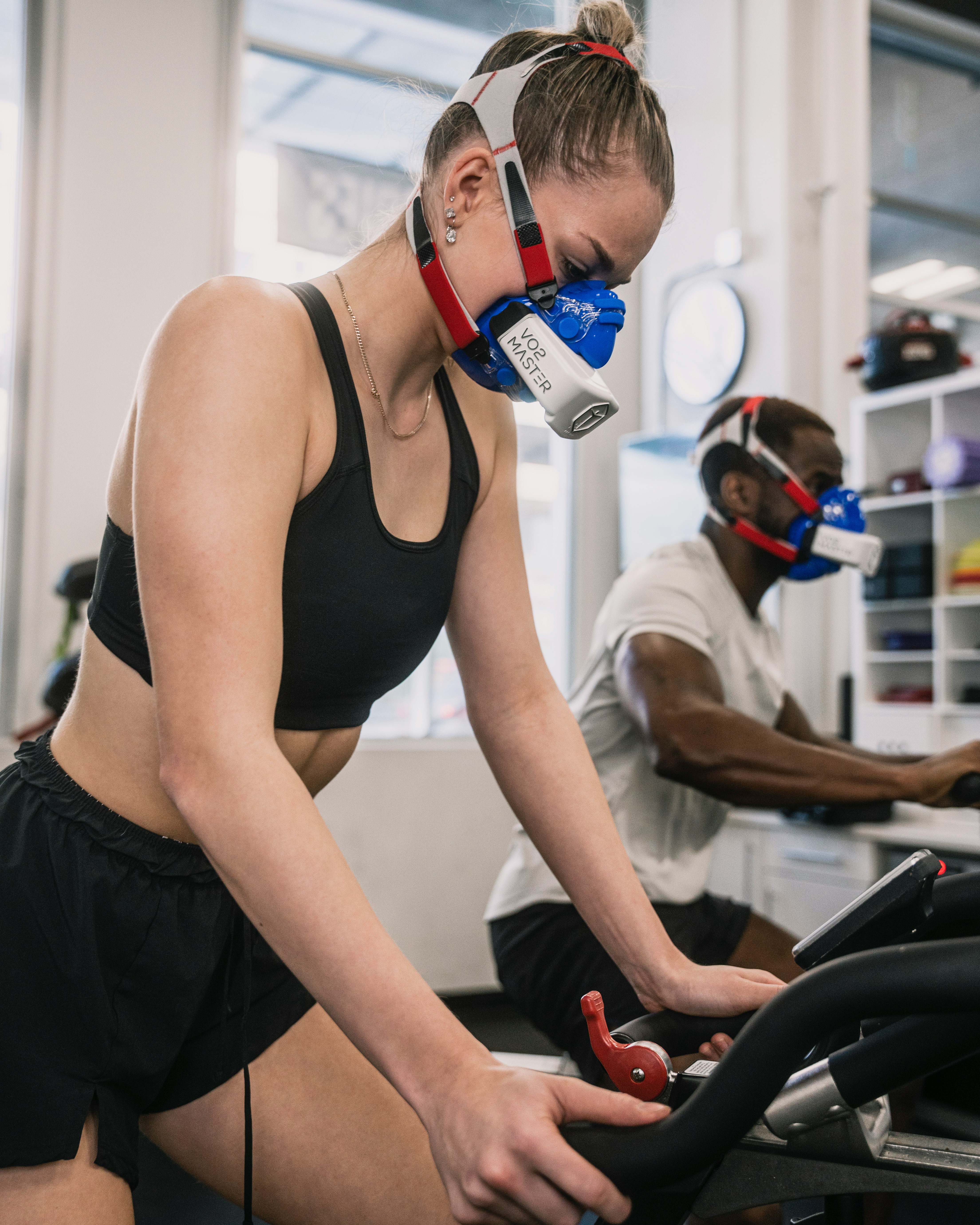
Ask a football coach in Singapore which fitness number matters most and "VO2max" is usually the first answer, often before the sentence is finished. It shows up on lab printouts, gets estimated from beep test levels scrawled on a training-ground clipboard, and functions as informal shorthand for "how fit is this athlete." What gets lost in that shorthand is that VO2max is a specific, narrowly defined physiological measurement, that the field tests used to estimate it in team sports are proxies with their own error margins, and that the research on how much VO2max itself actually predicts match performance in sports like football is considerably more qualified than the way it's usually talked about on the sideline.
What VO2max Actually Measures
Maximal oxygen uptake — VO2max — is the highest rate at which the body can take in, transport, and use oxygen during exercise that recruits large muscle groups to exhaustion. It is not a measure of "fitness" in any general sense; it is a specific ceiling on aerobic energy supply, and it is governed by the Fick equation: VO2 equals cardiac output multiplied by the arteriovenous oxygen difference — how much blood the heart pumps per minute, multiplied by how much oxygen the tissues extract from that blood.
An influential review by Bassett and Howley in Medicine & Science in Sports & Exercise examined which side of that equation actually sets the ceiling, and concluded that oxygen delivery — driven primarily by maximal cardiac output — is the dominant limiting factor in most people, not the muscle's capacity to extract and use the oxygen once it arrives1. That distinction matters for what a VO2max number is actually telling a coach: it's closer to a measurement of central cardiovascular plumbing than a direct readout of leg muscle quality, work capacity, or match fitness.
The only way to measure it directly is a graded exercise test to volitional exhaustion on a treadmill or cycle ergometer with a metabolic cart measuring expired gas, breath by breath. Everything else — every field test discussed below — is an estimate, built on the statistical relationship between how far or how long someone can run and what a gas analyser would have measured if one had been strapped to their face at the same time.
The Field Tests: Beep Test, Yo-Yo, and Cooper Test
Three field tests dominate team-sport testing, and they were not all built for the same purpose. The Cooper test — run as far as possible in 12 minutes — was developed by Kenneth Cooper in 1968 using 115 US Air Force personnel, comparing field distance against directly measured treadmill VO2max to build a regression equation2. It is a continuous-running test, built on a military population, and it predates almost every other field test still in use today.
The 20-metre multistage shuttle run — universally known as the beep test — was developed by Léger and Lambert in 1982 as an incremental, audio-paced test: athletes run back and forth between two lines 20 metres apart, with the pace increasing every minute until they can no longer keep up with the beep3. Like the Cooper test, it estimates VO2max from a continuous, progressively harder running effort.
The Yo-Yo Intermittent Recovery Test, refined and validated for elite soccer by Krustrup, Bangsbo, and colleagues, is built differently on purpose. Athletes run 20 metres out and 20 metres back at an increasing, audio-paced speed, but with a 10-second active recovery jog built into every shuttle4. That intermittent structure was a deliberate design choice — team sports involve repeated bursts of high-intensity running interspersed with brief recovery, not one long continuous effort, and the test was built to load that pattern specifically rather than to be a more convenient version of a treadmill test.
How Well Do These Field Tests Actually Correlate With Lab VO2max?
The honest answer is: it depends heavily on which test, which population, and which prediction equation is used, and the correlation coefficients that get quoted as if they were a single settled number actually span a wide range.
Cooper's original validation produced a correlation of r = 0.897 between 12-minute distance and treadmill-measured VO2max2 — a strong result, but one generated on young, fit, male military personnel, not the general population of youth or amateur athletes the test now gets used on. For the beep test, a 2015 meta-analysis by Mayorga-Vega, Aguilar-Soto, and Viciana in the Journal of Sports Science and Medicine pooled 78 correlation coefficients across 57 studies and found that criterion-related validity varied substantially depending on which of several competing prediction equations (Léger's original, Ramsbottom's, and others) was applied to the same raw shuttle-run score5. The shuttle run itself is a reasonably reproducible physical test; the VO2max number attached to it depends on which formula is doing the converting, and different formulas do not agree with each other.
Population also matters more than the marketing of these tests implies. A 2021 study by Magee, White, Merrigan, and Jones in the journal Sports directly tested several beep test prediction equations against lab-measured VO2max in NCAA Division I women's field hockey athletes and found that only some of the available equations (Ramsbottom's and Flouris's) produced accurate estimates for that specific group, while others did not6. A formula built and validated on one population doesn't automatically transfer cleanly to another.
The Yo-Yo Intermittent Recovery Test shows the same pattern in a more pronounced form. Krustrup and colleagues' original validation reported a correlation of r = 0.71 between Yo-Yo IR1 distance and laboratory VO2max in elite male soccer players4. A 2014 study by Martínez-Lagunas and colleagues in the International Journal of Sports Physiology and Performance found an even stronger correlation in female soccer players, r = 0.837 — and then, in the same paper, concluded that the test was not an accurate method for directly measuring or estimating VO2max in that population. A strong correlation across a group of athletes and an accurate estimate for any one individual athlete are two different statistical questions, and a test can score well on the first while failing the second — a systematic bias or wide scatter around the regression line can sit underneath a headline correlation coefficient that looks reassuring at a glance.
The Yo-Yo Test's Real Job Was Never Estimating VO2max
This is the point most easily missed in how these tests get discussed: the Yo-Yo Intermittent Recovery Test's strongest evidence base has very little to do with how well it estimates a lab VO2max number, and everything to do with how well it tracks what actually happens in a match.
A separate, widely cited 2003 study by Mohr, Krustrup, and Bangsbo in the Journal of Sports Sciences compared top-class and moderate-standard professional soccer players using match time-motion analysis and found that top-class players covered 28% more high-intensity running distance and 58% more sprinting distance during matches than moderate players — and scored 11% higher on the Yo-Yo Intermittent Recovery Test8. That is a direct, ecologically valid link between a field test score and what a player actually does during ninety minutes of real competition. It's arguably a stronger case for using the test than any correlation with a treadmill number, because it's measuring the thing coaches actually care about — match running output — directly, rather than through the intermediate step of an estimated physiological ceiling.
Two players can post nearly identical VO2max numbers and go on to have very different matches. The aerobic engine sets how much fuel is available over ninety minutes — it doesn't decide how well an athlete spends it in the moments that actually matter.
How Much Does VO2max Itself Predict Team-Sport Performance?
Here the evidence is genuinely mixed, and both halves of it are real. On one side, a landmark 2001 study by Helgerud, Engen, Wisløff, and Hoff in Medicine & Science in Sports & Exercise put elite junior soccer players through eight weeks of high-intensity aerobic interval training, raised their VO2max by roughly 11% (from 58.1 to 64.3 mL·kg⁻¹·min⁻¹), and found that the same players covered 20% more distance in a match, held the ball 23% longer, and performed roughly twice as many sprints as before the intervention9. A comprehensive 2005 review of soccer physiology by Stølen, Chamari, Castagna, and Wisløff in Sports Medicine likewise documented that VO2max tends to track playing level and position, with higher aerobic capacities generally found in higher-standard competition10. Aerobic capacity clearly matters — it isn't a myth, and training it produces measurable in-game changes.
On the other side, VO2max turns out to be a surprisingly weak predictor of some of the qualities that decide individual match-winning moments. A 2009 study by Rampinini, Sassi, Morelli, Mazzoni, Fanchini, and Coutts in Applied Physiology, Nutrition, and Metabolism examined repeated-sprint ability — the capacity to reproduce near-maximal sprints with only brief recovery, arguably the most match-decisive physical quality in football — and found only a moderate relationship with VO2max (r values of roughly -0.45 to -0.65 depending on the specific measure)11. An athlete with a big aerobic engine is not guaranteed to be the one still sprinting hard in the 88th minute; recovery between sprints draws on a different, only partially overlapping, physiological toolkit.
The clearest illustration of how far down the list VO2max sits comes from talent identification research. A landmark 2000 study by Reilly, Williams, Nevill, and Franks in the Journal of Sports Sciences compared 16 elite and 15 sub-elite youth soccer players matched for age and body size across a battery that included eight physiological tests alongside anthropometric, psychological, and skill measures — and the measures that actually discriminated the elite group from the sub-elite group were agility, sprint time, and anticipation/skill, not aerobic capacity12. VO2max was on the test sheet. It wasn't what separated the players who went on to make it from the players who didn't.
The Genetic Ceiling — and Floor
Part of why VO2max is such a blunt selection tool is that a meaningful share of it isn't something training builds from scratch. Research from the HERITAGE Family Study, led by Bouchard and colleagues, found that baseline VO2max in the sedentary state is roughly 50% heritable13, and a related HERITAGE analysis found that the same standardised 20-week training programme produced wildly different responses between individuals — some participants gained more than a litre per minute in absolute VO2max, others gained almost nothing, and that variation in trainability itself clustered strongly within families rather than being randomly distributed14. Two athletes can follow an identical aerobic programme and land in very different places, for reasons that have nothing to do with effort or coaching quality.
That has a direct, practical implication for anyone using a VO2max cutoff — lab-measured or field-estimated — as a selection filter. It risks screening out a genuine low-responder who nonetheless has excellent agility, sprint mechanics, or game intelligence, exactly the qualities Reilly's talent-identification data flagged as the actual discriminators between elite and sub-elite youth players.
What This Actually Means for Testing in Singapore
None of this argues against testing aerobic capacity. It argues for being precise about what a given test is good for.
- Tracking an individual athlete's own trend over a season. Beep test level or Yo-Yo IR1 distance, retested under the same conditions, is a legitimate way to see whether an athlete's match-relevant conditioning is trending up or down. This is the use case the evidence supports most directly.
- Comparing match-relevant running capacity, not a treadmill number. The Yo-Yo test's best-supported claim is that it tracks high-intensity running and sprint distance covered in actual matches — that's a legitimate reason to use it in football specifically, independent of how well it happens to estimate VO2max.
- Treating a single field-test score as a selection or talent cutoff. This is where the evidence gets thin. VO2max, however it's measured, was not the quality that separated elite from sub-elite youth players in the research that actually tested for it directly — agility, sprint speed, and anticipation were.
- Needing a precise, clinically meaningful VO2max value. For genuine cardiorespiratory diagnostics or high-performance periodisation where the exact number matters, a field test estimate carries real error and population-specific bias. Laboratory gas analysis remains the only test that actually measures VO2max rather than estimating it from something else.
VO2max is a real, physiologically well-defined, genuinely trainable quality, and the training that raises it does produce measurable changes in how much ground a player covers and how often they touch the ball in a match. But it's one input, estimated with varying accuracy by the field tests built to stand in for it, and it explains a smaller share of what separates good team-sport athletes from great ones than the attention it gets on a testing day would suggest. The engine matters. It has never been the whole car.
Sources
- Bassett DR, Howley ET. "Limiting Factors for Maximum Oxygen Uptake and Determinants of Endurance Performance." Medicine & Science in Sports & Exercise. 32(1):70-84, 2000. researchgate.net.
- Cooper KH. "A Means of Assessing Maximal Oxygen Intake: Correlation Between Field and Treadmill Testing." JAMA. 203(3):201-204, 1968. pubmed.ncbi.nlm.nih.gov.
- Léger LA, Lambert J. "A Maximal Multistage 20-m Shuttle Run Test to Predict VO2 Max." European Journal of Applied Physiology and Occupational Physiology. 49(1):1-12, 1982. researchgate.net.
- Krustrup P, Mohr M, Amstrup T, Rysgaard T, Johansen J, Steensberg A, Pedersen PK, Bangsbo J. "The Yo-Yo Intermittent Recovery Test: Physiological Response, Reliability, and Validity." Medicine & Science in Sports & Exercise. 35(4):697-705, 2003. doi.org/10.1249/01.MSS.0000058441.94520.32.
- Mayorga-Vega D, Aguilar-Soto P, Viciana J. "Criterion-Related Validity of the 20-M Shuttle Run Test for Estimating Cardiorespiratory Fitness: A Meta-Analysis." Journal of Sports Science and Medicine. 14(3):536-547, 2015. pubmed.ncbi.nlm.nih.gov.
- Magee MK, White JB, Merrigan JJ, Jones MT. "Does the Multistage 20-m Shuttle Run Test Accurately Predict VO2max in NCAA Division I Women Collegiate Field Hockey Athletes?" Sports. 9(6):75, 2021. pubmed.ncbi.nlm.nih.gov.
- Martínez-Lagunas V, Ding K, Erlacher D, Bahr R, Ahnert Y, Hartmann U. "Validity of the Yo-Yo Intermittent Recovery Test Level 1 for Direct Measurement or Indirect Estimation of Maximal Oxygen Uptake in Female Soccer Players." International Journal of Sports Physiology and Performance. 9(5):825-831, 2014. journals.humankinetics.com.
- Mohr M, Krustrup P, Bangsbo J. "Match Performance of High-Standard Soccer Players With Special Reference to Development of Fatigue." Journal of Sports Sciences. 21(7):519-528, 2003. researchgate.net.
- Helgerud J, Engen LC, Wisløff U, Hoff J. "Aerobic Endurance Training Improves Soccer Performance." Medicine & Science in Sports & Exercise. 33(11):1925-1931, 2001. pubmed.ncbi.nlm.nih.gov.
- Stølen T, Chamari K, Castagna C, Wisløff U. "Physiology of Soccer: An Update." Sports Medicine. 35(6):501-536, 2005. pubmed.ncbi.nlm.nih.gov.
- Rampinini E, Sassi A, Morelli A, Mazzoni S, Fanchini M, Coutts AJ. "Repeated-Sprint Ability in Professional and Amateur Soccer Players." Applied Physiology, Nutrition, and Metabolism. 34(6):1048-1054, 2009. pubmed.ncbi.nlm.nih.gov.
- Reilly T, Williams AM, Nevill A, Franks A. "A Multidisciplinary Approach to Talent Identification in Soccer." Journal of Sports Sciences. 18(9):695-702, 2000. pubmed.ncbi.nlm.nih.gov.
- Bouchard C, Daw EW, Rice T, Pérusse L, Gagnon J, Province MA, Leon AS, Rao DC, Skinner JS, Wilmore JH. "Familial Resemblance for VO2max in the Sedentary State: The HERITAGE Family Study." Medicine & Science in Sports & Exercise. 30(2):252-258, 1998. pubmed.ncbi.nlm.nih.gov.
- Bouchard C, An P, Rice T, Skinner JS, Wilmore JH, Gagnon J, Pérusse L, Leon AS, Rao DC. "Familial Aggregation of VO2max Response to Exercise Training: Results From the HERITAGE Family Study." Journal of Applied Physiology. 87(3):1003-1008, 1999. pubmed.ncbi.nlm.nih.gov.
Want this applied to your own program, team, or school? Free 20-minute consult, no obligation.
Book a free consult →