
Research · Youth Development
Will Lifting Stunt My Kid's Growth? What the Research Actually Says
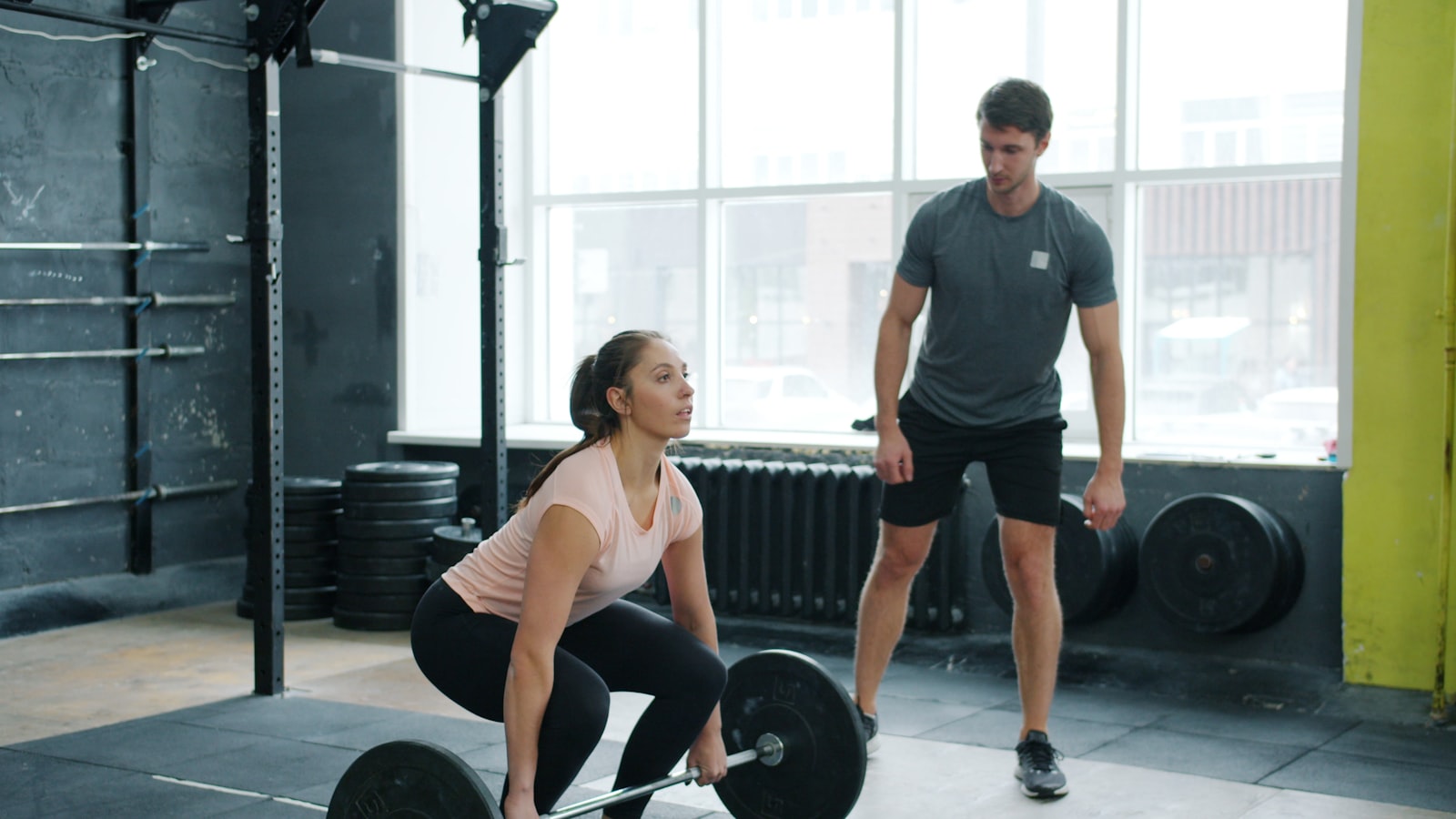
"Won't it stunt his growth?" is close to a universal first question. It comes from a real place — growth plates are a genuine anatomical structure, and the instinct to protect a still-developing skeleton is a good one. The question deserves a real answer, not reassurance on faith.
The National Strength and Conditioning Association's updated position statement on youth resistance training — a comprehensive review of the pediatric exercise science literature by an expert panel of exercise scientists, physicians, and physical educators, published in the Journal of Strength and Conditioning Research1 — answers it directly, and the answer runs the opposite direction from the worry.
The growth-plate concern, specifically
Growth cartilage exists at three sites in a growing child's body: the growth plates near the ends of long bones, the cartilage lining joint surfaces, and the points where major tendons attach to bone. Because this cartilage is "pre-bone," it is genuinely softer than surrounding tissue — the underlying biology behind the worry is real.
But the position statement is direct about what the actual research shows: "to date, injury to the growth cartilage has not been reported in any prospective youth resistance training research study." Every case of growth-cartilage injury on record traces to a small number of retrospective reports from the 1970s–80s, and those were attributed to improper lifting technique, maximal or near-maximal lifts, or a lack of qualified adult supervision — not to resistance training itself. There is, in the statement's own words, "no evidence to suggest that resistance training will negatively impact growth and maturation during childhood and adolescence." One further detail cuts against the intuition entirely: growth cartilage in a preadolescent child may actually be stronger and more resistant to shearing forces than in an adolescent, not more fragile.
How the injury rate actually compares
Rather than argue this in the abstract, the position statement cites the numbers directly against the sports a young athlete is already playing.
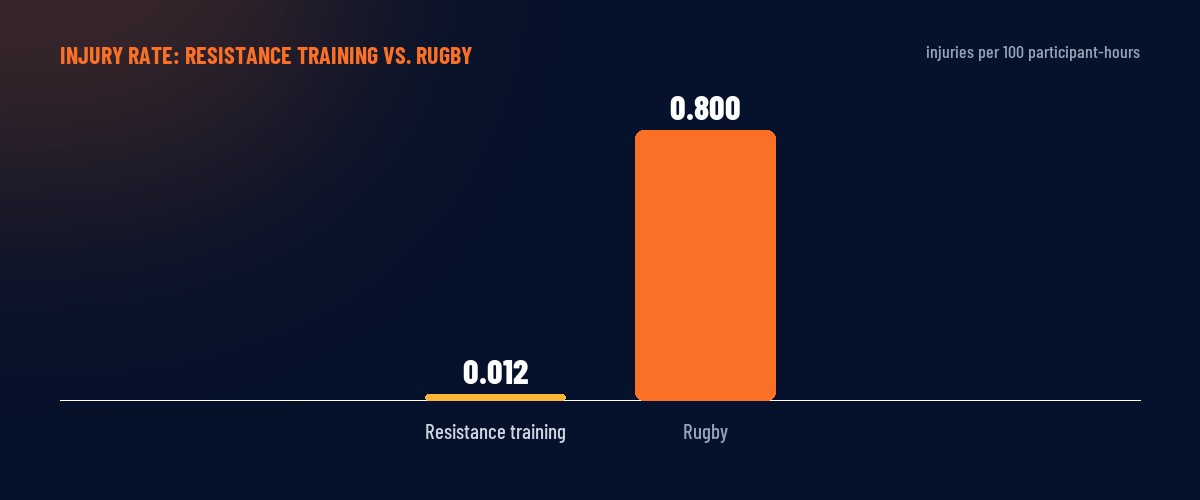
Injury rate per 100 participant-hours — resistance training vs. rugby, per Faigenbaum et al., 2009.
Where injuries in resistance training do occur, the statement is specific about the cause: "injuries related to resistance training in high school athletes appear to involve the aggressive progression of training loads or improper exercise technique" — a program design and coaching problem, not an inherent property of lifting weights.
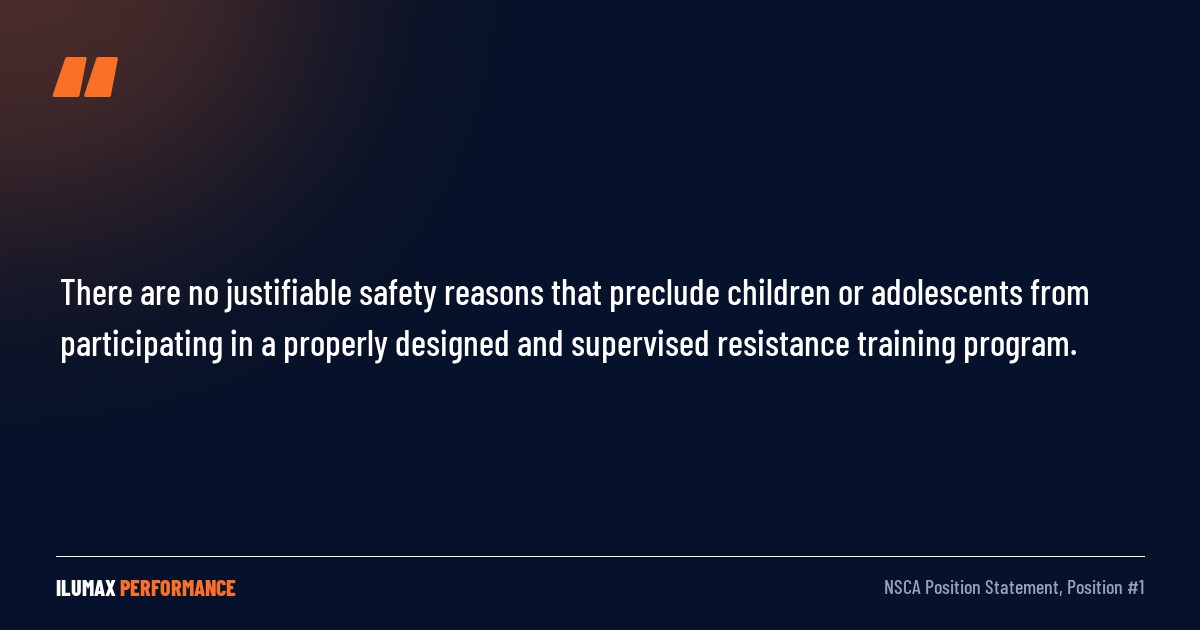
"There are no justifiable safety reasons that preclude children or adolescents from participating in [a properly designed and supervised] resistance training program." — NSCA Position Statement, Position #1
What "properly designed and supervised" is actually doing
The qualifier in that sentence is the entire answer. The position statement's risk-reduction guidance is specific: qualified supervision, age-appropriate program design, sensible load progression, and limiting the number of maximal or near-maximal lifts in a session. None of that is exotic — it's the same discipline any well-run program applies at any age, just held to more strictly with a developing athlete.
What gets missed in the "is it safe" framing is what a young athlete gives up by avoiding resistance training out of caution. The same position statement credits a properly designed program with the potential to increase a young athlete's resistance to sports-related injury in the first place — alongside improving muscular strength, motor skill performance, cardiovascular risk profile, and psychosocial well-being. Strength gains of up to 74% after 8 weeks of progressive training have been reported in youth populations, with meta-analyses showing effect sizes of 0.57–0.75 — real, measurable adaptation, not merely growth that would have happened anyway.
The actual risk calculus a parent is weighing, once the data is on the table, isn't "lifting vs. no lifting." It's supervised, age-appropriate strength work against a season of a field sport with an injury rate an order of magnitude higher — for a training modality the evidence credits with reducing that very risk.
Sources
- Faigenbaum AD, Kraemer WJ, Blimkie CJR, Jeffreys I, Micheli LJ, Nitka M, Rowland TW. "Youth Resistance Training: Updated Position Statement Paper From the National Strength and Conditioning Association." Journal of Strength and Conditioning Research 23(Suppl 5):S60–S79, 2009. Full position statement (PDF, NSCA).
Want this applied to your own program, team, or school? Free 20-minute consult, no obligation.
Book a free consult →