
Research · Youth Development
How Strong Should a Teenager Be? The Research Says That's the Wrong Question
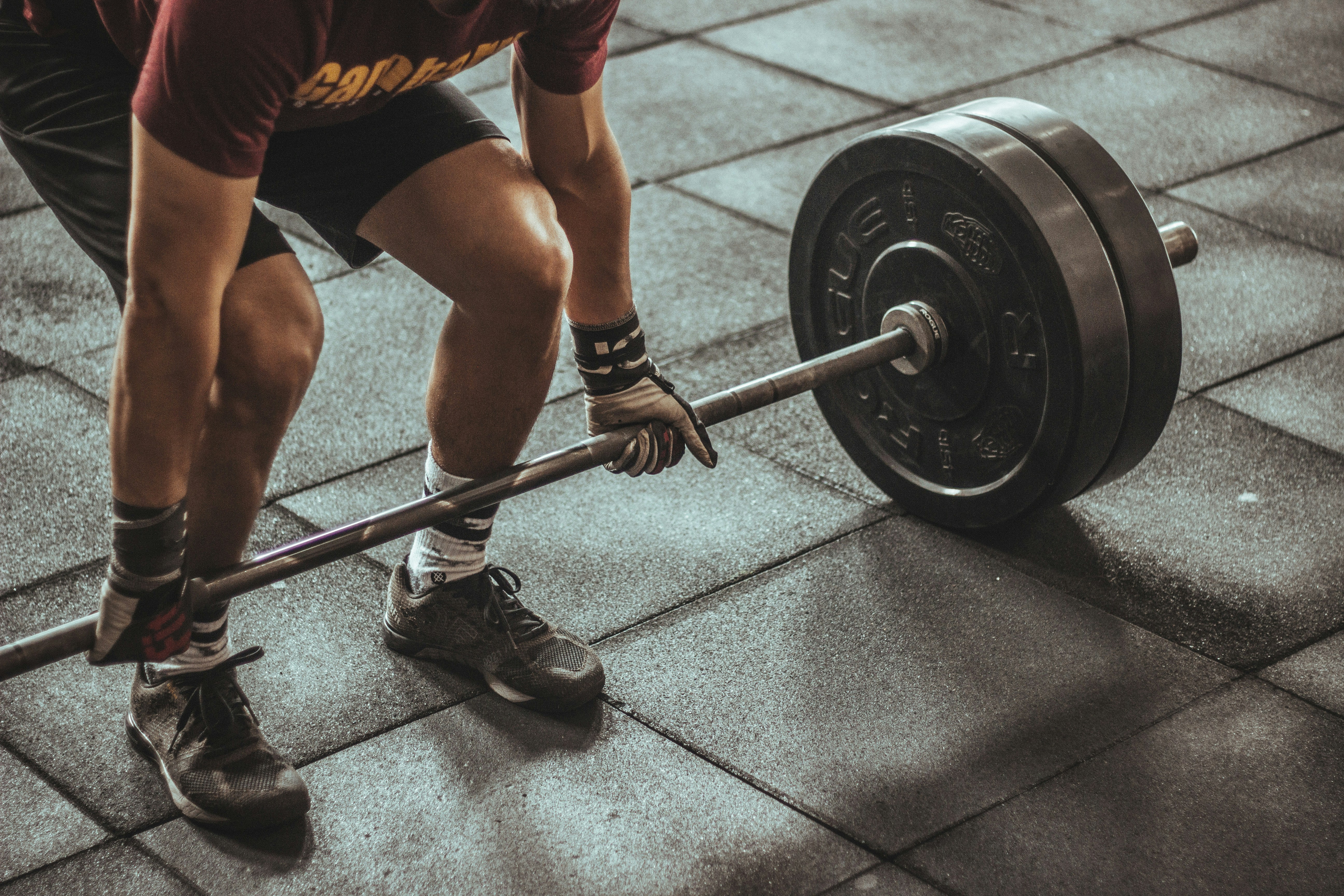
A parent's question almost always arrives in the same shape: "Is that a good squat for his age?" It's a reasonable thing to want to know, and pediatric exercise science answers it by rejecting the premise. There is no validated table of what a 15-year-old "should" squat, bench, or deadlift — and the research explains, in some detail, why building one would be a mistake rather than an oversight nobody's gotten around to fixing.
The comparison a parent or coach can actually make with any scientific footing isn't a teenager's numbers against a published adult or elite standard. It's a teenager's progress against where their own training actually started — a measure the field calls training age, and it isn't the same thing as the number on a birth certificate.
The comparison that looks fair and isn't
Start with a real dataset, because it makes the point better than an abstract argument does. A 2023 study in Biology of Sport1 measured eccentric hamstring strength — the same test, on the same device — across 244 school-age athletes in the U12–U18 age categories (football, athletics, and multi-sport programs) and 346 professional footballers from the Qatar Stars League. Judged on the raw number alone, the school athletes came out weaker as a group: an average of 272 N of force, against 297 N for the professionals. That's the comparison an elite-standards chart is actually making, and on its face it looks like exactly what common sense would predict.
Absolute vs. body-mass-normalised eccentric hamstring strength, school athletes vs. professional footballers — Jeanguyot et al., 2023.
Divide the same numbers by body mass, and the ranking flips. The school athletes were, on average, relatively stronger than the professionals they'd just lost to on the raw chart. The study's authors are direct about what that means for judging a young athlete against an adult or elite reference table: "given the dynamic nature of growth and maturation, comparisons with elite adult populations may be inaccurate." A number that reads as underperformance on the absolute chart can be full, or even superior, performance once it's expressed in terms that account for what's actually different between the two groups — body mass a young athlete hasn't finished adding yet.
Same age, different bodies
The deeper problem with any age-based table is that chronological age is a weak stand-in for the thing that actually predicts strength: biological maturity. A 2020 study of 703 German elite young athletes aged 8 to 18, published in PLOS ONE2, put numbers on how wide that gap can run — post-pubertal athletes markedly outperformed pubertal athletes of the identical chronological age on jump, change-of-direction, and grip-strength tests. The authors' own framing of the underlying issue is direct: "unlike chronological age, maturation is not a linear process," and "youth of the same chronological age display wide variability in the development of morphological and physiological characteristics." Their conclusion is that maturity-specific reference values, not simple age-based ones, are a "necessity" for assessing a young athlete's performance fairly — not a nicety.
The strength and conditioning field's practical answer to that variability is a method called bio-banding: grouping and evaluating athletes by physical maturity rather than birth year. A 2017 review in the Strength and Conditioning Journal3, co-authored by two of the researchers behind the influential Youth Physical Development model, illustrates just how wide the spread inside one age group can be. Among a sample of Portuguese youth soccer players aged 11 to 15, some had already reached 95–100% of their predicted adult height while teammates the same age were still under 85% — a full developmental stage of difference sitting inside a single team photo. Putting those two players' squats on the same age-based table and drawing a conclusion about either one's training compares different organisms, not different work ethics.
The mechanism is different, not just the size
The deeper reason a teenager's strength shouldn't be benchmarked against an adult's isn't only that teenagers are smaller. The biological process producing the strength gain is genuinely different, and the position-statement literature is specific about it.
Before puberty, the NSCA's 2009 position statement4 is direct that "training-induced strength gains are more related to neural mechanisms than to hypertrophic factors" — the nervous system getting better at recruiting and coordinating muscle that already exists, rather than the muscle itself getting meaningfully bigger. A 2013 review in Pediatric Exercise Science5, co-authored by the same lead author, puts the mechanism in plainer terms: without the circulating testosterone that drives muscle growth, "it appears that children experience more difficulty increasing their muscle mass in response to resistance training." Hypertrophy becomes a meaningfully bigger contributor to strength gains only after puberty, "because testosterone and other hormonal influences on muscle hypertrophy would be operant."
The 2017 bio-banding review3 restates the same finding in programming terms: before puberty, "gains in strength, speed, and power are best achieved through activities that encourage adaptations of the neuromuscular systems," whereas "postpubertal youth are more able to become stronger, faster, and powerful through muscle fiber hypertrophy and increases in the cross-sectional area of muscle." Pre- and post-puberty strength gain aren't the same process happening at different speeds. They're two different physiological pathways, and expecting the first to produce numbers comparable to the second is asking neural coordination alone to match a system that also has hormones and added muscle mass working for it.
The position statement is specific enough to name the exact kind of fixed number this argument is against. It directly rejects the idea that "a predetermined baseline level of strength (e.g., 1 repetition maximum [1RM] squat should be 1.5 times body weight) should be a prerequisite for lower-body plyometric training," stating plainly that the requirement "is not supported by current research and clinical observations."4 That's written about readiness for one specific type of training, but the logic underneath it applies just as well to any claim that a young athlete needs to clear a fixed strength number before being considered on track.
A teenager's strength should be measured against where their own training started, not against a number an adult's biology produced.
Readiness, in other words, is a function of what an athlete has actually trained — not a number on a chart.
What training age actually measures
If chronological age is the wrong axis, the position statement supplies the right one. The NSCA defines its entire resistance training progression in terms of training experience alone — not age at all. A "novice" is anyone with two to three months or less of consistent resistance training experience, or someone who hasn't trained in several months. "Intermediate" covers roughly three to twelve months of consistent training. "Advanced" is reserved for at least twelve months of consistent training that has produced measurable gains in strength and power.4 A physically mature 17-year-old who picked up a barbell for the first time last month is a novice by this definition. A well-coached 13-year-old two years into a properly progressed program is not.
The position statement's recommended progression tracks that ladder, not birthdays:
- Novice: 50–70% of 1RM, 1–2 sets of 10–15 reps, about 1 minute of rest between sets, training 2–3 times a week.
- Intermediate: 60–80% of 1RM, 2–3 sets of 8–12 reps, 1–2 minutes of rest, 2–3 times a week.
- Advanced: 70–85% of 1RM, 3 or more sets of 6–10 reps, 2–3 minutes of rest, 3–4 times a week.
The statement's more general starting guidance is to begin with 1–3 sets of 6–15 repetitions on light-to-moderate loads and "increase the resistance gradually (5–10%) as strength improves."4 Nowhere in either table is there a target number to reach. The whole scheme references how consistently and how well an athlete has already been training — precisely the variable an elite-standard comparison leaves out entirely.
The maturity window changes what "advanced" should emphasize
Training age and biological maturity are related but not identical, and a well-run program has to track both. A 2025 scoping review in the Journal of Functional Morphology and Kinesiology6 found that different strength and power qualities reach their fastest rate of development at different points relative to peak height velocity (PHV) — the fastest point of an adolescent's growth spurt — rather than all arriving in one uniform window. The same review discusses a well-documented dip in coordination and force output that tends to appear around the growth spurt, sometimes called "adolescent awkwardness," and reports a genuinely useful finding alongside it: structured, ongoing training participation through that window appears to reduce the dip, rather than an athlete simply being at its mercy.
The bio-banding literature translates the same idea into programming terms. Using percentage of predicted adult height as the marker, an athlete below roughly 85% is prepubertal, and training at that stage should lean on the neural-coordination adaptations it responds to best; an athlete above roughly 95% is post-pubertal and capable of "substantial performance gains through hypertrophy" that weren't available to them before.3 Two athletes at an identical training age — eighteen months of consistent, well-coached lifting, say — can legitimately need different programs if one is well before their growth spurt and the other is well past it. That's a second, independent reason a single number on an age-based chart can't fairly serve both of them.
What this actually changes
None of this is an argument against testing or tracking numbers. It's an argument for tracking the right ones.
- Track trend, not table position. The useful comparison is this month's numbers against this athlete's own numbers three months ago — not against a figure drawn from an adult or elite population training under different hormonal and neuromuscular conditions.
- Ask about training age before judging a number. "How long has this athlete been training consistently, with sound technique?" is more informative than "how much do they lift," because the position statement's entire progression scheme is built on the answer to the first question, not the second.
- Expect the emphasis to shift with maturity, not just the load. A program that leans on neural-coordination work pre-growth-spurt and folds in more hypertrophy-oriented volume as an athlete matures is following the evidence. One that just adds weight to the bar on a schedule, regardless of where the athlete actually is developmentally, isn't.
- Use relative measures where they exist. Body-mass-normalised strength, limb symmetry, and load-to-rep-range consistency travel across a growth spurt in a way a raw one-rep max doesn't.
The question a parent is actually trying to ask — is my kid on track — has a real, evidence-based answer. It's just not one an adult standards table can give. It's whether a young athlete's numbers are moving in the right direction relative to how long and how well they've actually been training, inside a program built around where their body is right now rather than where a chart says it should be by a certain age.
Sources
- Jeanguyot E, Salcinovic B, Johnson A, van Dyk N, Whiteley R. "Eccentric Hamstring Strength in Young Athletes Is Best Documented When Normalised to Body Mass: A Cross-Sectional Study With Normative Data of 590 Athletes From Different Age Categories." Biology of Sport 40(4):1079–1095, 2023. DOI: 10.5114/biolsport.2023.125585.
- Lesinski M, Schmelcher A, Herz M, et al. "Maturation-, Age-, and Sex-Specific Anthropometric and Physical Fitness Percentiles of German Elite Young Athletes." PLOS ONE 15(8):e0237423, 2020. DOI: 10.1371/journal.pone.0237423.
- Cumming SP, Lloyd RS, Oliver JL, Eisenmann JC, Malina RM. "Bio-banding in Sport: Applications to Competition, Talent Identification, and Strength and Conditioning of Youth Athletes." Strength and Conditioning Journal 39(2):34–47, 2017. DOI: 10.1519/SSC.0000000000000281.
- Faigenbaum AD, Kraemer WJ, Blimkie CJR, Jeffreys I, Micheli LJ, Nitka M, Rowland TW. "Youth Resistance Training: Updated Position Statement Paper From the National Strength and Conditioning Association." Journal of Strength and Conditioning Research 23(Suppl 5):S60–S79, 2009. Full position statement (PDF, NSCA).
- Faigenbaum AD, Lloyd RS, Myer GD. "Youth Resistance Training: Past Practices, New Perspectives, and Future Directions." Pediatric Exercise Science 25(4):591–604, 2013. journals.humankinetics.com.
- Retzepis N-O, Avloniti A, Kokkotis C, et al. "The Effect of Peak Height Velocity on Strength and Power Development of Young Athletes: A Scoping Review." Journal of Functional Morphology and Kinesiology 10(2):168, 2025. DOI: 10.3390/jfmk10020168.
Want this applied to your own program, team, or school? Free 20-minute consult, no obligation.
Book a free consult →