
Research · Longevity
Why a Handshake Might Predict Your Lifespan Better Than Your Blood Pressure
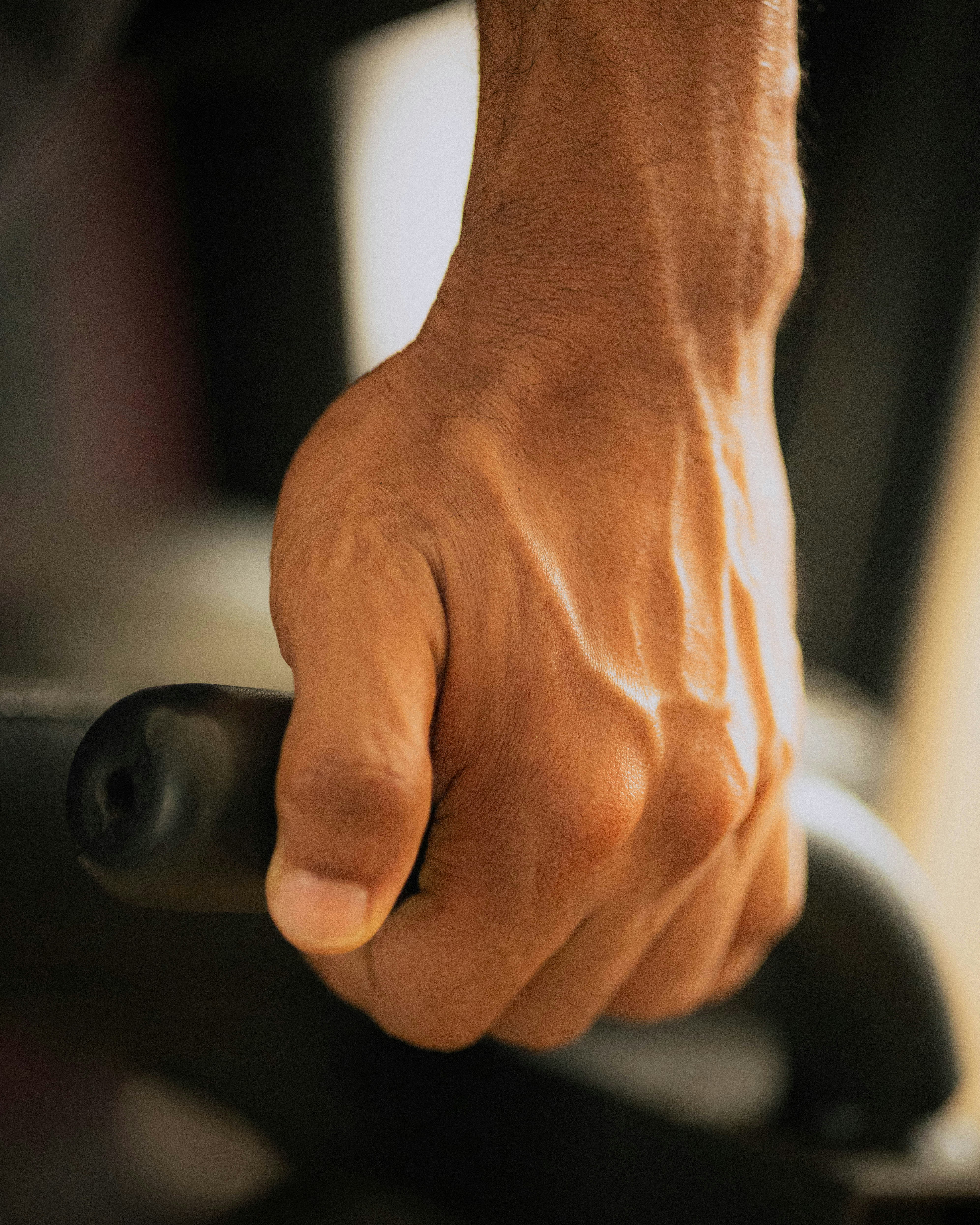
A handshake takes about two seconds. A grip-strength test — squeezing a handheld dynamometer as hard as possible for a few seconds — takes barely longer, costs almost nothing, and requires no lab equipment. Over the past two decades it has also become one of the most closely studied single measurements in exercise and ageing science, showing up as a predictor of death, cardiovascular disease, cognitive decline, and disability across cohorts spanning hundreds of thousands of people across multiple continents. That's an unusual amount of research attention for a test that, on its face, only measures how hard someone can squeeze.
The interest isn't really about the hands. It's about what a maximal grip contraction reveals about the rest of the body — and increasingly, researchers treat it less as a hand-strength test and more as a low-cost readout of overall physiological reserve.
The studies that put grip strength on the map
The single most cited piece of evidence is the Prospective Urban Rural Epidemiology (PURE) study, published in The Lancet in 2015.1 Researchers measured handgrip strength with a dynamometer in nearly 140,000 adults across 17 countries of varying income levels, then tracked them for a median of four years. After adjustment for age, sex, and other established risk factors, every 5-kilogram decrease in grip strength was associated with a 16% increase in all-cause mortality, a 17% increase in both cardiovascular and non-cardiovascular mortality, a 7% increase in the risk of myocardial infarction, and a 9% increase in the risk of stroke.1 The finding that made the study genuinely notable wasn't just that grip strength predicted death — it was that grip strength predicted it more strongly than systolic blood pressure, a measurement that sits at the centre of most cardiovascular risk calculators in clinical use today.1
Three years later, a UK Biobank analysis by Celis-Morales and colleagues, published in the BMJ, tested the same relationship at a much larger scale within a single high-income country: 502,293 participants followed for a mean of 7.1 years, with 13,322 deaths recorded.2 Every 5-kilogram lower grip strength was linked to roughly a 16–20% increase in all-cause mortality, a 19–22% increase in cardiovascular mortality, a 24–31% increase in respiratory mortality, and a 10–17% increase in cancer mortality, with broadly consistent effects in men and women.2 Adding grip strength to an established cardiovascular risk score produced a small but measurable improvement in how well that score predicted who would go on to die — a meaningful result for a five-second test added onto a five-minute clinic visit.2
A 2022 dose-response meta-analysis pooling 48 prospective cohort studies and more than 3.1 million participants confirmed the pattern held across the accumulated literature, not only in these two landmark studies.3 It found a close-to-linear inverse relationship between grip strength and all-cause mortality across roughly the 26–50 kilogram range, with more complex, threshold-based relationships for cancer and cardiovascular mortality specifically.3 Put simply: across nearly fifty independent studies of different populations, weaker grip has tracked with a higher risk of dying, consistently enough that the relationship is no longer treated as a curiosity in the epidemiology literature.
What a squeeze actually measures
None of this means a weak handshake causes heart disease, and the researchers behind these studies are careful not to claim that it does. What grip strength appears to capture is broader: a readout of the neuromuscular system's overall capacity, not an isolated property of the forearm.
Producing maximal force in a grip contraction requires the nervous system to recruit a large proportion of the available motor units in the forearm flexors and drive them at a high firing rate, in close synchrony. That capacity — how effectively the nervous system can recruit and drive muscle under a maximal effort — tracks closely with the same capacity elsewhere in the body. The European Working Group on Sarcopenia in Older People (EWGSOP2), in its 2019 consensus paper on diagnosing sarcopenia, states it directly: grip strength "correlates moderately with strength in other body compartments, so it serves as a reliable surrogate for more complicated measures of arm and leg strength."4 That's the reason EWGSOP2 made grip strength, rather than a leg-press or knee-extension test, the primary practical measure for identifying low muscle strength in clinical practice — cutoffs below 27 kilograms for men and below 16 kilograms for women flag "probable sarcopenia" and trigger further assessment.4 The same paper is explicit about why the field cares at all: low grip strength is "a powerful predictor of poor patient outcomes such as longer hospital stays, increased functional limitations, poor health-related quality of life and death."4
In other words, a dynamometer reading isn't really scoring hand strength for its own sake. It's a cheap, fast proxy for the muscular and neuromuscular condition of the whole body — which is precisely why it correlates with outcomes, like cardiovascular death, that have nothing anatomically to do with the hand.
A dynamometer reading isn't really scoring hand strength for its own sake. It's a cheap, fast proxy for the muscular and neuromuscular condition of the whole body.
Beyond mortality: cognition and the correlation question
The same logic extends to the brain. A 2021 systematic review and meta-analysis in Frontiers in Aging Neuroscience, pooling 15 longitudinal cohort studies, found that people with poorer grip strength carried close to double the risk of subsequent cognitive decline (hazard ratio 1.99) and a 54% higher risk of developing dementia (hazard ratio 1.54), with similarly elevated risk for both Alzheimer's disease specifically and non-Alzheimer's dementia.5
It's worth pausing on causation here, because a rigorous reading of this evidence requires it. Grip strength is an observational marker in nearly all of this research — something measured alongside an outcome, not manipulated in a controlled trial. A 2025 Mendelian randomization study — a genetic-epidemiology method used to test whether an association is more likely to be causal rather than coincidental — found a directional, positive causal effect of grip strength on cognitive function, but did not find evidence supporting a direct causal effect of grip strength on dementia risk itself.6 The honest summary of the current evidence is that weak grip is a reliable early-warning signal correlated with worse outcomes across multiple systems, most plausibly because it reflects a shared underlying process — declining muscle mass, reduced physical activity, systemic inflammation, or general physiological decline — rather than because the hand muscles themselves are doing any of the damage.
Not just an ageing marker: occupational and combat-sport performance
Most of the epidemiology above comes from older or general-population cohorts, but grip strength shows up as a meaningful, practical measure well outside that context too.
A 2017 retrospective cohort study of 169 police recruits, published in the International Journal of Environmental Research and Public Health, found that recruits with lower grip strength were significantly more likely to fail an occupational task-performance assessment built around simulated tactical scenarios, and that grip strength — specifically in the non-dominant hand — was significantly associated with injury risk over the training course.7 For a role built around physically controlling people and equipment under stress, that's closer to a direct, mechanistic relationship than a proxy one — grip strength there behaves more like a job-specific physical requirement than a biomarker of underlying health.
Combat sports show a related pattern, with an added layer of specificity. A 2023 study in Frontiers in Sports and Active Living compared maximal isometric grip force between competitive judo and Brazilian jiu-jitsu athletes and untrained students, using both a standard grip and a sport-specific kimono (gi) grip.8 The grapplers produced significantly greater force than the students in both bilateral and unilateral testing, and the researchers noted that the specific type of grip tested changes how force is expressed — a finding with a direct coaching implication. For a grappler, generic crush-grip strength and the specific grip a judogi or kimono demands are not interchangeable qualities, and training only one does not guarantee the other transfers cleanly.
What the evidence actually supports for training it
The reassuring part of this research is that grip strength, unlike some biomarkers, responds directly and predictably to training — and the dosing evidence behind that is unusually specific.
A 2025 Bayesian network meta-analysis in Frontiers in Physiology, pooling 13 randomized controlled trials and 711 older adults with sarcopenia, modelled which combinations of resistance-training variables produced the largest gains in handgrip strength.9 The dose most strongly associated with improvement combined training three times per week, at roughly 49% of one-repetition maximum, across a programme lasting about 19 weeks, with six sets and 16 repetitions per exercise — though the review found meaningfully effective results across a considerably wider range as well: 2–5 sessions weekly, intensities from 30–75% of 1RM, programme lengths from 4–24 weeks, and total weekly training volumes from roughly 528 to 2,200 repetitions.9 The practical message isn't that there's one narrow formula to follow — it's that grip strength, treated as a marker of general muscular condition, responds to the same structured, progressive resistance training that improves strength anywhere else in the body, and does so within months rather than years.
Two population-specific implications follow from the research above:
- For general and older populations, the EWGSOP2 cutoffs — below 27kg for men, below 16kg for women, on a standard handheld dynamometer — offer a simple, free reference point worth tracking, not as a self-applied diagnosis but as a number worth knowing and re-testing periodically, the same way a resting heart rate or blood pressure reading gets tracked over time. Given the dose-response data above, consistent structured resistance training addressing the major muscle groups is what actually moves that number — not isolated grip gadgets used as a substitute for real training.
- For athletes, particularly in grappling and combat sports, the specificity finding from the judo and BJJ research matters directly. Generic grip strength and sport-specific grip demands are related but distinct qualities. A wrestler, judoka, or BJJ athlete benefits from grip work that resembles the actual grip exchanges of their sport — gi or no-gi, crushing or sustained isometric holds — layered on top of, rather than instead of, the general strength training that builds the underlying neuromuscular capacity a dynamometer reading is actually reflecting.
None of this reframes grip strength as something to train in isolation, chasing a bigger dynamometer number for its own sake. The research consistently treats it the other way around — as a low-cost, well-validated signal of how the rest of the body's muscular and neuromuscular systems are actually functioning, cheap enough to measure at the start of a training programme and repeat every few months as one honest data point among several.
Sources
- Leong DP, et al. "Prognostic value of grip strength: findings from the Prospective Urban Rural Epidemiology (PURE) study." The Lancet 386(9990):266–273, 2015. PubMed.
- Celis-Morales CA, et al. "Associations of grip strength with cardiovascular, respiratory, and cancer outcomes and all cause mortality: prospective cohort study of half a million UK Biobank participants." BMJ 361:k1651, 2018. doi.org/10.1136/bmj.k1651.
- López-Bueno R, Andersen LL, Koyanagi A, Núñez-Cortés R, Calatayud J, Casaña J, del Pozo Cruz B. "Thresholds of handgrip strength for all-cause, cancer, and cardiovascular mortality: A systematic review with dose-response meta-analysis." Ageing Research Reviews 82:101778, 2022. doi.org/10.1016/j.arr.2022.101778.
- Cruz-Jentoft AJ, et al. "Sarcopenia: revised European consensus on definition and diagnosis" (EWGSOP2). Age and Ageing 48(1):16–31, 2019. doi.org/10.1093/ageing/afy169.
- Cui M, Zhang S, Liu Y, Gang X, Wang G. "Grip Strength and the Risk of Cognitive Decline and Dementia: A Systematic Review and Meta-Analysis of Longitudinal Cohort Studies." Frontiers in Aging Neuroscience 13:625551, 2021. doi.org/10.3389/fnagi.2021.625551.
- Sun Q, Cao Q, Gu Z, He P, Zhu M, Liang X. "Causal relationship between hand grip strength and cognition/dementia risk: a Mendelian randomization study." American Journal of Translational Research 17(3):1910–1924, 2025. Full text (PDF, e-century.us).
- Orr R, Pope R, Stierli M, Hinton B. "Grip Strength and Its Relationship to Police Recruit Task Performance and Injury Risk: A Retrospective Cohort Study." International Journal of Environmental Research and Public Health 14(8):941, 2017. doi.org/10.3390/ijerph14080941.
- Escobar-Molina R, Cuevas-Laguna M, Chirosa-Ríos IJ, Merino-Fernández M, Chirosa-Ríos LJ, Franchini E. "Analysis of grip specificity on force production in grapplers and its effect on bilateral deficit." Frontiers in Sports and Active Living 5:1190369, 2023. doi.org/10.3389/fspor.2023.1190369.
- Li HR, Huang S, Yv Z, Jiang N, Li P, Zhai Y, Peng F. "Optimal dose of resistance training to improve handgrip strength in older adults with sarcopenia: a systematic review and Bayesian model-based network meta-analysis." Frontiers in Physiology 16:1564988, 2025. doi.org/10.3389/fphys.2025.1564988.
Want this applied to your own program, team, or school? Free 20-minute consult, no obligation.
Book a free consult →