
Research · Injury & Recovery
Half of Young Gymnasts Have Wrist Pain. Almost Nobody Has Tested What Prevents It.
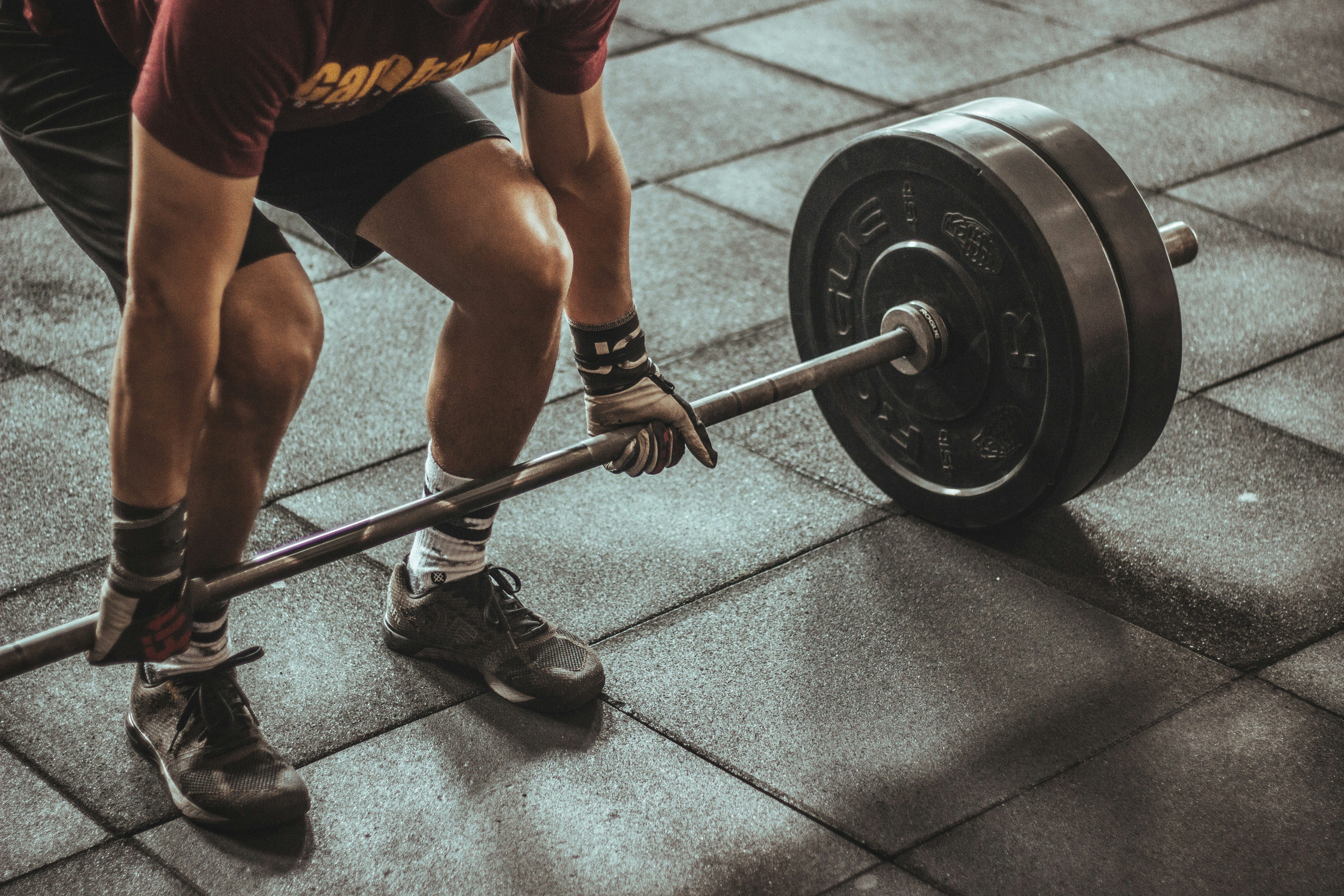
Before the warm-up finishes, half the group is taping wrists. Nobody remarks on it. A twelve-year-old winces landing a round-off, shakes the hand out, and goes again. Asked afterwards, they say it always hurts a bit on floor.
In most youth sports, a joint that hurts in most sessions would prompt a referral. In gymnastics it is close to the norm, and the research suggests the norm is the problem: the pain is common, it rarely goes away on its own, and almost nothing about how to load a growing wrist has actually been tested.
How common it actually is
The most complete picture is a 2026 systematic review and meta-analysis of adolescent artistic gymnasts. It screened 3,650 records and included 25 studies, with a median participant age of 12 and 76% female participants on average.1
The last figure matters most, and it rests on the smallest sample. Positive ulnar variance means the ulna ends up relatively longer than the radius at the wrist, and in gymnasts it is read as a sign that repeated loading has disturbed growth at the distal radial growth plate. It is the outcome that turns "sore wrists" into a structural change that outlasts the sport. One study of 25 children is not a rate anyone should quote with confidence, but it is enough to say the outcome is not hypothetical.
The confidence intervals tell their own story. A chronic-injury prevalence somewhere between 12% and 71% is less an estimate than a statement that the studies disagree, and the heterogeneity statistic (I² = 96%) confirms it. The authors rated the certainty of almost every pooled outcome as very low.1 What survives that caveat is the order of magnitude: across very different study designs, wrist pain in this population is measured in tens of per cent, not single figures.
It does not settle down
The obvious hope is that wrist pain is a phase. The best prospective data available argue otherwise. A one-year cohort followed 47 non-elite gymnasts aged 5 to 16 at a single club, with an interview-based questionnaire and a physical exam at the start and the end of the year.2
Two details in that study are more useful than the headline. First, gymnasts aged 10 to 14 were significantly more likely to report pain at each survey than those younger or older (p = 0.03).2 That is the window of the adolescent growth spurt, when the growth plate is at its most vulnerable — the same pattern that shows up at other growth-plate sites under repetitive load.
Second, training intensity rose over the year in both groups, but the increase was statistically significant only among the pain-free gymnasts (p = 0.003, against p = 0.08 in those with pain).2 The pain was already acting as a brake. These children were not training through it unaffected; they were quietly progressing less, while almost none of them were seeing anyone about it.
This is a single club, a 2002 study and 47 children, and it should be read at that scale. It is also the only prospective cohort of its kind, and its conclusion — that wrist pain at this level is common and persists with continued training in the large majority who report it — has not been contradicted since.
What the risk factors actually are
The 2026 review lists the factors associated with wrist pain across the included studies: age between 10 and 14, older age at the start of training, training intensity, body mass index, years of training and weekly training hours.1
That reads like a clear load story. Look underneath it and the story gets thinner. Only four studies examined risk factors at all. In the strongest of them, a multivariable analysis, each step up in training intensity carried an adjusted odds ratio of 1.19, and later age at training onset 1.97 — but no study reported confidence intervals for its odds ratios.1 The weekly-hours association comes from a single small cross-sectional study with a chi-square test (p = .04), and that study was rated high risk of bias overall.1
Across the whole review, 20 of 25 studies were at high risk of bias on at least one criterion, and 16 failed to recruit a representative population.1 The authors' own conclusion is blunt: unlike several other youth sports, gymnastics lacks injury risk reduction guidelines, including for the growth-plate overuse injury known as gymnast wrist, and further research on training intensity thresholds is "imperative".1
So the honest summary is this. More gymnastics, at higher intensity, during the growth spurt, is associated with more wrist pain. Nobody has identified a weekly-hours threshold, a safe number of handstands or a training-load ratio that reduces it, because nobody has run the study.
Acute injuries follow a different pattern
Overuse is not the whole picture. Using US emergency department surveillance data from 2012 to 2018, one study estimated 72,542 youth gymnastics injuries presenting to emergency departments each year, 61.3% of them in children aged 7 to 11.3
Wrist and lower-arm fractures were significantly more common in childhood than adolescence (1.07 against 0.43 per 100,000 athlete-days; p = .002), and the difference was driven by girls (1.06 against 0.37).3 By adolescence, the pattern shifted towards ankle injuries and concussion.
That is a reminder that the youngest gymnasts break wrists by falling onto them, while the 10-to-14 group wears them down by loading them. The two problems peak at slightly different ages and call for different responses: landing skills and progressions for the first, load and symptom monitoring for the second.
The elbow: evidence borrowed from baseball
Elbow overuse in gymnasts is real — the elbow becomes a weight-bearing joint on vault, beam and floor — but it has no epidemiology of its own comparable to the wrist literature. What exists is mostly surgical outcome data for osteochondritis dissecans of the capitellum, a lesion in the cartilage and underlying bone of the outer elbow.
The main systematic review pooled 24 studies and 492 adolescent patients with a mean age of 14.3.4 Of the 464 whose sport was recorded, 371 played baseball and 35 were gymnasts. Overall, 86% returned to sport at a mean of 5.6 months after surgery. Return to the previous level was 94% after osteochondral autograft, against 71% after debridement or microfracture and 64% after fixation.4
Those are encouraging figures, but they describe throwers far more than gymnasts, and the included studies were mostly retrospective single-centre case series with no control groups; the authors rated the evidence low to very low quality.4 A gymnast's elbow bears body weight in extension rather than whipping through a throwing arc, and nothing in this literature tells us how well the throwing data transfer. There is no evidence-based gymnastics-specific return-to-sport protocol to point to.
What this changes in practice
Stop treating wrist pain as part of the sport. Half of adolescent gymnasts report it, and nearly nine in ten who have it still have it a year later. Common is not the same as harmless, and pain that persists through a growth spurt is the pattern associated with growth-plate change.
Make 10 to 14 the age band you watch hardest. It is the most consistent risk factor in the data, and it maps onto the growth spurt rather than onto training age. A gymnast in a rapid growth phase is a different athlete from the same gymnast a year earlier.
Get persistent wrist pain seen. In the prospective cohort, five of the gymnasts with wrist pain had seen a physician. Early, pain-only presentations are the point at which modifying load is cheapest; waiting for a structural change on imaging is waiting too long.
Track what the wrist actually does, not just total hours. Total weekly hours is a weak proxy for wrist load, because a session of conditioning and a session of floor tumbling load the wrist very differently. Logging wrist-loading volume and pairing it with a simple pain check sits naturally alongside session-RPE load monitoring. No study has validated this for gymnasts' wrists, so treat it as good monitoring practice rather than proven prevention.
Watch for the gymnast who stops progressing. In the cohort, pain-free gymnasts significantly increased their training intensity over a year and those with pain did not. A plateau in a child with a sore wrist may be the wrist talking.
Do not import elbow return-to-sport timelines from baseball uncritically. The pooled data are dominated by throwers, and a weight-bearing elbow is a different mechanical problem.
Where this evidence stops
The wrist meta-analysis is the best summary available and is candid about its own weaknesses: very low certainty for most outcomes, inconsistent definitions of pain and injury, and studies that rarely separated specific wrist diagnoses. Its total of 185,107 gymnasts is dominated by a single large dataset of 183,139; the pooled prevalence figures rest on a few hundred athletes. The authors also note that gymnasts may under-report pain, which would mean the true figures are higher, not lower.1
The prospective cohort is one club, 47 children and more than two decades old. The emergency department data capture acute injuries serious enough to bring a family to hospital, not overuse. The elbow evidence is surgical, retrospective and mostly about baseball.
The most important gap is the one in the title. There is no trial in this literature showing that any specific limit on hours, intensity or wrist-loading volume reduces wrist or elbow injury in young gymnasts. What the evidence does support is narrower and still worth acting on: wrist pain in this population is common, persistent and concentrated in the growth spurt, and treating it as normal is the one response the data clearly argue against.
Sources
- DiLeo, S. D. F., Noori, A., Day, E., Burkhart, T. A., Paul, R. A., & Chan, A. H. W. (2026). Epidemiology and risk factors of wrist pain and injury in adolescent artistic gymnasts: a systematic review and meta-analysis. Orthopaedic Journal of Sports Medicine, 14(1), 23259671251395329. https://doi.org/10.1177/23259671251395329
- DiFiori, J. P., Puffer, J. C., Aish, B., & Dorey, F. (2002). Wrist pain in young gymnasts: frequency and effects upon training over 1 year. Clinical Journal of Sport Medicine, 12(6), 348-353. https://doi.org/10.1097/00042752-200211000-00005
- Tisano, B., Zynda, A. J., Ellis, H. B., & Wilson, P. L. (2022). Epidemiology of pediatric gymnastics injuries reported in US emergency departments: sex- and age-based injury patterns. Orthopaedic Journal of Sports Medicine, 10(6), 23259671221102478. https://doi.org/10.1177/23259671221102478
- Westermann, R. W., Hancock, K. J., Buckwalter, J. A., Kopp, B., Glass, N., & Wolf, B. R. (2016). Return to sport after operative management of osteochondritis dissecans of the capitellum: a systematic review and meta-analysis. Orthopaedic Journal of Sports Medicine, 4(6), 2325967116654651. https://doi.org/10.1177/2325967116654651
Want this applied to your own program, team, or school? Free 20-minute consult, no obligation.
Book a free consult →