
Research · Injury Epidemiology
One Sport, All Year: What the Epidemiology Says About Overuse Injury in Youth Athletes
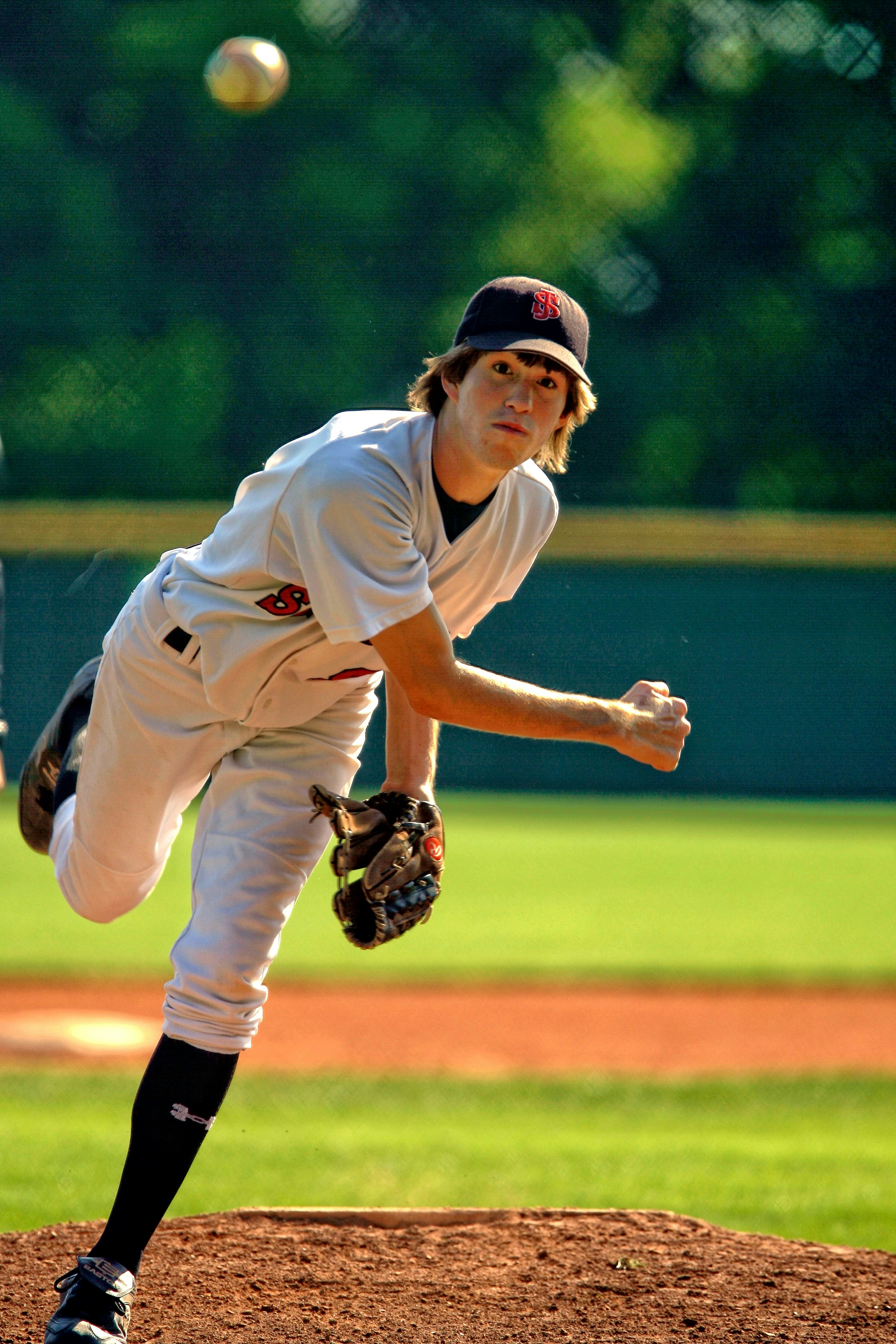
"He only plays one sport, but he plays it every season, all year" is said by parents as a credential, not a warning. It usually is meant as one — proof of commitment, an edge over the kid who splits time across three sports and a school team. The epidemiology on youth overuse injury tells a more complicated story, and it comes with real numbers attached: odds ratios, relative risks, and injury rates broken down by sport, not just a general sense that "too much of one thing" is bad. It's also a story that runs into a second, less comfortable one — the tool sports medicine built to manage training load and prevent exactly this kind of injury, the acute:chronic workload ratio, is now the subject of a genuine methodological fight inside the field that produced it.
What "specialization" actually means, epidemiologically
Before the injury numbers mean anything, it's worth being precise about what researchers are actually measuring. The most widely used tool in this literature is a simple 3-point scale developed by Neeru Jayanthi and colleagues: one point each for (1) training in a single sport to the exclusion of others, (2) training in that sport more than eight months of the year, and (3) having quit other sports to focus on the main one.1 A score of 0–1 is classified as low specialization, 2 as moderate, and 3 as high. It's a blunt instrument — a young athlete who has simply never played anything else can score as "moderately" specialized despite looking, to any coach watching them train, like the most specialized kid in the gym — but it's the scale nearly every study in this article uses, which makes it worth knowing before the numbers arrive.
The scale matters because it turns "specialization" from a vague lifestyle description into something a researcher can actually compare against an injury outcome. That comparison is where the epidemiology starts.
The injury-risk numbers
Jayanthi's own 2015 case-control study, published in the American Journal of Sports Medicine, remains the foundational data point.1 Drawing on 822 injured and 368 uninjured young athletes seen at sports medicine clinics, the study found that after controlling for age and total weekly hours of sports activity, a high specialization score was an independent risk factor for injury in general (odds ratio 1.27) and, more specifically, for serious overuse injury — stress fractures, spondylolysis, and osteochondritis dissecans among them — at an odds ratio of 1.36. Total weekly training volume mattered on its own too: each additional hour of weekly training was itself an independent predictor of injury.
A 2024 synthesis in the HSS Journal pooling multiple studies puts a relative-risk figure on the same pattern from a different angle.2 Highly specialized athletes carried a significantly higher overuse-injury risk than moderately specialized athletes (relative risk 1.18), and moderately specialized athletes carried higher risk again than low-specialization athletes (relative risk 1.39). Flip the comparison around and it holds just as well: athletes who "sampled" multiple sports rather than specializing had a significantly lower injury incidence than specializers, at a relative risk of 1.37, drawn from pooled data across 5,736 athletes.
A separate 2024 study in the Journal of Athletic Training, following 1,171 youth patients across the full range of specialization pathways, adds a detail that complicates the simple "one sport is riskier" framing.4 Among the subset classified as highly specialized, it found no significant difference in overuse-injury rates between athletes who specialized early and never played anything else and those who specialized later, having "evolved" from a broader sporting background. What did predict a shift toward overuse injury specifically — as opposed to a one-off acute injury — was competing in an individual sport rather than a team sport, at nearly double the odds (odds ratio 1.95). The type of specialization pathway mattered less than whether the sport itself involves repetitive, self-selected movement patterns without a team structure diversifying the load.
Which injuries, which sports
The aggregate risk numbers are only half the picture. The other half is which specific injuries actually show up, and the pattern is sport-specific enough to be genuinely useful for a coach or parent trying to know what to watch for.
Stress fractures cluster in running and gymnastics
A large surveillance study covering US high school athletes across eight seasons — 51,773 total injuries recorded across more than 25 million athlete-exposures — found an overall stress-fracture rate of 1.54 per 100,000 athlete-exposures.5 That overall number hides enormous variation by sport: girls' cross country carried the highest rate at roughly 10.6 per 100,000 athlete-exposures, followed by girls' gymnastics at around 7.4 and boys' cross country at around 5.4. In sports both sexes play, girls sustained stress fractures at roughly 1.7 times the rate of boys. The pattern lines up with what the mechanism would predict — sports built around repetitive, high-impact, single-plane loading (running strides, gymnastics landings) concentrate bone-stress injury in a way that multi-directional field sports don't.
Knee tendinopathy tracks single-sport female athletes specifically
The same 2024 HSS Journal synthesis found single-sport female athletes carried roughly four times the relative risk of patellar tendinopathy, Sinding-Larsen-Johansson syndrome, and Osgood-Schlatter disease compared to their multi-sport peers (95% CI 1.5–10.1).2 All three conditions are variations on the same underlying problem — repetitive tensile load on the extensor mechanism of a still-growing knee, applied in the same pattern, week after week, without a different sport's movement demands giving that specific structure a break.
Throwing injuries in baseball have risen sharply alongside specialization
Adolescent throwing athletes carry perhaps the most extensively documented sport-specific overuse pattern in this literature. A 2019 narrative review in the Journal of Athletic Training lays out the numbers: ulnar collateral ligament (UCL) reconstructions in youth and adolescent pitchers increased 343% between 2003 and 2014, with 56.6% of all such surgeries occurring in 15-to-19-year-olds — a rate climbing 18.5% per year in that adolescent group, faster than the equivalent adult surgical rate.6 The risk factors identified are concrete and load-based rather than mysterious: pitchers aged 9–14 who pitched more than eight months of the year carried five times the risk of eventually needing elbow surgery compared to those who didn't; pitching through arm fatigue carried a risk multiplier of 4 to 36 times, described in the review as the single most dangerous factor identified; and exceeding roughly 80 pitches in a game or 100 innings in a year each independently raised surgical risk two- to fivefold. Separately, a 2017 case series in the Orthopaedic Journal of Sports Medicine tracking UCL injuries at one center found overall case volume rose more than twelvefold between 2000 and 2016, with baseball players accounting for nearly three-quarters of all cases.7 None of this is a mystery about why it's happening — it's a direct injury signature of the same repetitive-load mechanism showing up in a joint that takes years longer than most to finish developing.
Why single-sport, year-round training raises the risk
The 2024 clinical report on overuse injury from the American Academy of Pediatrics' Council on Sports Medicine and Fitness frames the underlying mechanism plainly: overuse injuries result from repetitive stress applied without sufficient recovery, accumulating musculoskeletal damage faster than the tissue — bone, tendon, growth cartilage — can remodel and repair itself.3 The report notes that overuse injuries already account for up to half of all pediatric sports-medicine visits, before specialization is even factored in as a variable. Single-sport, year-round training removes the two things that would otherwise interrupt that cycle: a genuine off-season, and a different sport's different movement pattern loading different structures instead of hammering the same ones. A multi-sport athlete's "overuse" exposure to any one joint or growth plate is naturally diluted across a calendar year in a way a single-sport athlete's isn't, independent of total training volume.
Training load and the acute:chronic workload ratio
If specialization is one half of the overuse-injury puzzle, how much an athlete trains in any given week — and how that compares to what they've been doing lately — is the other. The most influential attempt to formalize that second half is the acute:chronic workload ratio (ACWR), introduced by sports scientist Tim Gabbett, building on an older fitness-fatigue model of training response.8 The idea: divide an athlete's very recent training load (acute, typically the past week) by their more established training load (chronic, typically a rolling four-week average). Gabbett's 2016 paper in the British Journal of Sports Medicine, titled "the training–injury prevention paradox," argued that athletes who built a high chronic workload gradually were often at lower injury risk than athletes training far less overall — because the gradual load itself builds the physical resilience that protects against injury. The danger zone wasn't high training load in general; it was a sharp, sudden spike in acute load relative to what the athlete's body had adapted to. A commonly cited "sweet spot" for the ratio sat around 0.8 to 1.3, with values climbing toward 1.5 and beyond associated with rising injury risk in several of the team-sport datasets the model was built on.
For a youth-sport context specifically, this reframes the specialization data above in a useful way: it isn't necessarily the sport itself that's dangerous, it's an abrupt jump — a return from a short break straight into full training volume, a tournament week stacked onto a normal training week, a new season starting without a ramp-up period. A single-sport athlete training year-round is, in principle, less likely to hit these load spikes than an athlete cycling in and out of different sports and camps — which is part of why the honest picture here has two separate risk factors running at once, not one substituting for the other.
The unsettled part: does the ACWR actually hold up?
Here the story gets genuinely more complicated, and it's worth being direct about it rather than presenting the ACWR as settled science. Since around 2019, a series of papers — most prominently from sports scientist Franco Impellizzeri and colleagues — has mounted a serious methodological challenge to the ACWR concept itself. A 2020 paper in the Journal of Athletic Training lays out the case in detail.9 The authors argue that the ACWR has no real physiological grounding — in their own words, "the physiological rationale for choosing this ratio is unknown, and it is not supported by the Banister model" it claims to derive from — and that the ratio has genuine mathematical problems: because the acute workload is itself embedded inside the chronic-workload average, the two numbers aren't statistically independent, which can produce spurious associations that look like a real injury signal but aren't. Most strikingly, the paper cites simulation work showing that even when data is generated with no actual relationship between workload and injury built in at all, the ACWR still produces the same "sweet spot"-shaped injury curve researchers had been reporting as a real finding — a pattern consistent with a statistical artifact rather than a genuine physiological effect.
"Practitioners should still rely on their clinical experience and intuition, combined with logical training principles." — Impellizzeri et al., Journal of Athletic Training, 2020
The critique has had real institutional consequences, not just academic ones — the paper notes that the Australian Institute of Sport subsequently advised against using the ACWR as an injury-risk indicator at all. It's also worth flagging what the critique does not say: nobody in this debate is arguing that training load is irrelevant to injury risk, or that sudden spikes in volume are harmless. What's being disputed is much narrower and more technical — whether this specific ratio, calculated this specific way, is a valid, causally meaningful number to hang a training decision on. That's a genuinely open, actively argued question in the sports-science literature right now, not a settled one in either direction, and almost none of the underlying research — on either side — was conducted specifically in youth populations. It was built and fought over almost entirely in elite adult and professional team-sport settings, which means applying it to a 14-year-old's training calendar is already a bigger extrapolation than most of the marketing around training-load apps lets on.
What this means for how a young athlete actually trains
None of the uncertainty around the ACWR undermines the specialization data — those findings come from a completely separate body of research, built on real injury outcomes rather than a modeled ratio, and they hold up well across multiple independent studies and sports. What the two bodies of evidence together suggest, held honestly, is a program built around a small number of unglamorous, well-supported habits rather than a single formula: genuine off-seasons from a primary sport, exposure to different movement patterns across the year rather than the same joint stress repeated every week of it, close attention to known load thresholds in high-risk activities like pitch counts and monthly training volume, and — the piece the ACWR debate actually reinforces rather than undermines — real caution around sudden jumps in training volume, judged by a coach who knows the athlete rather than outsourced entirely to a ratio on a screen. The injury-risk data on specialization is specific enough to act on. The tool built to fine-tune exactly how much load is too much, in any given week, is still being argued about by the researchers who built it.
Sources
- Jayanthi NA, LaBella CR, Fischer D, Pasulka J, Dugas LR. "Sports-Specialized Intensive Training and the Risk of Injury in Young Athletes: A Clinical Case-Control Study." American Journal of Sports Medicine 43(4):794–801, 2015. pubmed.ncbi.nlm.nih.gov/25646361.
- Sugimoto D, Whitney KE, d'Hemecourt PA, Stracciolini A. "Youth Sport Specialization: Current Concepts and Clinical Guides." HSS Journal 20(3):416–423, 2024. pmc.ncbi.nlm.nih.gov/articles/PMC11299332.
- Brenner JS, Watson A; AAP Council on Sports Medicine and Fitness. "Overuse Injuries, Overtraining, and Burnout in Young Athletes." Pediatrics 153(2):e2023065129, 2024. publications.aap.org.
- Murday PF, McLoughlin DE, Wild JT, et al. "Injury Patterns in Highly Specialized Youth Athletes: A Comparison of 2 Pathways to Specialization." Journal of Athletic Training 59(2):112–120, 2024. pmc.ncbi.nlm.nih.gov/articles/PMC10895393.
- Changstrom BG, Brou L, Khodaee M, Braund C, Comstock RD. "Epidemiology of Stress Fracture Injuries Among US High School Athletes, 2005–2006 Through 2012–2013." American Journal of Sports Medicine 43(1):26–33, 2015. pubmed.ncbi.nlm.nih.gov/25480834.
- Zaremski JL, Zeppieri G Jr, Tripp BL. "Sport Specialization and Overuse Injuries in Adolescent Throwing Athletes: A Narrative Review." Journal of Athletic Training 54(10):1030–1039, 2019. pmc.ncbi.nlm.nih.gov/articles/PMC6805054.
- Zaremski JL, McClelland J, Vincent HK, Horodyski M. "Trends in Sports-Related Elbow Ulnar Collateral Ligament Injuries." Orthopaedic Journal of Sports Medicine 5(10):2325967117731296, 2017. pmc.ncbi.nlm.nih.gov/articles/PMC5648099.
- Gabbett TJ. "The Training-Injury Prevention Paradox: Should Athletes Be Training Smarter and Harder?" British Journal of Sports Medicine 50(5):273–280, 2016. pubmed.ncbi.nlm.nih.gov/26758673.
- Impellizzeri FM, McCall A, Ward P, et al. "Training Load and Its Role in Injury Prevention, Part 2: Conceptual and Methodologic Pitfalls." Journal of Athletic Training 55(9):893–901, 2020. pmc.ncbi.nlm.nih.gov/articles/PMC7534938.
Want this applied to your own program, team, or school? Free 20-minute consult, no obligation.
Book a free consult →