
Research · Youth Athletic Development
Is Marathon Training Safe for Kids? What the Research on Youth Distance Running Shows
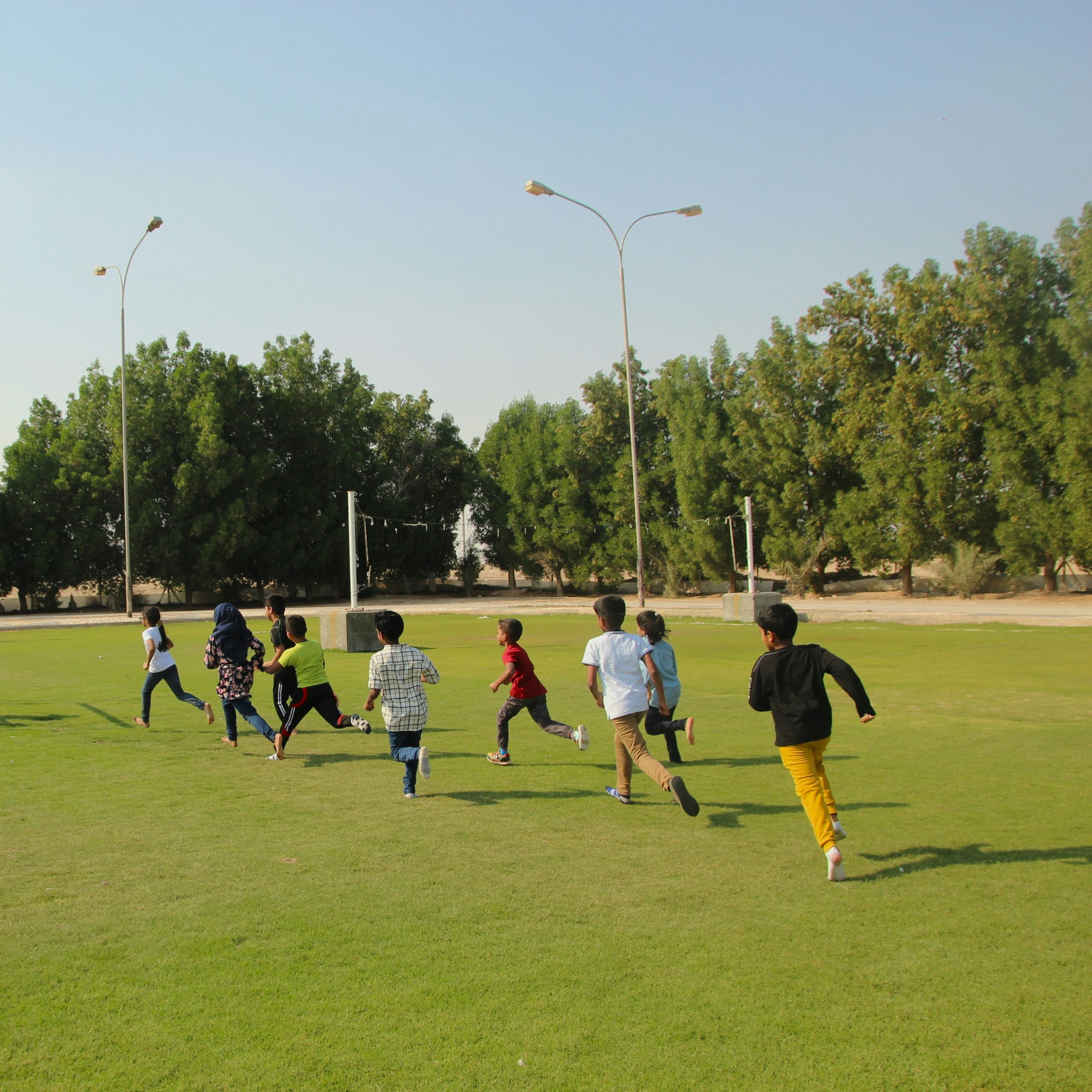
Family running culture has quietly shifted over the past decade. Parkrun juniors, charity 5Ks with kids' waves, school cross-country programmes, and a growing number of "family marathon" events with shorter concurrent races have made distance running one of the most visible ways for children to get active alongside their parents. Inevitably, some ambitious young runners, and some ambitious parents, start asking a bigger question: if a ten-year-old can run 5 kilometres comfortably, is there any reason they should not train for a half marathon, or even a full marathon?
Pediatric sports medicine has been answering versions of this question since the early 1980s, when the first running boom sent children onto marathon start lines alongside their parents. The consensus that has built up since then is more nuanced than a flat yes or no. Short, well-managed distance running appears to carry minimal risk for most healthy children. Marathon-length training and racing is a different matter, one where growth biology, thermoregulation, and long-term athletic development all argue for patience.
What the American Academy of Pediatrics actually says
The American Academy of Pediatrics Committee on Sports Medicine first addressed this directly in 1990, and its position has anchored pediatric guidance ever since: long-distance events designed for adults are not recommended for children before they have finished physical maturation, and no child should attempt a full marathon before reaching the final stage of sexual maturity rating, Tanner stage 5.1 That statement was never a ban on running itself. It was a statement about matching event distance to a still-developing skeleton, cardiovascular system, and thermoregulatory system, the same logic pediatricians apply to weightlifting loads, contact sports, and single-sport specialisation in youth.
More recent expert reviews have kept that ceiling roughly in place while giving parents and coaches more practical texture. A 2024 narrative review in the Journal of Functional Morphology and Kinesiology sorts youth marathon risk into three age bands: children under 12 are considered highest-risk because of an immature musculoskeletal system, adolescents aged 12 to 15 sit at medium risk partly because this window overlaps with peak height velocity, the fastest phase of the adolescent growth spurt, and 16-to-18-year-olds are lowest-risk and have the highest marathon completion rates.2 Historically, distance events have followed similar logic: when the New York City Marathon set a minimum entry age of 16 in 1981, organisers acknowledged the cutoff was "primarily implemented for administrative purposes and lacked a foundation in outcomes data" rather than a hard line drawn from injury statistics.2
Closer to the ground, pediatric sports medicine clinicians tend to frame the real-world guidance around the 5K distance rather than the marathon. As James MacDonald, MD, MPH, a sports medicine physician at Nationwide Children's Hospital, puts it when discussing safe running distances for kids:
"If children enjoy running and are not having pain, there is no reason to keep them from training for or participating in distance events longer than 5K."
He also points out a structural fact that quietly shapes the conversation: 5K is usually the longest distance that state high school athletic associations sponsor as an organised competitive event, which is one reason it functions as an informal ceiling in youth running culture even though nothing about a child's physiology fails abruptly past 3.1 miles.9 Beyond 5K, MacDonald's guidance is conditional rather than prohibitive: a gradual build from roughly 10 miles per week, increasing no more than about 10 percent weekly, with at least one full rest day, is a reasonable framework for a motivated, pain-free young runner, while he is candid that for genuine marathon distances in prepubescent children specifically, "there is no data on long-term effects."9
The IMMDA position: marathons can wait until adulthood
The International Marathon Medical Directors Association (IMMDA), the body that coordinates medical policy across major marathons worldwide, has taken a more conservative line than the "individualise it" approach. Its advisory statement on children and marathoning, built on a position paper unanimously approved by IMMDA's General Assembly and later revised, argues that marathon running specifically should be reserved for participants aged 18 and older.3 The reasoning leans heavily on the same AAP statements described above, combined with a simple cost-benefit observation: the aerobic fitness and health benefits of endurance exercise in childhood are real and worth pursuing, but they do not require exposing a child to marathon-specific training loads to obtain them. Meaningful fitness can be built well short of 42.2 kilometres.
IMMDA's member races have also been candid that they are not positioned to resolve the underlying scientific uncertainty themselves. Their statement notes that marathons are not the place to study whether children and adolescents running marathons is physiologically and psychologically damaging, which is part of why so many major marathons enforce their own minimum ages independent of what any single piece of research shows.3
Growth plates: the one physical vulnerability that is genuinely youth-specific
If there is a single physiological fact that separates a 12-year-old runner from a 30-year-old one, it is the growth plate. Growth plates, the epiphyseal and apophyseal cartilage at the ends of long bones and at tendon attachment sites, remain open until the end of puberty, and cartilage is mechanically weaker than the bone it will eventually become. That mismatch is a large part of why repetitive-impact sports produce injury patterns in children that adults essentially do not get.
A 2021 systematic review in the International Journal of Environmental Research and Public Health looked specifically at youth distance running and lower-extremity injury and reached a measured conclusion: the available literature "suggests youth can participate in distance running with minimal adverse effects," with one notable exception, "increased vulnerability to growth plate injury."4 The review also surfaced a genuine tension in the data. One included study found that injured middle-school runners had trained at meaningfully higher weekly mileage than their non-injured peers, 14.1 miles per week versus 12.0 miles per week, yet the reviewers' broader pooled analysis found no statistically significant correlation between running mileage and injury overall.4 That is a reminder that individual load tolerance, biomechanics, prior injury history, and growth-spurt timing likely matter more than any single mileage number.
Injury rates themselves are not trivial. One study cited across this literature found 14.2 percent of middle-school runners and 20.8 percent of high-school runners reported an injury over a season, with the knee (33 percent), lower leg (19 percent), and foot (14 percent) as the most commonly affected sites.2 A separate 15-year prospective dataset found girls sustaining lower-extremity injuries at a higher rate than boys, 16.7 injuries per 1,000 athlete exposures versus 10.9 per 1,000 in boys2, a gap researchers attribute in part to differences in pelvic biomechanics and the timing of the adolescent growth spurt relative to bone density gains. Later-maturing children face their own version of this risk: because their growth plates stay open longer, they spend more total time in the higher-risk window than earlier-maturing peers of the same chronological age.
Both reviews flag the same evidence gap: almost nothing has been studied in children under 10, and the systematic review's authors are blunt that current mileage guidance for youth runners is "predominantly based on expert opinion rather than evidence based."4 That is not a reason to panic about a child jogging with a parent; it is a reason to treat persistent, localised bone or joint pain in a young runner, heel pain, focal hip or groin pain, unexplained knee pain that does not resolve with a few days of rest, as something to have evaluated rather than something to run through.
The cardiovascular system: real adaptation, low measured danger, but a heat-tolerance gap
Youth endurance athletes' hearts adapt to training in the same direction as adults' do, just earlier. Echocardiographic studies of highly trained youth athletes show larger left ventricular diameter, wall thickness, and mass compared with untrained peers, alongside a substantially higher stroke volume index during submaximal and maximal exercise, with one longitudinal study of young endurance-trained athletes recording stroke volume index values reaching roughly 64 mL/m².5 Notably, the research suggests this performance advantage comes mainly from better filling of the heart, enhanced preload and diastolic function, rather than from any exaggerated systolic contractility, which is consistent with a healthy training adaptation rather than a pathological one.5
Reassuringly, reviewers of youth marathon participation have not found reports of cardiac-related fatalities among children in marathon races, and they note that no dedicated research yet exists on marathon-specific cardiovascular effects in young people, positive or negative, simply because so few children have raced the full distance under study conditions.2 For context, sudden cardiac death during marathons among adults of all ages is itself extremely rare, at roughly one event per 100,000 participants, and the cases that do occur in athletes under 30 are overwhelmingly linked to pre-existing, often undiagnosed structural conditions such as hypertrophic cardiomyopathy rather than to the distance itself.2 This is precisely why a pre-participation physical exam, with attention to family cardiac history, remains the standard safety gate before any child takes on serious endurance training, not because distance running itself creates cardiac risk, but because training can unmask a pre-existing condition.
Thermoregulation is the more consistently documented youth-specific risk, and it is a physiological issue rather than a training one: children gain radiant heat faster relative to their body mass, produce more metabolic heat per kilogram at a given running pace, and sweat less efficiently than adults, which together push core temperature up faster during long efforts in the heat. That is a meaningful consideration for tropical training environments and race-day heat and humidity, and it is one of the physiological concerns cited most consistently across pediatric guidance on children and marathon-length events.3 Fluid and sodium balance over multi-hour efforts is the related practical concern: a published case report followed a 15-year-old who completed a self-paced marathon in 5 hours and 19 minutes with mild, asymptomatic exercise-associated hyponatremia, a blood sodium reading of 134 mmol/L, just under the diagnostic threshold, which resolved within a day without complications.6 The case is often cited as evidence that a well-supported teenager can complete a marathon without serious harm, but the same report notes his inexperience as a first-time marathoner was itself a risk factor for the sodium imbalance, underlining that pacing, fuelling, and hydration strategy matter even more for a novice young runner than for an experienced adult.
Overtraining and burnout: probably the bigger real-world risk
If growth plates are the physical concern most specific to youth running, overtraining and burnout may be the more common practical failure mode. The American Academy of Pediatrics' most recent clinical report on the subject notes that roughly 70 percent of children and teens quit organised sport altogether by age 13, with injury and burnout among the leading drivers.7 The report defines overtraining plainly as a decrease in performance due to an imbalance of training and recovery, and its clinical recommendations read like a checklist any endurance coach working with minors should already be following: build weekly training time, repetitions, or distance gradually rather than in jumps; treat nonspecific muscle or joint complaints, unexplained fatigue, mood changes, or a drop in academic performance as possible early warning signs rather than things to push through; and protect at least one day off per week and several months off per year from a single sport.7
The 2024 narrative review adds a training-age argument that is easy to miss in the injury-risk conversation: most successful, top-ranked youth distance runners do not go on to become elite senior runners, and the review's authors specifically recommend that children hold off on regular, specialised distance-running training until at least the early stages of puberty, roughly ages 11 to 13, favouring broader athletic development before narrowing into one endurance discipline.2 That recommendation lines up with mainstream long-term athletic development thinking well outside running specifically: general movement competency, strength, and multi-sport exposure in the pre-adolescent years tend to produce more durable, more motivated athletes later than early single-sport intensification does.
What this actually means for a young runner's programme
Pulled together, the pediatric sports medicine literature does not describe distance running as dangerous for children. It describes a dose-and-timing problem. A rough, evidence-informed synthesis looks like this:
- Before puberty: unstructured running and organised events up to roughly 5K are well supported when a child is enjoying it and running pain-free; specialised distance training is better delayed in favour of broad-based athletic development.
- Early-to-mid adolescence: longer events such as a 10K, and for older, more developed teens a half marathon, become reasonable with a gradual, monitored build, commonly cited as roughly 10 percent weekly mileage increases, a full rest day each week, and a period of reduced load each year.
- Full marathon distance: best deferred until physical maturity is reached, Tanner stage 5 per the AAP, or, per IMMDA's more conservative and administratively simpler line, until age 18.
- At any age: persistent, localised bone or joint pain, in the heel, knee, hip, or shin, warrants clinical evaluation before more running rather than "running it off"; heat and hydration planning need extra margin for children given their less efficient thermoregulation; and calcium (roughly 1,300 mg per day) and vitamin D (roughly 600 IU per day) intake targets for young runners aged 9 to 18 support the bone health that all this training load is stressing.2
None of this argues against youth endurance sport. It argues for sequencing it the way pediatric sports medicine sequences everything else a growing body is asked to do: build the aerobic base and the general athleticism first, let the skeleton and the cardiovascular system mature on their own timeline, and save the marathon distance for a body that has finished the job of becoming an adult one.
Sources
- https://publications.aap.org/pediatrics/article/86/5/799/56562/Risks-in-Distance-Running-for-Children
- https://pmc.ncbi.nlm.nih.gov/articles/PMC10971426/
- https://immda.org/wp-content/uploads/2015/08/Spring-2009-Revised-Children-and-Marathoning.pdf
- https://doi.org/10.3390/ijerph18147542
- https://pmc.ncbi.nlm.nih.gov/articles/PMC9787332/
- https://pmc.ncbi.nlm.nih.gov/articles/PMC6473750/
- https://publications.aap.org/pediatrics/article/153/2/e2023065129/196435/Overuse-Injuries-Overtraining-and-Burnout-in-Young
- https://www.healthychildren.org/English/news/Pages/AAP-calls-out-causes-of-injury-overtraining-and-burnout-in-youth-sports.aspx
- https://www.nationwidechildrens.org/family-resources-education/700childrens/2023/09/what-running-distances-are-safe-for-children
Want this applied to your own program, team, or school? Free 20-minute consult, no obligation.
Book a free consult →