
Research · Testing & Assessment
The Asymmetry Number Most Coaches Watch Is the One That Moves the Most
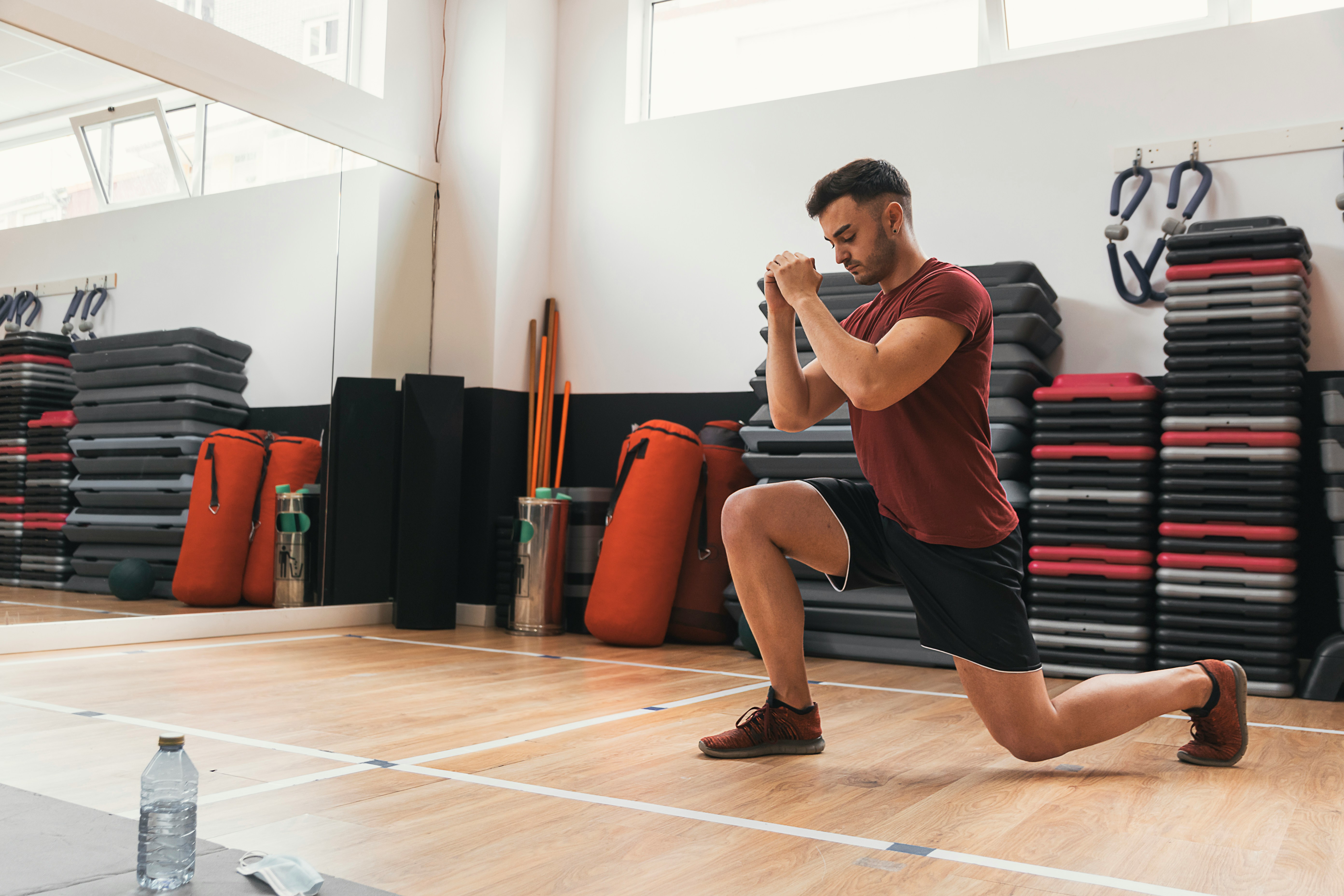
A fourteen-year-old does three single-leg jumps on each side in pre-season testing. The report comes back with one line highlighted in red: left leg 13% lower than right. By mid-season the same test says 6%, with the right leg now the weaker one. Nothing about the player has visibly changed, and nobody is quite sure which report to believe.
Both, probably — and neither, as an injury forecast. The asymmetry figure that most monitoring software leads with is the one the youth evidence shows moving the most, and the one place a prospective youth study did find a meaningful injury signal was a different number altogether.
What the reviews actually found
Two systematic reviews published a year apart asked the same question: does lower-limb asymmetry predict sports injury? Neither is reassuring for anyone selling a single threshold.
The first screened 302 studies and reviewed 31, covering 6,228 participants, with soccer players the most-studied group at 2,171.1 Of those studies, eight found no statistical association between asymmetry and injury, ten found partial statistically significant evidence, and ten found a significant link. The authors rated the overall body of evidence as moderate to lower quality, and concluded that a relationship cannot be ruled out but that higher-quality studies with standardised methods are needed.1
The second was stricter, including only prospective cohort studies — designs in which athletes are tested first and followed for injuries afterwards, which is what an injury-prediction claim actually needs. It included 28, with sample sizes ranging from 45 to 362.2 Its conclusion was blunt: the findings were "highly inconsistent", making a clear statement on the association between each asymmetry and sport injury difficult.
That last figure matters for anyone working with young athletes. In the prospective review, only four studies focused purely on paediatric-age participants, with four more mixing children and adults without analysing them separately.2 Most of what is said about asymmetry and injury risk has been learned on adults and then applied to teenagers.
Within that review, unilateral jumps were the most promising category: of six studies analysed for this association, five reported a significant link with injury.2 But the specifics are scattered. One study found a 10% hop asymmetry associated with foot and ankle injury in female collegiate athletes (odds ratio 4.4); another, in volleyball players, found the same 10% threshold was not associated with injury at all.2 Same cutoff, same type of test, opposite answers.
The one large youth study, and the number it actually flagged
The most directly relevant evidence for youth coaches comes from a prospective cohort of 357 elite male academy footballers aged 10 to 18, screened in pre-season and then followed for ten months for non-contact lower-limb injuries.3 Ninety-nine players sustained one. The screening battery included single-leg hops, a hop-and-stick, the tuck jump, and the single-leg countermovement jump.
The most consistent risk factor was single-leg countermovement jump asymmetry — but not in jump height. It was asymmetry in peak landing vertical ground reaction force: how differently each leg absorbed the impact of coming back down.3 That distinction is easy to lose. Jump height asymmetry tells you which leg pushes off better. Landing force asymmetry tells you something about how each leg copes with load on the way in, which is closer to the mechanism of most non-contact injuries.
The odds ratios below 1 look odd until you see how the study coded asymmetry: as the percentage of performance the weaker leg achieved relative to the stronger one.3 An odds ratio of 0.90 therefore means that each step towards symmetry came with lower odds of injury — greater asymmetry, greater risk. The authors also note that asymmetry above 15% was commonly seen among the players who went on to be injured.
The caveats are spelled out by the authors themselves. The associations were "often low to moderate" in strength. The risk factors differed by age group: in the U13–U14 band — the group most likely to be going through the growth spurt — no movement-based test was significantly associated with injury, and the multivariate model's ability to identify injured players there was low. In the U18s, the only variable that mattered was simply being older. Previous injury, one of the best-established risk factors in sport, was not included. And the study was explicitly exploratory, testing many variables rather than a single pre-specified hypothesis.3
So the best youth evidence supports asymmetry as one potential risk factor among several, measured in a variable most dashboards do not headline, with a strength of association that is real but modest and that changes with age.
Why the jump-height number will not sit still
The readiness side of the story — using asymmetry week to week to decide who trains fully — depends on the number being stable enough that a change means something. A season-long study of 59 youth elite team-sport athletes tested exactly that, repeating the single-leg countermovement jump and a single-leg hop for distance at pre-season, mid-season and end of season.4
Jump-height asymmetry on the single-leg countermovement jump was significantly higher at mid-season than at pre-season, a large effect (d = −1.03), and also differed significantly from end-of-season. Hop-for-distance asymmetry, by contrast, barely moved across the year (effect sizes −0.02 to −0.06).4 The countermovement jump height figure was the only metric in the study to change significantly in magnitude.
Then there is direction — which leg comes out weaker. Agreement on direction across time points ranged from poor to slight for both tests, with kappa values of −0.10 to 0.18 for the jump and −0.21 to 0.18 for the hop.4 A kappa near zero means agreement is roughly what chance would produce. In practical terms, the "weak leg" identified in September is not reliably the weak leg in January.
The test most often used to label a young athlete's "weak side" could not consistently agree with itself on which side that was across a single season.
This does not make the measurement useless. A mid-season rise in asymmetry might reflect accumulated fatigue, a niggle, or a change in training emphasis — all things a coach would want to know about. But it means a single reading, or a red flag triggered by one session, is reading a number that is expected to fluctuate. Asymmetry belongs in the same category as the other metrics covered in our guide to what force plate data actually predicts: useful as a trend against the athlete's own history, weak as a one-off verdict.
Growth makes it harder, not clearer
It would be convenient if asymmetry simply rose during the growth spurt and fell afterwards, giving coaches a predictable window to watch. A cross-sectional study of 347 elite male youth footballers grouped by maturation — before, around, and after peak height velocity — found a more muddled picture.5 Single-leg countermovement jump landing-force asymmetry was higher in the circa- and post-peak groups than in the pre-peak group (d = 0.41–0.43). Hop-for-distance and balance-reach asymmetries trended downward with maturation, but those differences were not significant and the effect sizes were small to trivial.5
The authors' conclusion was that stage of maturation did not have a profound effect on asymmetry, and that between-limb differences seem to be established early in childhood.5 That is a useful reframe: asymmetry in a young athlete is not primarily a growth-spurt artefact that will resolve on its own, but nor is it a reliable marker of who is mid-growth. It is a trait with its own trajectory that interacts with maturation in ways the cohort data has not yet untangled.
What this changes in practice
Look at landing, not just take-off. The one prospective youth signal was in landing-force asymmetry. If a system reports both, the landing figure deserves at least as much attention as jump height — and if it only reports jump height, that is the less supported number.
Never act on a single session. Jump-height asymmetry shifted with a large effect size between pre- and mid-season in healthy youth athletes, and the weaker side flipped at near-chance rates. A one-off red flag should prompt a retest and a conversation, not a change to the programme.
Track direction alongside size. A 10% asymmetry that stays on the same leg across three testing points is a different story from a 10% figure that keeps changing sides. Only the first suggests a persistent deficit worth training.
Treat a fixed cutoff as a prompt, not a gate. The same 10% hop threshold was associated with injury in one cohort and not in another. Whatever number the software uses to turn a cell red, it has not been validated in young athletes as a decision rule.
Pair it with something the athlete tells you. For day-to-day readiness, an asymmetry figure has no study behind it as a stand-alone marker. Combining it with session RPE and the athlete's own report of how they feel gives context the number cannot provide on its own.
Expect age-specific answers. In the largest youth cohort, risk factors differed between U11s, U13s, U15s and U18s, and none of the movement tests helped in the age band most likely to be in the growth spurt. A single screening protocol interpreted the same way from age 10 to 18 is asking more of the data than it can give.
Where this evidence stops
Both systematic reviews are limited by the studies beneath them: different tests, different asymmetry formulas, different injury definitions, and mostly adult samples. The first rated its evidence as moderate to lower quality; the second could not reach a clear conclusion at all. Neither pooled the data into a single effect estimate, so there is no meta-analytic figure for how much asymmetry raises injury risk.
The prospective youth cohort is the strongest direct evidence, and it comes from one population — elite male academy footballers in England — with no adjustment for previous injury and an exploratory design. Its findings may not carry over to girls, to recreational players, or to other sports. The seasonal study followed 59 athletes across three time points, and the maturation study was cross-sectional, comparing different players at different stages rather than following the same players through growth.
Most importantly, none of these studies tested whether reducing asymmetry actually lowers injury rates, or whether using asymmetry to modify training on a given day improves outcomes. What the evidence supports is narrower than the marketing: asymmetry, especially in landing, may be one modest risk factor in young athletes; the jump-height version is noisy enough that it should only be read as a trend; and no threshold has yet earned the right to make a decision on its own.
Sources
- Helme, M., Tee, J., Emmonds, S., & Low, C. (2021). Does lower-limb asymmetry increase injury risk in sport? A systematic review. Physical Therapy in Sport, 49, 204-213. https://doi.org/10.1016/j.ptsp.2021.03.001
- Guan, Y., Bredin, S. S. D., Taunton, J., Jiang, Q., Wu, N., & Warburton, D. E. R. (2022). Association between inter-limb asymmetries in lower-limb functional performance and sport injury: a systematic review of prospective cohort studies. Journal of Clinical Medicine, 11(2), 360. https://doi.org/10.3390/jcm11020360
- Read, P. J., Oliver, J. L., De Ste Croix, M. B. A., Myer, G. D., & Lloyd, R. S. (2018). A prospective investigation to evaluate risk factors for lower extremity injury risk in male youth soccer players. Scandinavian Journal of Medicine & Science in Sports, 28(3), 1244-1251. https://doi.org/10.1111/sms.13013
- Fort-Vanmeerhaeghe, A., Bishop, C., Buscà, B., Vicens-Bordas, J., & Arboix-Alió, J. (2021). Seasonal variation of inter-limb jumping asymmetries in youth team-sport athletes. Journal of Sports Sciences, 39(24), 2850-2858. https://doi.org/10.1080/02640414.2021.1968123
- Read, P. J., Oliver, J. L., Myer, G. D., De Ste Croix, M. B. A., & Lloyd, R. S. (2018). The effects of maturation on measures of asymmetry during neuromuscular control tests in elite male youth soccer players. Pediatric Exercise Science, 30(1), 168-175. https://doi.org/10.1123/pes.2017-0081
Want this applied to your own program, team, or school? Free 20-minute consult, no obligation.
Book a free consult →